
Velia caprai
Velia caprai
Description
How to identify
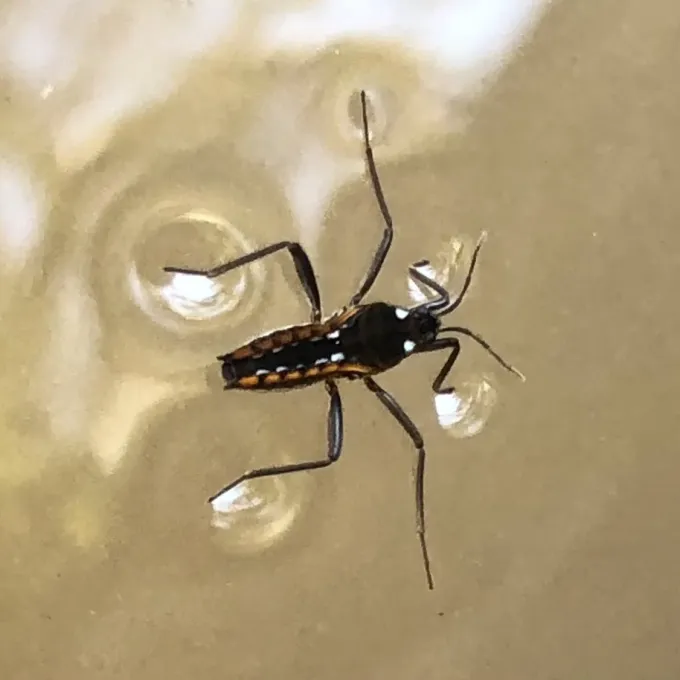
Velia caprai is a species of insect belonging to the family Veliidae, within the order Hemiptera. These small bugs are well-known for their ability to skate across the water surface using surface tension.
Adult Velia caprai are generally dark-colored, ranging from brown to black, which helps them blend into their natural environment of moist soil and pond margins.
The nymphs go through several developmental stages before becoming adults; they look similar to the mature form but are smaller and lack fully developed reproductive organs.
They inhabit streams, brooks, and various wet environments, especially those with debris where they can find prey and seek shelter from predators.
Identification of the species often requires careful examination under magnification, as morphological features related to leg hair arrangement and genital structure are distinct.
What it damages
Velia caprai is primarily a predator, feeding on smaller invertebrates found in aquatic or very damp environments, rather than being a direct feeder on plant tissues.
The potential damage associated with this insect is largely indirect, as high populations can negatively impact beneficial insects and microorganisms in the riparian zones.
They do not cause direct damage to agricultural crops such as leaf piercing or sucking, making them essentially harmless in terms of direct plant productivity.
In specialized environments like greenhouses with indoor water features, their presence might be a nuisance due to their rapid movement across wet surfaces.
Their impact on agriculture is considered negligible; however, their presence should be noted as part of the overall biodiversity monitoring of the farm ecosystem.
When it appears
The active season for Velia caprai typically begins in early spring when temperatures rise, allowing them to emerge from their overwintering sites.
During the summer months, they are most abundant, as the warm weather favors rapid reproduction and the development of multiple generations throughout the season.
As autumn approaches and temperatures drop, adults seek shelter in protected areas, such as under stones, logs, or deep within leaf litter near water bodies.
Spring emergence is usually synchronized with the increase in water and air temperatures, marking the return of these insects to the surface of the water.
The speed of their life cycle is highly dependent on ambient environmental conditions; warmer years generally result in higher populations by late summer.
Signs of infestation
The most visible sign of their presence is the characteristic ripple pattern on the water surface caused by their quick, erratic movements when disturbed.
Large aggregations of these small dark bugs on damp soil near irrigation channels or ponds are clear indicators of a thriving local population.
The presence of nymphs in the vegetation lining a water source indicates that the area provides suitable conditions for successful breeding and development.
The absence of typical plant symptoms like wilt, chlorosis, or necrotic lesions confirms that the insects are not consuming the crops themselves.
Frequent sightings in nursery areas often suggest issues with drainage or excessive humidity, which should be investigated to maintain optimal growing conditions.
Control measures
Direct chemical control for Velia caprai is rarely necessary because they do not pose a threat to plant health or agricultural yield.
The most effective management approach is physical maintenance, such as clearing debris from the edges of ponds and streams to reduce suitable habitats.
Optimizing drainage systems and managing soil moisture around cultivation areas helps to limit the space available for their population expansion.
Biological control methods involve fostering a healthy ecosystem where natural predators like damselflies, water spiders, and fish can regulate insect numbers naturally.
Avoid broad-spectrum insecticide applications near water sources, as these chemicals can harm non-target aquatic organisms and disrupt the balance of the local ecosystem.
Taxonomy
- Latin name
- Velia caprai
- Order
- Hemiptera (bugs, aphids, leafhoppers)
- Family
- Veliidae
- EPPO code
- VELICA
Discussion
No discussions yet — be the first.