
Microvelia
Microvelia
Description
How to identify
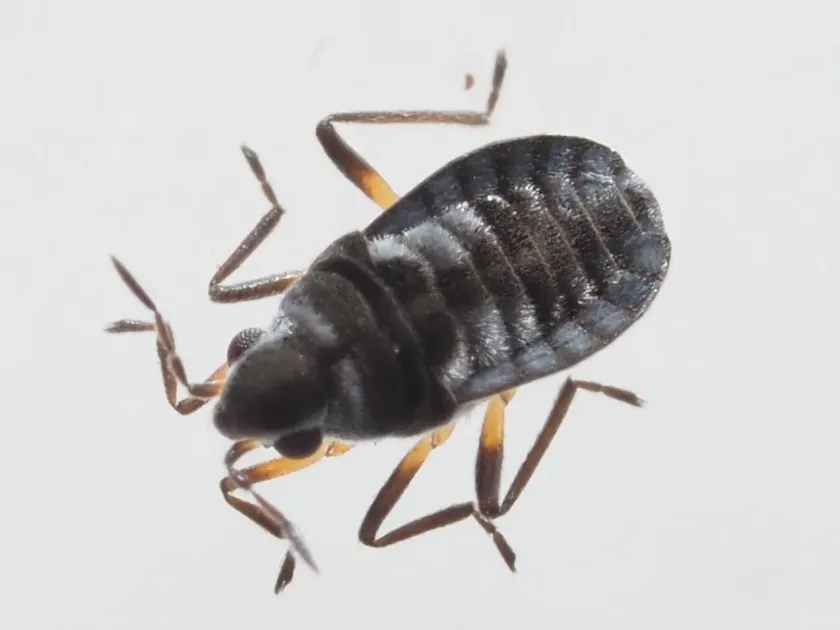
Microvelia belongs to the family Veliidae (order Hemiptera). These are minute insects, with adult individuals rarely exceeding 2–3 millimeters in length.
Visually, they resemble tiny water striders, but they differ in their more compact, robust bodies and their specific way of moving across water surfaces.
Their coloration is generally dark, ranging from brown to black, which helps them effectively camouflage on moist surfaces or within aquatic environments.
They possess the ability to skim rapidly across water surfaces due to hydrophobic hairs on their legs that create high surface tension.
Both wingless and winged forms occur, with winged individuals capable of dispersing to new areas within ponds or greenhouse systems.
What it damages
The primary targets of Microvelia are plants grown in hydroponic and aquaponic systems, as well as crops in high-humidity greenhouse environments.
They pose a specific threat to lettuce, basil, and other leafy greens grown on floating raft systems.
In natural habitats, they feed on small insects trapped in the water, but in agricultural systems, they may switch to young plant tissues.
Both nymphs and adults can suck sap from roots and the lower parts of stems submerged in water or sitting on moist substrates.
Large-scale outbreaks of this pest lead to stunted plant growth, reduced market quality, and create stress for the root system development.
When it appears
The activity of Microvelia is directly dependent on temperature and humidity levels within the growing area.
In heated greenhouses, the pest can reproduce year-round, as hydroponic conditions provide an ideal habitat for their development.
The life cycle includes the egg stage, five nymphal instars, and the adult stage, with the entire process occurring rapidly under favorable temperatures.
The highest population spikes are recorded during periods of high humidity and stagnant water in drainage systems or reservoirs.
In open-field conditions, peak activity occurs during summer months when water bodies warm up and coastal areas become consistently damp.
Signs of infestation
The first sign of infestation is the presence of clusters of tiny black dots on the surface of the nutrient solution in hydroponic systems.
Upon inspection of the plants, one may notice microscopic damage on the root crowns or the undersides of leaves that come into contact with moisture.
Plants may show signs of wilting, chlorosis, or tissue necrosis caused by both the insects feeding and the resulting weakening of the plant's immune system.
The presence of pest colonies is often accompanied by the contamination of the water surface with their excrement.
In cases of significant infestation, a noticeable decrease in the overall growth rate of the crop is observed, impacting final yield weight.
Control measures
The primary control measure is maintaining hygiene in water systems and regular disinfection of nutrient solution reservoirs.
It is crucial to prevent water stagnation in trays and around cultivated plants, as these are the main breeding grounds for the pest.
An effective method includes the use of mechanical barriers or screens to prevent insect entry into enclosed systems.
In the event of mass infestation, the use of biological control agents or specialized insecticides approved for greenhouse use is recommended.
Regular monitoring using yellow sticky traps placed just above the water surface is advised for early detection.
Taxonomy
- Latin name
- Microvelia
- Order
- Hemiptera (bugs, aphids, leafhoppers)
- Family
- Veliidae
- EPPO code
- MICVSP
Discussion
No discussions yet — be the first.