
Asiatic black bear
Ursus thibetanus
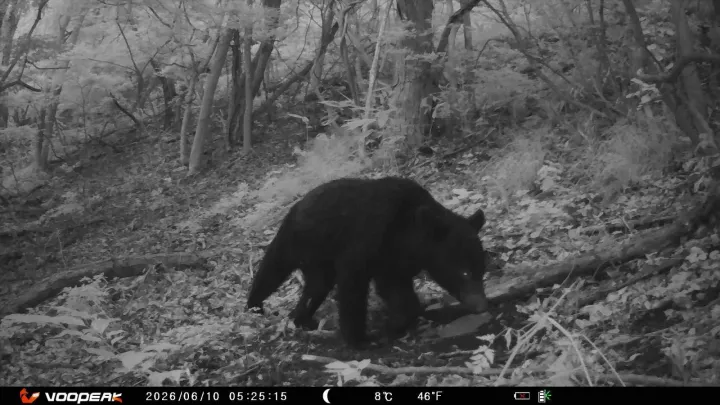
Description
How to identify
The Asiatic black bear (Ursus thibetanus), also known as the moon bear, belongs to the Ursidae family. It is easily identified by the distinct white V-shaped patch on its chest.
These bears are highly skilled climbers, using their strong claws to ascend trees effortlessly, which allows them to damage orchards by breaking branches to access fruit.
They are primarily crepuscular or nocturnal, making direct observation of them within agricultural fields difficult during daylight hours.
As opportunistic feeders, they adapt their diet based on availability, often shifting from forest food sources to cultivated crops when nutrients are abundant.
Their physical size and strength enable them to cause significant structural damage to vegetation that smaller pests simply cannot inflict.
What it damages
The Asiatic black bear causes severe damage to nut orchards, including walnut and hazelnut trees, by snapping off branches and crushing the canopy to reach the harvest.
Corn fields suffer significantly when the crop reaches the milk-wax stage, as bears trample large patches and consume the grains in massive quantities.
They damage tree bark by clawing and peeling it, which leaves the timber vulnerable to secondary infestations and rot, impacting the long-term health of the orchard.
Fruits and melons are often decimated by bears, which rip the outer shells of the produce, rendering the entire yield unsellable and attracting other pests.
Repeated foraging in the same orchard can lead to the total decline of tree productivity, forcing growers to invest in extensive restoration or replanting.
When it appears
Damage is most prevalent during late summer and autumn, a critical period for bears to consume high-calorie food in preparation for their winter hibernation.
While bear activity is generally low in spring and early summer, they may graze on young shoots and buds, which impacts the initial growth stages of orchard trees.
The specific timing of crop damage is highly correlated with the ripening phenology of the target plants in the farm area.
As natural forest food sources fluctuate, the pressure on agricultural fields increases, making late-season harvests particularly vulnerable to bear incursions.
Winter dormancy provides a natural reprieve for farmers, as bear activity ceases entirely until the return of spring weather.
Signs of infestation
A telltale sign is the formation of nest-like branch aggregations in the tree canopy where the bear has settled to consume fruit conveniently.
Corn fields will show clear paths of trampled stalks and discarded, half-eaten cobs left behind on the soil surface.
Deep, vertical claw marks on the trunks of fruit trees provide strong evidence of the bear's climbing and territorial marking behavior.
Fecal deposits found near the edge of the orchards or along common movement trails indicate the frequency and duration of the bear's visits.
The presence of large, distinct paw prints in the soil between rows confirms the size and species of the animal frequenting the plantation.
Control measures
The most effective physical deterrent is the installation of high-voltage electric fencing designed specifically to repel large mammals.
Motion-activated lighting systems and ultrasonic noise devices can disrupt bear foraging patterns, discouraging them from staying in the area.
- Deploying trail cameras for consistent monitoring of field borders.
- Removing thick brush from the perimeter to minimize hiding spots.
- Scheduling harvests to be as quick as possible during peak ripeness.
- Implementing scent-based repellents that are naturally unpleasant to bears.
Buffer strips of less desirable crops can be planted along the outer edges to divert bears away from high-value commercial orchards.
Coordinating with local wildlife management agencies can provide farmers with additional strategies for long-term population and damage control.
Taxonomy
- Latin name
- Ursus thibetanus
- Family
- Ursidae
- EPPO code
- URSUTH
Discussion
No discussions yet — be the first.