
European mole cricket
Ursus
Description
How to identify
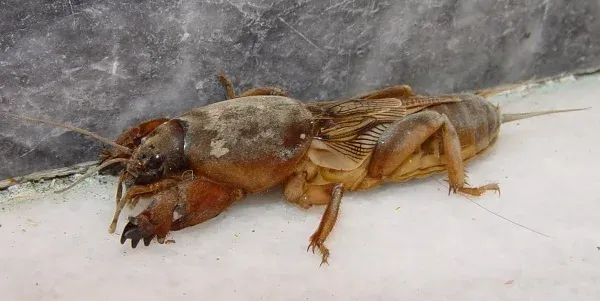
The European mole cricket (lat. Gryllotalpa gryllotalpa) is a member of the Gryllotalpidae family, known for its burrowing lifestyle. Adults reach 5 to 8 cm in length and have a robust build.
The most striking physical feature is the pair of highly modified, shovel-like front legs. These are perfectly adapted for excavating tunnels through the soil with remarkable efficiency.
The body is covered in a dense, velvet-like brownish pubescence, which helps the insect move through damp soil. Despite their underground nature, they are capable of strong flight and can cover significant distances at night.
Their life cycle typically lasts one to two years. They spend the winter in deep soil burrows or piles of organic matter, where temperatures remain relatively stable and above freezing.
Females create specialized brood chambers in the soil to lay eggs. Nymphs resemble miniature adults and undergo several molts before reaching reproductive maturity.
What it damages
As polyphagous insects, mole crickets can cause extensive damage to a wide range of vegetable crops. Tomatoes, cabbages, potatoes, and root vegetables are particularly susceptible to their feeding.
They destroy plants by severing the roots or stems just below the soil surface. This leads to the rapid wilting and collapse of healthy-looking seedlings within a matter of hours.
Seeds and underground plant parts, such as tubers and carrots, are also frequently consumed or hollowed out. This makes the harvest significantly less marketable and prone to rot.
In greenhouses and nurseries, mole cricket activity is especially dangerous. Their network of tunnels creates gaps between the roots and the soil, causing roots to dry out and eventually die.
The economic impact can be severe in intensive cultivation areas. Without proper management, a large infestation can decimate entire beds of vulnerable plants in just a few days.
When it appears
Activity resumes in early spring once the soil temperature increases significantly. As the ground warms up, they move closer to the surface to begin their seasonal foraging.
May and June are peak months for reproduction and movement. During this time, adults are highly active, searching for mates and establishing new tunnels for their upcoming offspring.
Summer heat often drives mole crickets to seek moisture. They are frequently found in irrigated areas and near water sources, where they continue their destructive habits throughout the growing season.
As autumn approaches, they prepare for winter by moving to deeper layers of the soil. They actively look for warm, compost-rich areas where they can withstand the coming frost.
The winter months are spent in a state of diapause. During this period, the insects remain inactive deep underground, waiting for the return of favorable spring conditions.
Signs of infestation
The most prominent sign of a mole cricket presence is the appearance of soil mounds and surface ridges after rain or irrigation. These trails indicate where the insect has tunneled.
Sudden wilting of a plant, despite adequate water and no visible leaf disease, is a classic indication of root damage. Tug gently on the plant; if it comes out easily, the roots are likely severed.
Visible holes in the ground, often hidden under debris or leaves, serve as entry points to their underground tunnel system. These holes are typically about 1-1.5 cm in diameter.
A high-pitched, chirping sound at night during early summer is a strong indicator of their presence. The males make these sounds to attract females for mating.
During cultivation or weeding, gardeners may notice the insects themselves or their clusters of eggs buried in small, hardened clay chambers within the topsoil.
Control measures
Mechanical control is effective through deep tillage in spring and autumn. This practice disrupts their nesting chambers and exposes the insects to predators like birds and hedgehogs.
Manure traps are highly effective in spring. Mole crickets are attracted to the warmth and moisture of decomposing manure, where they congregate and can be easily collected.
Biological control involves the application of entomopathogenic fungi, such as Beauveria bassiana. These products are environmentally friendly and target the insects specifically.
- Install physical barriers like plastic rings around young seedlings.
- Use commercially available bait stations containing specific insecticides.
- Encourage natural predators such as starlings, frogs, and hedgehogs on the property.
Chemical control should be used as a last resort and applied with precision. Granular insecticides can be incorporated into the soil at the time of planting to protect vulnerable roots.
Taxonomy
- Latin name
- Ursus
- Family
- Ursidae
- EPPO code
- URSUSP
Discussion
No discussions yet — be the first.