
American black bear
Ursus americanus
Description
How to identify
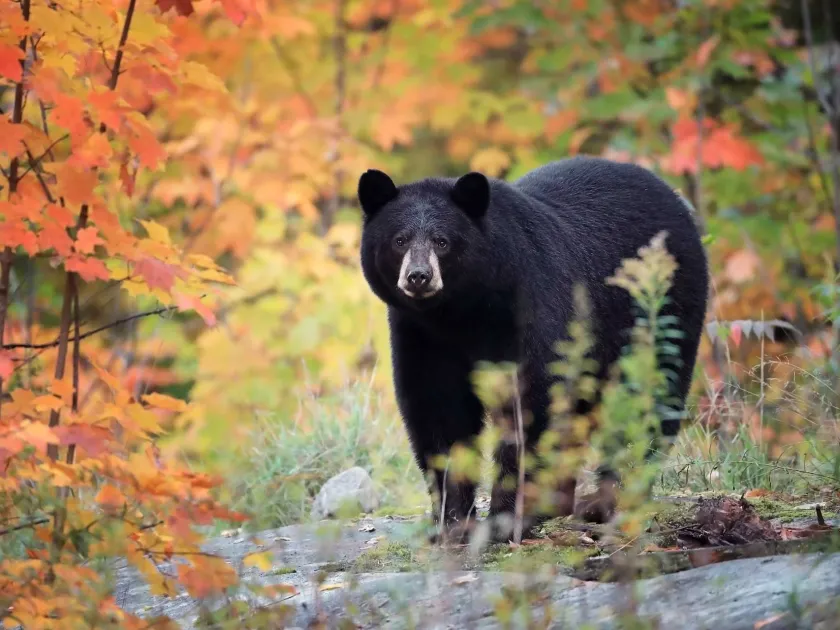
The American black bear (Ursus americanus) belongs to the order Carnivora and the family Ursidae. It is a robust mammal characterized by its black coat, smaller stature compared to grizzlies, and a keen sense of smell, which often draws it toward food sources on agricultural land.
What it damages
Black bears are opportunistic feeders that can cause extensive economic loss to agricultural operations. They have a particular affinity for cornfields, often damaging entire rows of crops just before harvest time. In addition to corn, they forage in small grain fields, destroying wheat and oat crops by trampling.
Fruit orchards are also prime targets for black bears, where they climb trees and break branches to access fruit, causing long-term structural damage to the trees. Their presence often leads to reduced harvest yields and higher operational costs for farmers.
In silviculture, these bears peel the bark off conifers to feed on the cambium layer. This practice can girdle the trees, causing them to die or develop significant growth defects, which negatively impacts timber production quality.
When it appears
Agricultural damage typically peaks during late summer and autumn. This period coincides with the bears' hyperphagia phase, where they consume vast amounts of calories to prepare for winter hibernation, driving them to exploit available cultivated crops.
Signs of infestation
Signs of infestation include broken stalks in cornfields, well-worn trails across agricultural plots, and distinct claw marks on tree trunks. Presence is also confirmed by large scat containing undigested plant material near the edges of affected fields.
Control measures
Electric fencing is considered the most effective non-lethal method for keeping black bears out of crops and orchards. These fences provide a painful but harmless deterrent that keeps the animals away from high-value fields.
Integrated management includes clearing brush around farm boundaries to eliminate cover and using noise-making devices or scare tactics to drive bears away. In areas with high damage frequency, professional wildlife management agencies may assist with relocation or population control strategies.
Taxonomy
- Latin name
- Ursus americanus
- Family
- Ursidae
- EPPO code
- URSUAM
Discussion
No discussions yet — be the first.