
Brown bear
Ursus arctos
Description
How to identify
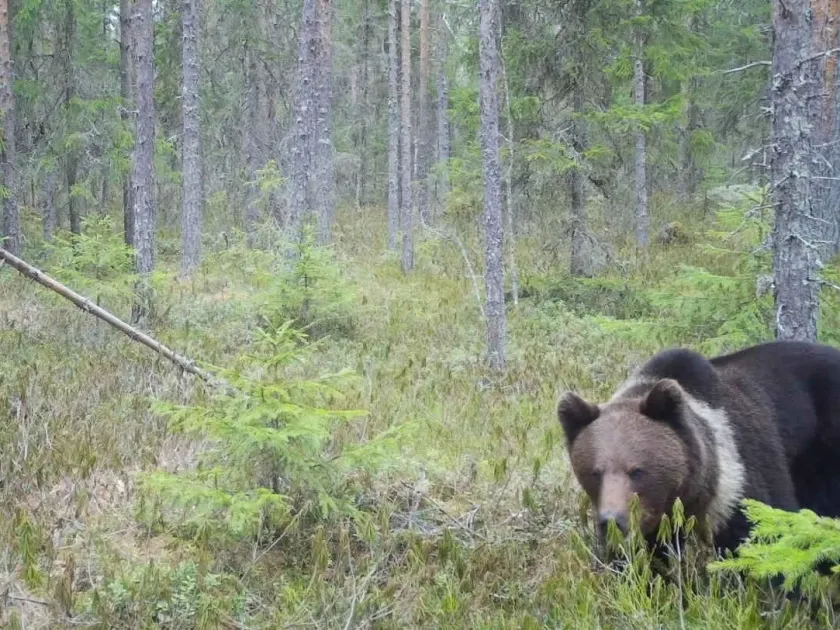
The brown bear (Ursus arctos) is a large mammal of the order Carnivora, family Ursidae. It is one of the most powerful wild animals, capable of destroying various farm structures.
Bears possess an exceptional sense of smell, enabling them to locate food sources, such as ripe grain or honey, from significant distances across diverse landscapes.
Physical strength and anatomy allow these animals to easily overcome fences and access storage areas, making them a major challenge for farmers located near forests.
Their activity patterns are seasonal, often peaking during late summer and autumn as they seek to build up fat reserves for winter hibernation.
The species shows high adaptability to human-altered landscapes, often learning how to bypass standard security measures implemented by agricultural businesses.
What it damages
Brown bears cause substantial losses in grain fields, particularly corn and oats. They often trample large areas, leading to significant yield reduction during the ripening stage.
Apiaries are highly vulnerable to bear attacks. A single bear can destroy dozens of hives in one night, consuming honey, larvae, and beeswax, and ruining expensive equipment.
Orchards and berry plantations are also frequent targets. Bears break branches and sometimes entire trees while trying to reach fruits, causing long-term damage to the farm.
In regions with livestock grazing, bears pose a direct threat to sheep, goats, and calves, which causes severe financial stress for local producers.
- Destruction of cereal and corn crops
- Devastation of beehives and apiary infrastructure
- Physical damage to fruit trees and berries
- Predation on small and large livestock
Signs of infestation
Identification is primarily based on large, five-toed footprints found in soft soil or mud, which are distinct from those of any other local species.
Widespread flattened areas within a field indicate where a bear has spent time feeding or moving through the crop towards a target food source.
Claw marks on hives or wooden poles, coupled with splintered wood and debris, serve as clear signs of an apiary invasion by a bear.
Broken branches and scarred bark on fruit trees signify that a bear has been foraging in the orchard, often leaving behind tufts of hair.
Fresh scats containing seeds, berries, or animal remains found in the perimeter of the farm are reliable indicators of current bear activity in the area.
Control measures
Electric fencing is widely recognized as the most effective method for securing beehives and vegetable gardens against bear intrusion.
Motion-activated sound and light deterrents are useful for frightening bears away from specific areas, although they may become less effective over time due to animal habituation.
Sanitation practices, such as removing fruit waste and securing storage bins, are essential to prevent attracting bears to farm buildings with strong odors.
Using guard dogs can provide a strong deterrent, as bears are generally cautious and prefer to avoid direct confrontation with trained, aggressive animals.
Maintaining clear perimeters and using motion-sensing cameras helps farmers monitor and identify bear activity early, allowing for proactive defense measures.
Taxonomy
- Latin name
- Ursus arctos
- Family
- Ursidae
- EPPO code
- URSUAR
Discussion
No discussions yet — be the first.