
Uromelan aphids
Uromelan
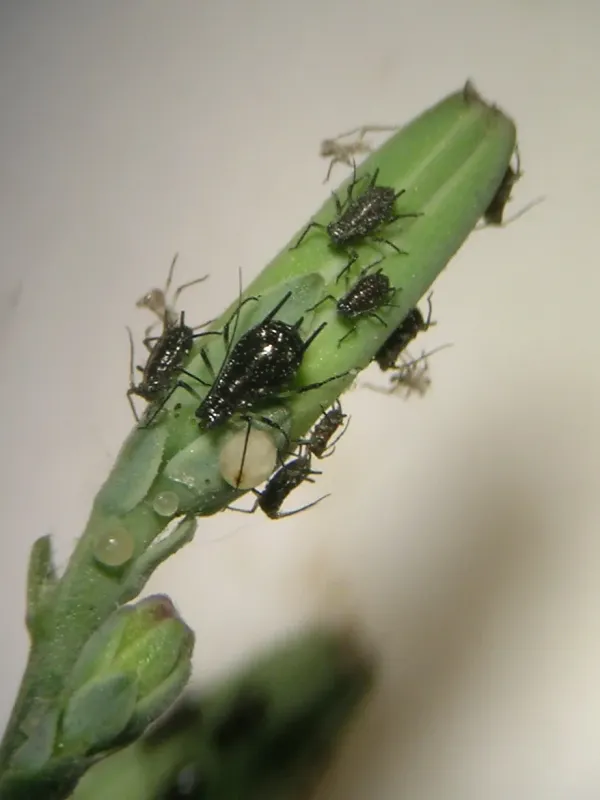
Description
How to identify
The genus Uromelan belongs to the family Aphididae, which includes true aphids. These insects are typically small, with a dark brown or black body color, allowing them to blend into the stems of host plants.
A key morphological feature for identifying Uromelan aphids is the presence of long, darkened siphunculi (tubes) at the tip of the abdomen.
They are colonial insects that primarily colonize the youngest parts of plants, such as shoot tips, flower buds, and tender leaves.
Unlike some aphid species that are covered in waxy secretions, Uromelan aphids usually possess a shiny, smooth surface, making them quite distinct during close observation.
Adult aphids generally measure 2–3 millimeters in length. Their populations can explode within a short time, covering entire flower stalks if left uncontrolled.
What it damages
Uromelan aphids are primarily specialized pests of plants in the Asteraceae family, including many common weeds, garden flowers, and some ornamental species.
They feed by piercing plant tissues with their proboscis to extract phloem sap. This feeding process depletes the plant's resources and stunts its development.
In addition to physical damage, they act as vectors for various plant viruses, which can lead to severe stunting, leaf curling, and mosaic patterns on the foliage.
The aphids secrete honeydew, a sticky substance that promotes the growth of sooty mold, a fungus that covers the leaves and hinders the photosynthetic process.
Heavy infestations can lead to the death of young shoots, bud abortion, and significant aesthetic damage to ornamental and horticultural crops.
When it appears
The life cycle of Uromelan is synchronized with the phenology of their host plants. They typically overwinter as eggs on the basal parts of perennial plants or plant debris.
In the spring, as temperatures rise, the overwintered eggs hatch into fundatrices (stem mothers), which immediately begin feeding on fresh plant growth.
The population reaches its peak during the mid-summer months when the plants are actively growing and contain high concentrations of nutrients.
Winged migratory forms usually emerge in mid-summer, allowing the colony to disperse to new host plants and expand their territory.
As autumn arrives, the aphids produce sexual forms that mate and lay overwintering eggs, ensuring the continuity of the species for the following season.
Signs of infestation
One of the earliest signs of Uromelan infestation is the curling and yellowing of the youngest leaves at the tip of the plant stem.
The presence of sticky honeydew on the leaves and stems is a reliable indicator, often accompanied by increased ant activity, as ants "farm" the aphids for their sweet secretions.
Visual inspection of the underside of leaves or the base of flower buds will reveal dense clusters of dark-colored insects feeding in groups.
If the plant shows stunted growth or distorted, misshapen flowers, it is a sign that the aphids have been present for a significant period.
A dark, sooty-looking residue on the leaves indicates that a colony has been established long enough to trigger the growth of secondary fungal infections.
Control measures
Managing Uromelan aphids requires a multifaceted approach involving cultural practices, biological controls, and chemical intervention when necessary.
Good agricultural hygiene is essential, particularly the removal of Asteraceae weeds in and around the garden that may harbor the pests during the season.
Encouraging natural predators such as ladybugs (Coccinellidae), lacewings, and hoverfly larvae can naturally keep aphid populations below the damage threshold.
For severe infestations, systemic insecticides are often the most effective method, as they are absorbed by the plant and kill the aphids feeding on the tissues.
- Regular monitoring of sensitive plants during the bud-forming stage.
- Physical removal or pruning of heavily infested plant parts.
- Using insecticidal soaps or horticultural oils as a low-toxicity treatment option.
Taxonomy
- Latin name
- Uromelan
- Order
- Hemiptera (bugs, aphids, leafhoppers)
- Family
- Aphididae
- EPPO code
- URMLSP
Discussion
No discussions yet — be the first.