
Dandelion aphid
Uroleucon taraxaci
Description
How to identify
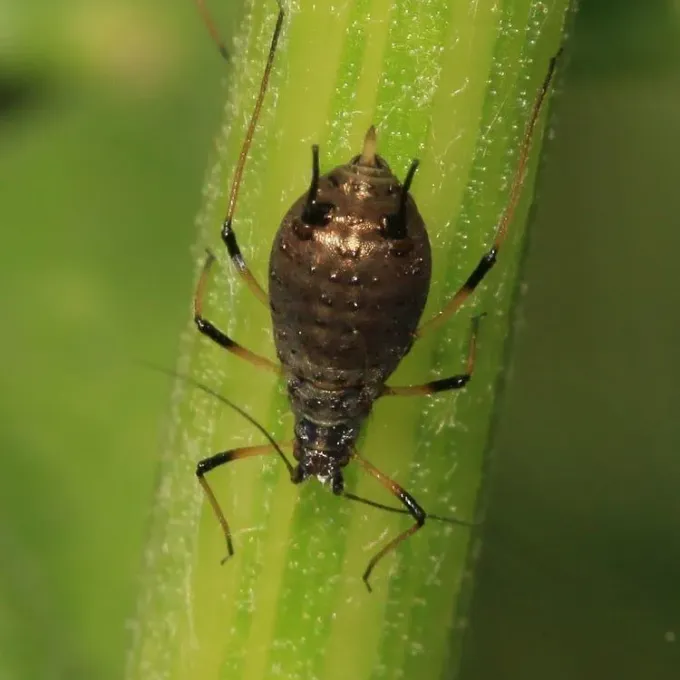
The dandelion aphid (Uroleucon taraxaci) is a specialized insect species belonging to the family Aphididae. Adults typically exhibit a dark brown to black body color with long legs and prominent cornicles.
This species is characterized by a colonial lifestyle, clustering on specific parts of dandelion plants. The body is pear-shaped, and the antennae are notably long, often exceeding the total body length.
As a monophagous species, it relies exclusively on plants within the genus Taraxacum. This specialization makes identification relatively straightforward in nature.
The reproductive strategy includes both parthenogenetic and sexual cycles, allowing for rapid population growth when environmental conditions are optimal.
Common predators such as lady beetles, lacewing larvae, and syrphid flies are frequently associated with these aphid colonies, acting as natural population regulators.
What it damages
The primary damage is caused by the aphid's constant sap-feeding from the host plant's tissues, specifically the flower stalks and leaves.
Heavy infestations lead to stunted growth, distortion of the flower stalks, and premature wilting of the buds. This significantly impacts the host plant's ability to produce seeds.
Nutrient depletion caused by the aphids weakens the dandelion, making it less vigorous during the peak growth season.
Furthermore, this aphid species serves as a vector for various plant viruses, which can potentially spread to neighboring horticultural crops.
The production of honeydew promotes the growth of sooty mold, which coats leaves and inhibits essential physiological processes like photosynthesis.
When it appears
The life cycle begins in early spring as eggs hatch into stem mothers. These initial generations start the colonization process on young dandelion leaves.
Peak activity is observed during the flowering period of the host plant, usually spanning from late spring to early summer in temperate climates.
Throughout the season, the aphid undergoes several generations, including the production of winged individuals that facilitate dispersal to new dandelion patches.
As temperatures rise and the quality of the host plant declines later in the summer, the aphid population tends to decrease.
With the onset of autumn, sexual forms appear, leading to the deposition of overwintering eggs, which remain dormant until the following spring.
Signs of infestation
Visible colonies of dark-colored aphids clustered on the undersides of leaves or along the flower stalks are the most reliable indicator.
Increased ant activity around dandelion plants is a strong sign of an aphid infestation, as ants are attracted to the sugary honeydew secretions.
Leaf curling, yellowing, or distortion around the feeding sites often indicates that the aphids have been feeding for an extended period.
A sticky, shiny residue on the leaf surface, often turning black due to the accumulation of sooty mold, is a typical symptom of aphid presence.
Unexpected drooping or failure of flower buds to open properly is a classic sign of vascular fluid loss caused by the aphid's feeding habits.
Control measures
Cultural control involves the mechanical removal of dandelions before they reach the flowering stage, which effectively eliminates the pest's habitat.
Encouraging natural predators, such as ladybugs and hoverflies, is a sustainable method for managing aphid numbers in garden environments.
If chemical intervention is necessary, the use of contact insecticides may be applied, ensuring they are suitable for use in the specific area.
Soap-based sprays can be an effective, eco-friendly remedy to reduce population levels in small, infested patches without harming beneficial insects.
- Regular weeding and garden sanitation.
- Enhancing biodiversity to support predators.
- Spot-treating with insecticidal soap solutions.
Taxonomy
- Latin name
- Uroleucon taraxaci
- Order
- Hemiptera (bugs, aphids, leafhoppers)
- Family
- Aphididae
- EPPO code
- DACTTR
Discussion
No discussions yet — be the first.