
Tansy aphid
Uroleucon tanaceti
Description
How to identify
The tansy aphid (Uroleucon tanaceti) is a member of the Aphididae family within the Hemiptera order. It is a specialist feeder that targets plants belonging to the Asteraceae family.
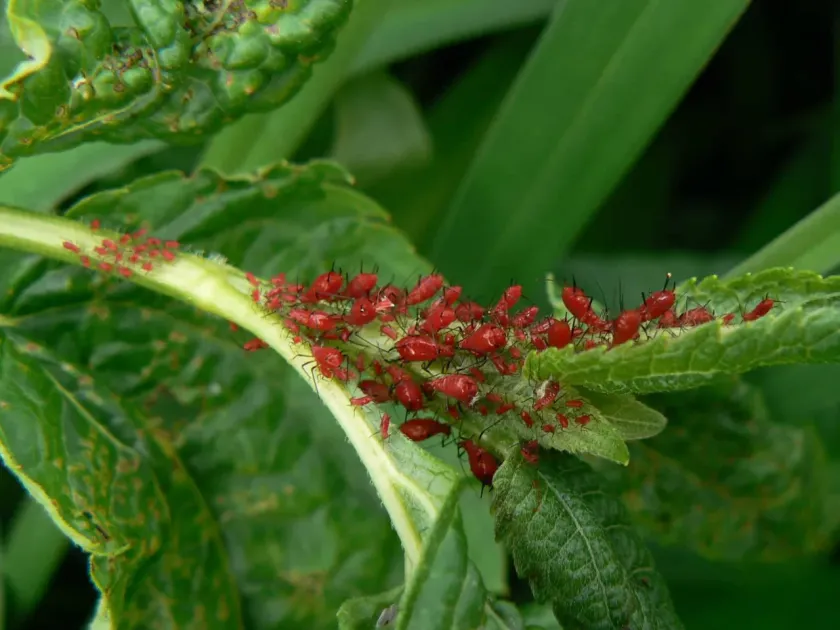
Adult aphids typically range from 2 to 3.5 mm in length. Their bodies are usually dark brown or reddish-maroon, providing excellent camouflage against the stems of their host plants.
One of the most distinctive identification features is the pair of very long, dark siphunculi and long antennae that often exceed the length of the body itself.
The species exhibits both wingless (apterous) and winged (alate) forms, allowing for efficient colonization and dispersal across different patches of host plants during the growing season.
They possess a long rostrum, an organ specifically adapted for piercing the epidermis and accessing the phloem sap of tansy and related plants.
What it damages
The primary host is the common tansy, Tanacetum vulgare. The aphid can also impact other Asteraceae species if they are growing nearby in gardens or wild environments.
By sucking the sap from the plants, these aphids deprive the host of essential nutrients and water, leading to weakened growth and reduced vigor.
Heavy infestations lead to the distortion of shoot tips, curling of leaves, and deformation of flowers, which significantly diminishes the ornamental or medicinal value of the crop.
The excretion of honeydew attracts secondary problems, such as sooty mold growth, which covers the leaves in a black, powdery substance that interferes with photosynthesis.
In the context of herb production, damage by Uroleucon tanaceti can cause a significant decline in the accumulation of secondary metabolites, such as essential oils, making the harvest less profitable.
When it appears
Tansy aphids overwinter as eggs on the basal parts of the host plant. They hatch early in the spring as soon as the plant begins to produce new, succulent growth.
Peak populations are usually observed during the late spring and early summer, specifically throughout June and July, when temperatures are favorable for rapid asexual reproduction.
During the warmer months, they produce multiple overlapping generations. Each generation can develop extremely quickly under the right climatic conditions.
Towards the end of the season, when day length decreases and food quality drops, sexual morphs appear to mate and lay winter eggs, ensuring the survival of the species until the following spring.
The biological cycle is strictly synchronized with the vegetative rhythm of the host, ensuring that aphids have access to the most nutrient-rich plant parts during their peak development phases.
Signs of infestation
Visible symptoms begin with the curling of the apical leaves and the inhibition of terminal growth, which makes the plant look stunted and unhealthy.
Close inspection of the stem tips reveals dense clusters of dark, pear-shaped insects, often attended by ants that protect them from predators.
Leaves often appear shiny and sticky due to the honeydew secretion. This stickiness is a primary indicator of an active aphid colony in the immediate vicinity.
The presence of a black powdery covering on the foliage indicates that a sooty mold infection has established itself on the honeydew, signifying an advanced stage of infestation.
Finally, yellowing or premature wilting of the floral buds is a common sign of nutritional depletion caused by intensive feeding on the reproductive structures of the plant.
Control measures
Cultural control involves maintaining weed-free zones around the tansy patch, as many weeds can act as secondary reservoirs for the species.
Encouraging natural predators such as ladybirds, lacewings, and parasitic wasps is a highly effective way to keep aphid populations below the economic injury level.
- Apply systemic insecticides during the pre-flowering stage.
- Use insecticidal soaps for localized, non-toxic management.
- Prune and destroy heavily infested plant tips to stop local spread.
- Monitor plants frequently starting in late spring for early signs.
- Use physical barriers or water sprays to dislodge colonies from smaller plants.
It is vital to avoid broad-spectrum pesticides during the flowering stage to protect pollinating insects, which are essential for the health of the ecosystem.
Integrative pest management practices, including balanced fertilization and proper site selection, help ensure that the plants are resilient enough to tolerate minor aphid pressure.
Taxonomy
- Latin name
- Uroleucon tanaceti
- Order
- Hemiptera (bugs, aphids, leafhoppers)
- Family
- Aphididae
- EPPO code
- DACTTN
Discussion
No discussions yet — be the first.