
Hieracium aphid
Uroleucon obscurum
Description
How to identify
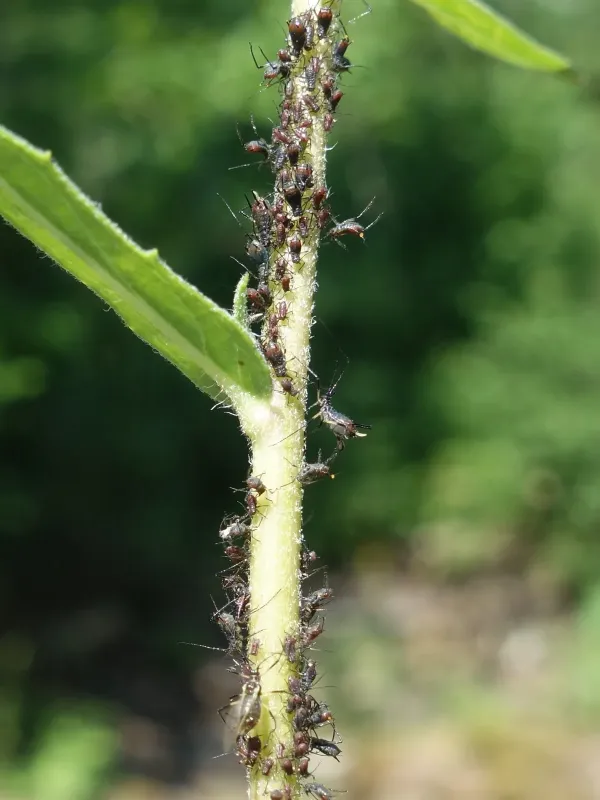
The Hieracium aphid (Latin: Uroleucon obscurum) is a member of the Aphididae family, order Hemiptera. This species is easily recognizable by its dark, often reddish-brown or black body color, providing camouflage against the stems of its host plants.
Adult aphids possess elongated bodies and notably long, black siphunculi, which are key diagnostic features for identifying this particular species within the genus.
The biological lifecycle is typically monocyclic, with the aphid reproducing via parthenogenesis and viviparity throughout the active growing season.
Winged forms appear primarily to facilitate migration between host plants or in response to declining food quality within the established colony.
Winter survival is achieved through the overwintering of eggs, typically deposited on the perennial parts of host plants, which allows for rapid re-colonization in early spring.
What it damages
The primary hosts for Uroleucon obscurum are plants within the genus Hieracium, though it can also infest other Asteraceae species found in meadows and agricultural fields.
The aphids feed by piercing the plant tissues and extracting sap from young leaves, buds, and terminal stems, which leads to significant physiological stress.
High population densities can cause severe stunting and deformation of plant organs, reducing the overall vitality and reproductive success of the infested host.
The production of honeydew as a byproduct of feeding creates an ideal environment for sooty mold growth, which inhibits photosynthesis by covering leaf surfaces.
Continued infestation often leads to the chlorosis of leaves and the premature drying of flowers, significantly impacting seed production in seed-growing operations.
Signs of infestation
Initial signs of infestation include the curling and yellowing of terminal leaves, where the aphids tend to concentrate in dense, dark-colored colonies.
A sticky, shiny residue on leaves, known as honeydew, is a classic indication of an active aphid infestation that requires immediate inspection.
The presence of ants attending to the colonies is a strong indicator of aphid activity, as ants protect them to harvest the nutritious honeydew.
Distortion of the stems and flower heads, combined with the presence of cast-off skins (exuviae), confirms that the aphids are actively molting and growing.
In advanced cases, the blackening of leaves caused by sooty mold colonization is visible, indicating that the infestation has reached a critical stage.
Control measures
Proactive monitoring is the foundation of management; regular field inspections allow for the detection of colonies before they reach damaging levels.
Cultural practices, specifically the elimination of weed hosts like wild Hieracium in the surrounding area, help reduce the reservoir population of the pest.
Conserving natural enemies such as lady beetles, lacewings, and hoverflies is highly effective for maintaining aphid populations below economic damage thresholds.
When chemical intervention is necessary, systemic insecticides applied during the early stages of the infestation provide the best control while minimizing non-target impacts.
Implementing an integrated pest management (IPM) approach, including the rotation of active ingredients, is essential to prevent the development of insecticide resistance.
Taxonomy
- Latin name
- Uroleucon obscurum
- Order
- Hemiptera (bugs, aphids, leafhoppers)
- Family
- Aphididae
- EPPO code
- DACTOB
Discussion
No discussions yet — be the first.