
Eupatorium aphid
Uroleucon gravicorne
Description
How to identify
The Eupatorium aphid (Uroleucon gravicorne) belongs to the family Aphididae. These are small, sap-sucking insects that are specialized to thrive on specific host plants within the Asteraceae family.
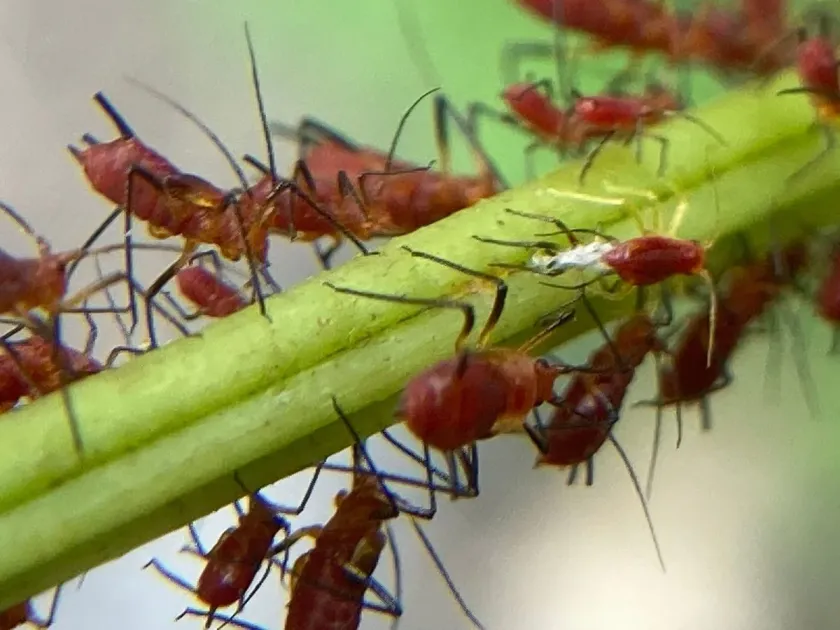
Adults typically measure between 2 and 3.5 mm in length. Their body color ranges from dark brown to reddish-black, allowing them to blend into the stems and buds of the host plant.
The body is characteristically pear-shaped, which is a hallmark of the Uroleucon genus. They possess long, dark legs and antennae that are well-adapted for movement across foliage.
The siphunculi, located on the posterior end of the abdomen, are dark and possess a unique reticulated pattern at the tips, which is a key diagnostic feature for identification.
They exhibit a complex life cycle, alternating between asexual reproduction during the spring and summer and sexual reproduction in the fall to ensure overwintering.
What it damages
The primary host for this species is the Eupatorium (Joe-Pye weed) genus, but they can occasionally infest other closely related ornamental plants in the Asteraceae family.
Aphids tend to congregate on young shoots, tender leaves, and developing flower buds, where the concentration of phloem sap is highest and easiest to access.
By constantly extracting plant sap, the aphids rob the host of vital nutrients, leading to reduced vigor, stunted growth, and the distortion of new leaf tissue.
Beyond physical damage, they are potential vectors for plant viruses, which can cause mosaic patterns or overall decline in ornamental plant health.
The removal of excessive nutrients often results in poor flower production, which is particularly detrimental to the aesthetic value of ornamental Eupatorium plantings.
When it appears
The activity cycle of this aphid typically begins in early spring, as temperatures rise and new growth appears on the perennial host plants.
The population reaches its maximum density during late spring and early summer when the weather is consistently warm and favorable for rapid reproduction.
During the hottest months of summer, the population may fluctuate, often migrating to more sheltered areas of the plant or declining as tissues harden.
As autumn approaches, the cycle shifts towards the production of sexual forms that mate and lay overwintering eggs on plant debris or stem bases.
There can be multiple overlapping generations in a single season, meaning that population numbers can escalate very quickly if left unmonitored by the gardener.
Signs of infestation
The most noticeable sign of an infestation is the curling and yellowing of the youngest leaves, which often hide the aphid colonies underneath.
The presence of honeydew, a sticky, sugary substance secreted by the aphids, creates a shiny appearance on the leaves and stems of the plant.
Increased ant activity on the stems is a reliable indicator of aphid presence, as ants protect the aphids to feed on the honeydew they produce.
A black, sooty mold often develops on the honeydew deposits, which blocks light and impairs the plant's ability to perform photosynthesis effectively.
- Leaf rolling and twisting.
- Stunted shoot elongation.
- Sticky residue on foliage.
- Failure of flower buds to open properly.
Control measures
Cultural control is the first line of defense, involving the removal of weeds and plant debris around the garden to eliminate overwintering sites for aphid eggs.
Small infestations can be managed using high-pressure water sprays or insecticidal soaps, which are effective and have minimal impact on beneficial insects.
For more severe cases, systemic insecticides can be applied; these chemicals are absorbed by the plant and provide long-term protection against sap-feeders.
Promoting a garden environment rich in natural predators, such as lady beetles, lacewings, and hoverflies, is a highly recommended long-term sustainable strategy.
Regular inspection of the upper growth points of your plants during the early season is essential to detect and treat the aphid population before it spreads.
Taxonomy
- Latin name
- Uroleucon gravicorne
- Order
- Hemiptera (bugs, aphids, leafhoppers)
- Family
- Aphididae
- EPPO code
- DACTGR
Discussion
No discussions yet — be the first.