
Composite aphid
Uroleucon compositae
Description
How to identify
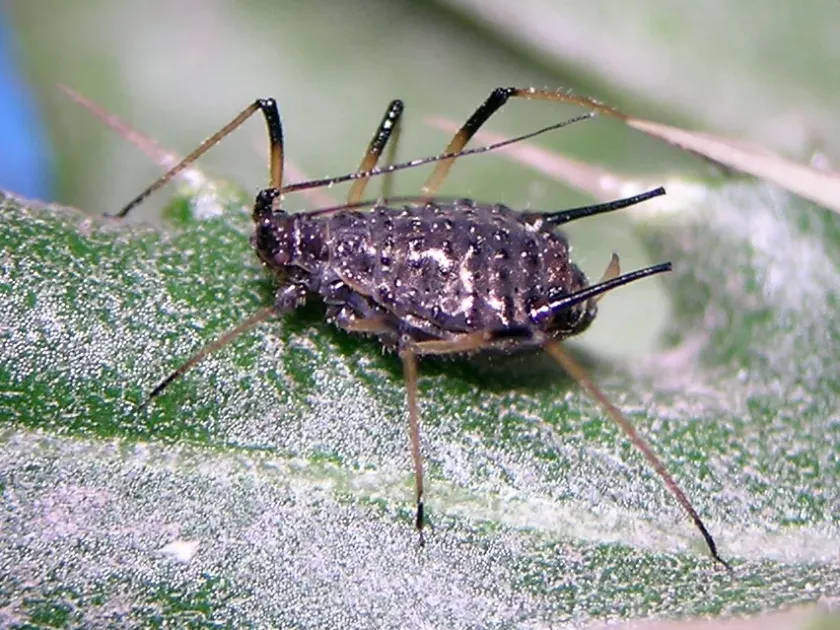
The composite aphid (Uroleucon compositae) belongs to the family Aphididae, within the order Hemiptera. These insects are characterized by a pear-shaped body, typically ranging from dark brown to reddish-black in color.
A key identifying feature of this species is the presence of long siphunculi (cornicles) and relatively long antennae that typically exceed the length of the aphid's body.
The colony consists of both wingless forms, which feed and reproduce locally, and winged forms that facilitate dispersal to new host plants during the growing season.
Development proceeds via incomplete metamorphosis. Under favorable conditions, the aphid reproduces parthenogenetically, allowing for extremely rapid population growth.
They are primarily found colonizing the undersides of leaves, young shoots, and flower heads of various plants, which makes them easy to spot during regular inspections.
What it damages
The primary hosts for Uroleucon compositae are members of the Asteraceae family. Major agricultural crops such as sunflowers and safflowers are particularly susceptible to infestation.
These aphids also utilize various weed species, such as thistle and mugwort, as reservoirs, which allows them to persist near agricultural lands throughout the season.
By feeding on phloem sap, the aphids extract essential nutrients, causing stunted growth, leaf curling, and overall physiological weakness in the host plants.
In sunflower cultivation, severe infestations during the flowering and seed-filling stages can lead to significant yield losses and reduced oil quality.
Furthermore, aphids are efficient vectors for plant viruses, meaning that even low populations can trigger widespread disease outbreaks in a field.
When it appears
The lifecycle begins in the spring when overwintered eggs hatch into fundatrices. These initial insects start the cycle for the upcoming growing season.
The peak population density typically occurs during mid-summer, coinciding with the rapid growth and reproductive phases of host crops like sunflowers.
Warm, dry weather provides optimal conditions for reproduction, enabling the aphid to complete multiple generations in a very short period.
As temperatures drop and day length decreases in the autumn, the population transitions to sexual reproduction to lay eggs, which overwinter on plant debris.
Understanding these seasonal dynamics is crucial for timing scouting efforts and implementing control measures before the population reaches an uncontrollable level.
Signs of infestation
The first signs of infestation include leaf curling and yellowing, which occur as the insects draw fluids from the plant tissues.
A sticky substance known as honeydew is often observed on the leaves. This excretion not only weakens the plant but also encourages the growth of sooty mold.
Affected plants often show reduced vigor, stunted shoot development, and sometimes premature wilting of the floral heads, indicating significant sap loss.
The presence of large, dark-colored aphid colonies on the underside of leaves or on stems is the most direct evidence of a pest outbreak.
An increased presence of ants on the plants is a strong indicator of aphid activity, as the ants feed on the honeydew and actively protect the aphid colonies.
Control measures
Effective management of the composite aphid relies on a combination of cultural, biological, and chemical control strategies.
- Managing field margins by removing Asteraceae weeds that host the aphids.
- Promoting natural predators like ladybugs, lacewings, and parasitic wasps.
- Implementing crop rotation to break the pest's reproductive cycle.
- Applying systemic insecticides only when economic thresholds are exceeded.
- Balancing nitrogen fertilization to prevent the development of overly succulent tissues.
When chemical intervention is necessary, it is essential to choose products that minimize harm to beneficial insects and pollinators.
Scouting should be conducted regularly to monitor colony density and the activity of natural enemies before deciding on treatment.
Integrated Pest Management (IPM) practices ensure that control measures remain sustainable while maintaining the quality and yield of the harvest.
Taxonomy
- Latin name
- Uroleucon compositae
- Order
- Hemiptera (bugs, aphids, leafhoppers)
- Family
- Aphididae
- EPPO code
- DACTCO
Discussion
No discussions yet — be the first.