
Chicory aphid
Uroleucon cichorii
Description
How to identify
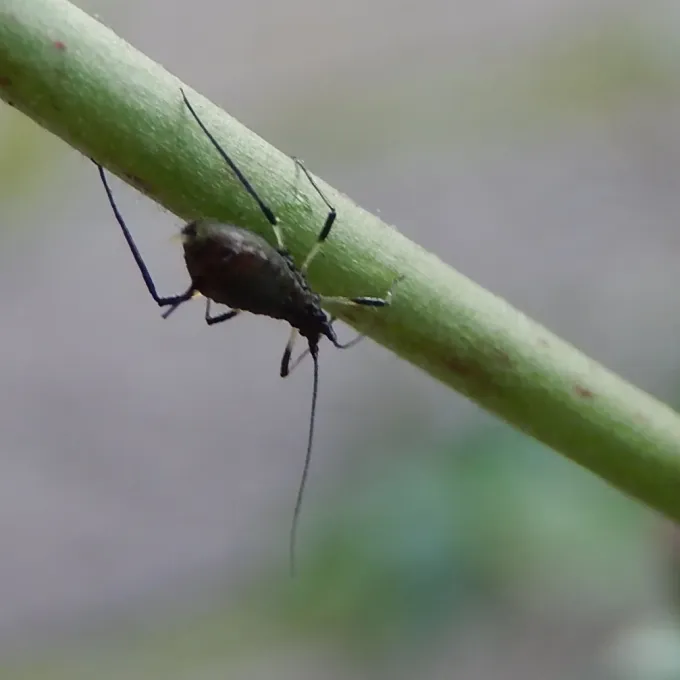
The chicory aphid (Uroleucon cichorii) is a specialist aphid species belonging to the family Aphididae. It is characterized by its reddish-brown to dark brown body color, which allows it to blend into the stems and leaves of its host plants effectively.
Adult aphids are typically 2-3 mm long with a pear-shaped body. A distinctive morphological feature is the presence of long, black-colored siphunculi (tubes) at the tip of the abdomen, which is a reliable characteristic for field identification of this species.
These aphids occur in both winged and wingless forms. The winged adults are essential for the dispersal and colonization of new host plants during the summer months, while the wingless forms ensure rapid reproduction within established colonies.
Colonies usually congregate on the upper parts of shoots, flower buds, and the underside of leaves. Due to their tendency to feed in dense groups, they are highly visible, which helps in identifying infested spots early before the population spreads uncontrollably.
Their life cycle involves continuous parthenogenetic reproduction during the growing season. This biological strategy allows them to increase their numbers exponentially under favorable conditions, making them a significant pest in chicory and related crops.
What it damages
The primary hosts of this aphid include various varieties of chicory (both witloof and common chicory) and related members of the Asteraceae family. They feed on plant sap, depriving the plant of essential nutrients and moisture.
The damage caused by feeding leads to curled, deformed leaves and stunted plant growth. By injecting saliva into the plant tissue, the aphids disrupt normal development, causing the plant to become stressed and chlorotic, which eventually impacts crop yield and quality.
Beyond direct physical damage, these aphids are vectors for several plant viruses. A minor aphid infestation can sometimes result in systemic viral infection, which is often more damaging than the direct feeding of the insects themselves.
The accumulation of honeydew (a sugary waste product) on the leaves creates an ideal environment for the growth of sooty mold. This fungus not only reduces the photosynthetic capacity of the plant but also significantly degrades the market value of the produce.
In hot and dry conditions, the damage is amplified. Plants under water stress have less ability to recover from sap loss, leading to a rapid decline in plant health and, in severe cases, the potential death of young or weakened seedlings.
When it appears
The activity of the chicory aphid begins in late spring as temperatures rise. Initial colonies are typically found on overwintering weeds or early-emerging host plants, serving as a source for migration into commercial fields.
The peak development phase occurs during the summer months when environmental conditions are optimal for aphid metabolic rates. Warm weather and moderate humidity accelerate the reproductive cycle, leading to rapid population surges.
Winged forms migrate between fields throughout the summer, ensuring that new patches of host plants are constantly colonized. This movement makes it challenging to contain the pest once the population has reached a certain density.
As autumn approaches and temperatures drop, the aphid reproduction rate slows down. The insects prepare for overwintering by sheltering on the lower parts of plants or on perennial weeds, surviving until the next growing season.
Understanding the seasonal dynamics is critical for pest management. Farmers should prioritize monitoring during the peak growth stages of the crop, as this is when the impact of the aphids on the final yield is the greatest.
Signs of infestation
The most common sign of infestation is the curling and twisting of young leaves. This deformation occurs due to the physiological impact of aphid feeding at the growing points of the plant.
Leaves often appear shiny and sticky due to the presence of honeydew. This substance is a clear indicator of aphid presence, often accompanied by the growth of a black, powdery sooty mold that covers the leaf surface.
Increased ant activity around the plants is a strong indicator of aphid colonization. Ants are attracted to the honeydew and often act as protectors, driving away natural predators like ladybugs or lacewings that would otherwise control the aphid population.
Chlorosis, or the yellowing of leaves, is a frequent symptom of prolonged feeding. Affected plants appear pale and lack the vigor of healthy plants, often showing signs of wilting even when soil moisture is adequate.
- Curled and deformed leaf growth.
- Sticky honeydew deposits on foliage.
- High levels of ant activity on stems.
- Presence of black sooty mold.
- General chlorosis and stunted growth.
Control measures
Effective management begins with good cultural practices, such as crop rotation and the removal of weed hosts from field margins. Reducing the proximity of chicory fields to wild Asteraceae plants significantly limits the initial influx of aphids.
Biological control plays a vital role in maintaining aphid numbers. Encouraging natural enemies like ladybirds, hoverflies, and lacewings is essential. Avoiding the prophylactic use of broad-spectrum insecticides helps preserve these beneficial predator populations.
Chemical control should be applied only when the economic injury level is reached. When necessary, systemic insecticides are generally preferred as they provide effective control by targeting aphids hidden within the plant tissues.
It is important to select products that are selective where possible to protect pollinators and natural enemies. Applications should be timed carefully, avoiding peak hours of pollinator activity to minimize environmental impact.
Regular field scouting is the most effective tool in the management of chicory aphids. Early detection allows for spot treatments, which are more environmentally and economically sustainable than full-field applications of chemicals.
Taxonomy
- Latin name
- Uroleucon cichorii
- Order
- Hemiptera (bugs, aphids, leafhoppers)
- Family
- Aphididae
- EPPO code
- DACTCI
Discussion
No discussions yet — be the first.