
Safflower aphid
Uroleucon carthami
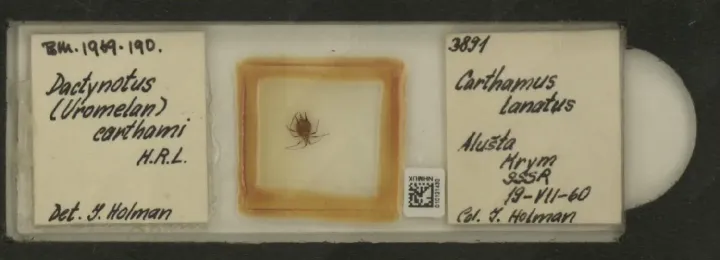
Description
How to identify
The safflower aphid (Uroleucon carthami) is a member of the Aphididae family, order Hemiptera. It is a specialized pest specifically adapted to feeding on plants within the Asteraceae family.
Adult aphids typically exhibit a dark brown, reddish-brown, or near-black coloration. They generally measure between 2 to 3 mm in length, featuring distinct long dark siphunculi and a cauda.
The species exists in both apterous (wingless) and alate (winged) forms. The winged individuals are critical for the dispersal and colonization of new host plants across the field.
The life cycle involves multiple nymphal stages, which resemble miniature versions of the adults. The population growth rate is highly dependent on environmental conditions, particularly temperature.
Being a monoecious species, it completes its entire life cycle on safflower or related Asteraceae hosts without the need for an alternate primary host plant.
What it damages
The primary economic host is the safflower (Carthamus tinctorius). The aphid also utilizes wild Asteraceae weeds, which act as secondary reservoirs for the pest.
The aphids primarily target soft, meristematic tissues such as young leaves, stems, and developing flower heads, which are essential for yield formation.
By removing plant sap, the aphids drain critical nutrients, which directly leads to stunted growth, reduced seed development, and decreased oil content in the harvest.
High infestation levels in the early growth stages of the crop can result in significant yield losses if left unmanaged, threatening the profitability of the safflower production.
The damage extends beyond direct sap removal; the stress caused by the infestation renders the crop more susceptible to various environmental stresses and secondary pathogens.
When it appears
Infestation typically begins during the rosette stage and progresses through the stem elongation period, reaching peak activity during the budding and early flowering phases.
Moderate temperatures and high humidity create favorable microclimates that allow aphid populations to multiply rapidly, potentially covering large plant surfaces within days.
As the season progresses and the plants reach maturity, the hardening of plant tissues makes them less attractive to aphids, leading to a natural decline in population density.
Alate forms primarily migrate between fields during the warmest hours of the day, using wind currents to expand the infestation area across agricultural landscapes.
Environmental fluctuations, such as extreme heat or heavy rainfall, can temporarily curb population growth, but the species' high reproductive capacity ensures quick recovery.
Signs of infestation
The initial signs of an infestation include the curling and twisting of young leaves. A sticky substance known as honeydew is secreted, covering the foliage.
Sooty mold fungus often grows on the honeydew deposits, resulting in a black, powdery appearance on the leaves that severely inhibits the plant's photosynthetic capacity.
- Curled and discolored yellowing of leaf tips.
- Presence of ants, which protect aphid colonies in exchange for honeydew.
- Deformed or undersized floral heads.
- General vigor loss and stunted plant height.
Colonies can be visually spotted on the undersides of leaves and near the base of flower heads. Close inspection often reveals densely packed clusters of aphids.
If left unaddressed, the aesthetic and physiological damage significantly lowers the grade of the seeds and reduces overall crop output at the time of harvesting.
Control measures
Crop rotation is a fundamental management practice that prevents the buildup of the aphid population within a specific field over consecutive growing seasons.
Effective weed management, focusing on the removal of Asteraceae weeds, is essential to minimize the local reservoir of the pest and prevent cross-infestation.
Biological control, facilitated by preserving natural enemies like lady beetles, lacewings, and hoverflies, plays a vital role in natural population suppression.
Chemical control using systemic insecticides is necessary when infestation thresholds are exceeded. These products effectively target aphids hidden in protected plant parts.
Monitoring the field for early signs of colonization using sticky traps or regular scouting is crucial for timely intervention before the pest reaches economic damage levels.
Taxonomy
- Latin name
- Uroleucon carthami
- Order
- Hemiptera (bugs, aphids, leafhoppers)
- Family
- Aphididae
- EPPO code
- DACTCA
Discussion
No discussions yet — be the first.