
Yarrow aphid
Uroleucon achilleae
Description
How to identify
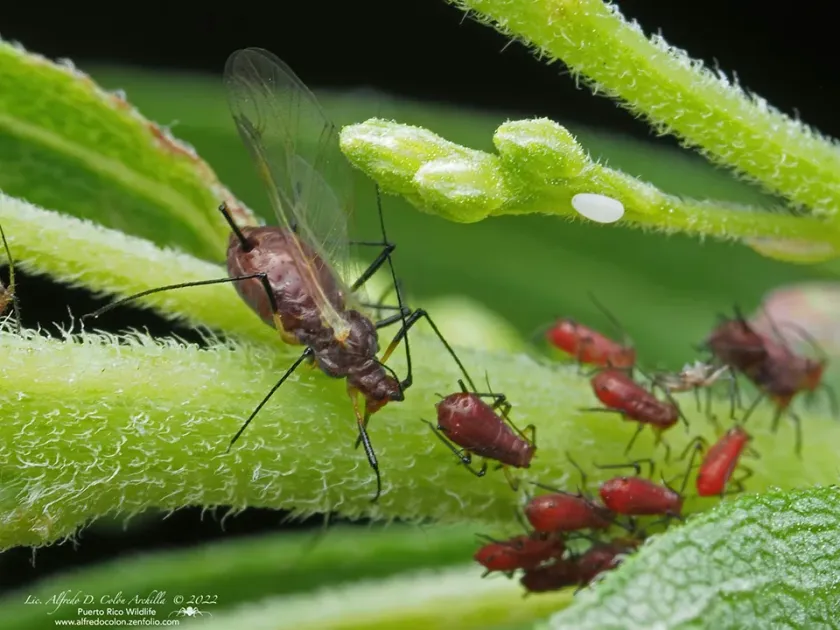
The yarrow aphid (Uroleucon achilleae) is a host-specific insect species belonging to the family Aphididae. These aphids typically exhibit a dark reddish-brown or deep mahogany coloration.
Adult individuals generally grow between 2 and 3 mm in length. A key identification feature of this species is its long, dark antennae and elongated dark cornicles (siphunculi) on the end of the abdomen.
They live in colonies, frequently clustering on the softest, most nutrient-rich parts of the plant, such as tender new growth and developing flower buds.
The life cycle involves multiple generations per season, with high reproductive potential that allows colonies to expand rapidly under favorable weather conditions.
Winged forms appear when colony density becomes too high, allowing the pest to disperse to new, less crowded parts of the host plant or to neighboring plants.
What it damages
The primary host for this pest is yarrow (Achillea), encompassing both wild varieties and ornamental garden cultivars. The aphid feeds by piercing plant tissues and extracting nutrient-rich sap.
Feeding on apical shoots and flower stems severely stunts plant growth and causes distortion, which ruins the appearance of ornamental displays.
Affected leaves often turn yellow, curl up, and drop prematurely, which disrupts the photosynthetic ability of the plant and lowers its overall vigor.
In addition to direct physical harm, these aphids are known vectors for various plant viruses, which can lead to long-term decline or death of the host plant.
The excretion of honeydew promotes the growth of sooty mold, a black fungus that covers leaves, blocking sunlight and further stressing the already weakened plant.
When it appears
The species survives the winter in the egg stage, typically deposited near the base of the plant or on the lower remaining foliage.
Spring activity begins as soon as temperatures rise, with nymphs hatching and immediately establishing colonies on emerging spring growth.
Summer is the period of peak activity and maximum population growth, often lasting through July, depending on the local climate and temperature.
As autumn approaches, the population shifts, and sexual forms appear to ensure the survival of the next generation through the winter months.
Environmental factors, such as humidity and the presence of natural predators, play a significant role in regulating population spikes throughout the season.
Signs of infestation
One of the earliest signs of infestation is the curling and distortion of young leaves at the top of the stem, often accompanied by stunted growth.
Clustered colonies of dark-colored insects visible on the underside of leaves or directly on flower buds provide clear evidence of an active population.
A sticky, shiny residue on the surface of the leaves indicates the presence of aphid honeydew, which is a classic symptom of significant infestation.
Increased ant activity around the plants is a tell-tale sign, as ants are often seen tending to aphid colonies to harvest the sweet honeydew they produce.
The development of black, powdery sooty mold on the foliage is a strong indicator that the aphid colony has been established for an extended period.
Control measures
Integrated pest management starts with cultural practices, such as removing weeds and limiting the nesting sites of ants that protect aphid colonies.
Encouraging natural predators like lady beetles, hoverflies, and lacewings is an effective long-term biological strategy for keeping aphid numbers in check.
Mechanical removal by spraying plants with a strong stream of water can be very effective for small, localized infestations in home gardens.
- Applying potassium-based insecticidal soaps to safely eliminate colonies on contact without leaving harmful residues.
- Using systemic insecticides for severe outbreaks on ornamentals, strictly following labels to avoid impacting pollinators.
- Conducting routine inspections of the garden to identify and address initial colonization before it spreads across the entire plant collection.
Always rotate insecticide active ingredients to reduce the risk of the aphid population developing resistance to chemical control methods.
Taxonomy
- Latin name
- Uroleucon achilleae
- Order
- Hemiptera (bugs, aphids, leafhoppers)
- Family
- Aphididae
- EPPO code
- DACTAC
Discussion
No discussions yet — be the first.