
Kirk's slug
Urocyclus kirkii
Description
How to identify
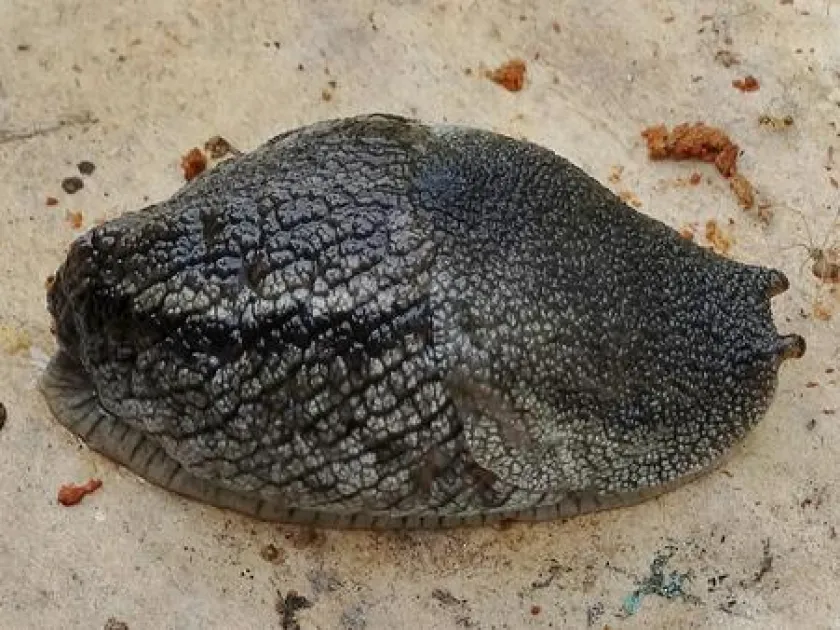
Kirk's slug (Urocyclus kirkii) belongs to the family Urocyclidae and the order Stylommatophora. It is a terrestrial gastropod mollusk known for its elongated, mucus-covered body which is crucial for retaining moisture.
The coloration of this species typically ranges from grey to brownish, often marked with darker spots or stripes along the mantle, providing effective camouflage against soil and decaying organic matter.
Like most slugs, this pest is primarily nocturnal. It spends daylight hours hidden in damp, cool environments such as under stones, wood, or dense vegetation to avoid dehydration from sunlight.
Field identification involves regular monitoring using bait traps or boards placed on the soil surface, which attract slugs and provide a clear overview of the current population density.
The anatomy of the slug includes a powerful muscular foot, enabling it to climb various plant stems and leaves, making both ground-level and aerial parts of the plant vulnerable to feeding.
What it damages
This slug is a polyphagous pest, meaning it feeds on a diverse range of botanical species, including vegetable crops like lettuce, cabbage, strawberries, and various nursery seedlings.
Feeding damage is characterized by large, irregular holes in leaves. In severe infestations, the slugs may consume entire leaves, leaving only the toughest vascular veins behind.
The pests also target fruits and subterranean parts of plants. This not only directly reduces yields but also creates entry points for secondary bacterial and fungal infections.
Young seedlings are particularly susceptible; a single slug can destroy a small plant by eating the growing point, resulting in stunted development or the immediate death of the plant.
Marketable produce is frequently downgraded or discarded because of the presence of slug mucus and excrement, which are aesthetically unappealing and may harbor pathogens.
When it appears
The life cycle and activity of Kirk's slug are heavily dictated by environmental humidity and temperature. Optimal conditions for the species involve cool, damp weather with frequent precipitation.
In spring, as soil temperatures rise, slugs emerge from dormancy and begin feeding on early vegetation. This is a critical period for crop protection, as younger plants are most vulnerable to attack.
Summer activity depends on moisture levels; while extreme heat and drought limit their mobility, irrigation or high humidity levels encourage the slugs to remain active throughout the summer months.
Autumn marks a peak in activity, as slugs feed intensively to build up energy reserves before wintering. During this time, they also lay eggs in the soil, ensuring the next generation.
Winter survival is achieved by retreating deep into the soil profile or hiding under sheltered debris, where they enter a state of reduced metabolic activity until favorable conditions return.
Signs of infestation
The most prominent sign of infestation is the appearance of glistening, silvery mucous trails left behind on leaves, soil surfaces, and plant stems as the slug moves.
Leaf damage often manifests as "window-paning" or large, ragged holes. The specialized rasping tongue, known as the radula, allows the slug to scrape plant tissues with great efficiency.
Dark, cylindrical fecal pellets are commonly observed near damaged areas, serving as a reliable indicator of slug activity and localized population hotspots.
Wilting plants, despite adequate irrigation, may be a sign of root collar damage, which is a common but often overlooked consequence of slug feeding at the soil level.
Damage to berries or fruit, particularly those touching the ground, appears as shallow, concave craters that eventually succumb to rot if not harvested quickly.
Control measures
Integrated pest management starts with cultural practices, such as removing debris and weeds that provide hiding spots for slugs, and improving drainage to reduce soil moisture.
Physical barriers such as copper tape, sharp gravel, or abrasive substances like diatomaceous earth or wood ash can create deterrents that slugs are reluctant to cross.
Biological control involves the use of parasitic nematodes (Phasmarhabditis hermaphrodita) or by encouraging natural predators, including hedgehogs, toads, and ground beetles.
Chemical control options include the use of molluscicide pellets containing iron phosphate, which is safer for the environment and domestic animals than traditional metaldehyde-based baits.
Manual collection in the evening or early morning, combined with the use of traps made from moist boards or melon rinds, can significantly reduce population levels in smaller garden areas.
Taxonomy
- Latin name
- Urocyclus kirkii
- Order
- Molluscs
- Family
- Urocyclidae
- EPPO code
- UROYKI
Discussion
No discussions yet — be the first.