
Ummidia picea
Ummidia picea
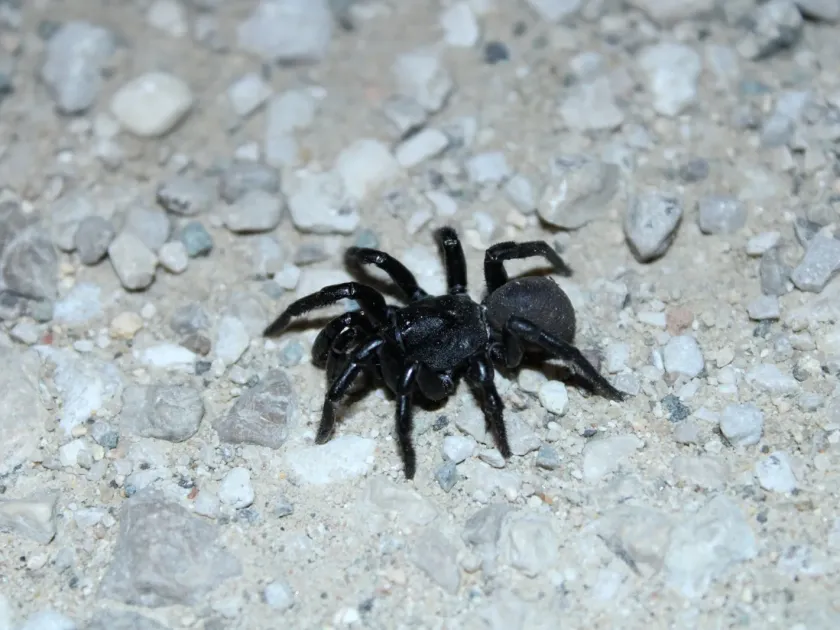
Description
How to identify
Ummidia picea is a spider species belonging to the family Ctenizidae, commonly known as trapdoor spiders, characterized by their robust appearance and dark, shiny exoskeleton.
They are famous for constructing deep burrows in the soil, which are secured with a hinged trapdoor made of silk and camouflaged with local soil particles.
These spiders are primarily nocturnal, spending most of their time hidden inside their burrows, which makes them difficult to observe during standard field checks.
The female Ummidia picea is generally larger and more sedentary than the male, often staying in the same burrow system for long periods of their lifespan.
Their physical structure, including powerful chelicerae, is perfectly adapted for digging and maintaining vertical tunnels in various types of soil substrates.
What it damages
The agricultural impact of Ummidia picea is indirect, primarily associated with their burrowing activities near the root zones of valuable crops and seedlings.
By creating multiple tunnels, these spiders can disrupt the soil structure, leading to increased air penetration or water loss around the roots, which causes stress to the plants.
The disturbance of the root environment can facilitate the entry of soil-borne pathogens and fungi, potentially leading to root decay in sensitive nursery plants.
As predators, their presence in large numbers can disrupt the local balance of beneficial arthropods, which are essential for controlling more harmful agricultural pests.
In greenhouses or specialized cultivation containers, their tunnels can interfere with automated irrigation systems by creating preferential paths for water drainage.
When it appears
The seasonal activity of Ummidia picea is largely dictated by soil moisture levels and ambient temperatures that affect their metabolic rates.
During the spring, when temperatures are favorable, they perform maintenance on their burrows, which may result in visible soil disturbances on the surface.
In the peak summer months, activity usually remains confined to night hours, with the trapdoors firmly closed during the heat of the day to maintain humidity inside the burrow.
Autumn marks a period of lower activity as the spiders prepare for colder weather, with many individuals opting to burrow deeper into the soil profile.
Winter is characterized by a state of metabolic depression, where the spiders remain deep underground to survive frosts and avoid the freezing surface layer.
Signs of infestation
The most common sign of Ummidia picea presence is the appearance of perfectly circular, camouflaged trapdoors on the soil surface within the cultivation area.
Small mounds of excavated soil or slightly indented spots near the base of plants can indicate an active burrow entrance hidden by natural debris.
Plants showing signs of stunted growth without clear signs of foliar pests or leaf damage may be suffering from root zone disruption caused by spider activity.
During nocturnal surveys, using a flashlight at a low angle might reveal the spider's eyes or the movement of the trapdoor as it waits for prey.
Unexpected shifts in soil moisture distribution or unusual drainage patterns in containerized plants can also hint at the presence of burrowing arachnids.
Control measures
Managing Ummidia picea focuses on disrupting their stable habitat through mechanical means, making the soil less attractive for burrow construction.
Regular and deep soil cultivation is highly effective, as it destroys the integrity of the tunnels and forces the spiders to relocate or perish.
Implementing crop rotation and avoiding long-term permanent beds in nursery settings can help limit the population density of these ground-dwelling spiders.
Biological control methods that encourage predatory ground beetles or other natural enemies are preferred over the use of harsh soil insecticides.
- Deep plowing and soil aeration.
- Monitoring soil surface for trapdoor activity.
- Ensuring proper crop spacing to allow light access.
- Physical exclusion methods in greenhouse containers.
Taxonomy
- Latin name
- Ummidia picea
- Family
- Ctenizidae
- EPPO code
- UMMIPI
Discussion
No discussions yet — be the first.