
Cteniza
Cteniza
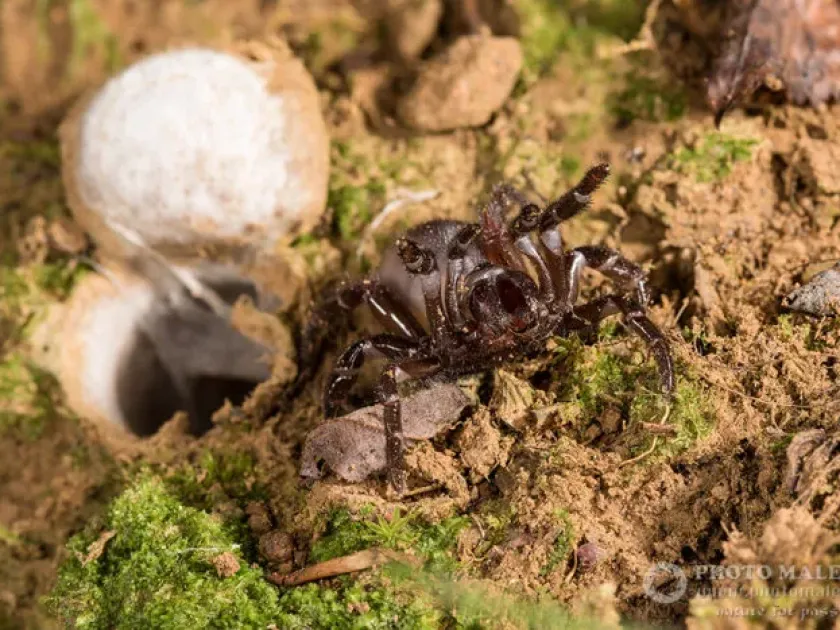
Description
How to identify
Cteniza is a genus of spiders belonging to the Ctenizidae family, commonly known as trapdoor spiders due to their unique method of nest construction.
These spiders are characterized by a robust body structure and powerful chelicerae, specifically evolved to facilitate the digging of deep vertical burrows.
Their coloration is typically dark, ranging from brown to black, which provides excellent camouflage against the soil environment where they reside.
A distinctive feature of their habitat is the camouflaged lid, crafted from silk and soil particles, which seals the burrow entrance when the spider is inside.
Adult individuals can grow to substantial sizes, reflecting their evolutionary success as specialized underground predators in various habitats.
What it damages
Cteniza spiders are not pests of crops in the conventional sense because they are carnivorous and feed on insects, not on plant tissues.
However, they can cause minor damage to seedlings by physically disturbing the soil and cutting through roots while constructing their vertical tunnels.
In cases of high population density in greenhouses or nursery fields, this burrowing activity may weaken young plants by disrupting the root zone environment.
Indirect damage can occur if the digging process increases soil aeration significantly, potentially leading to faster drying out of the root system during hot weather.
Despite these minor negative effects, the presence of these spiders is generally considered harmless to large-scale agriculture.
When it appears
The activity level of Cteniza spiders is heavily dictated by soil temperature, moisture levels, and the seasonal growth cycles of their prey.
Spring is the primary period of surface activity, coinciding with the mating season and the dispersal of spiderlings to establish their own territories.
During the peak of summer, they often retreat deeper into their burrows to escape high temperatures and desiccation, entering a state of dormancy.
Autumn brings a surge in activity as adult spiders repair their burrow structures and prepare for the upcoming winter months.
Since they are long-lived arachnids, individual spiders may maintain the same burrow site for several years if the environment remains stable.
Signs of infestation
The most reliable sign of a Cteniza presence is the discovery of perfectly circular holes in the ground, typically hidden by an earthen door.
Upon closer inspection, one can find silken linings within the upper parts of the tunnel, which serve to reinforce the structural integrity of the soil wall.
Sometimes, small piles of excavated soil outside the burrow entrance indicate recent construction or renovation of the underground nest.
Localized plant wilting in an otherwise healthy field can occasionally be linked to root damage caused by a spider burrow directly beneath the stem.
Signs of these spiders are most commonly found in neglected areas, gardens, or fields that have not been tilled for several growing seasons.
Control measures
Specific chemical control for Cteniza is neither recommended nor economically viable, as they are not classified as major agricultural pests.
The most effective management approach is consistent mechanical cultivation and deep tilling, which destroys the integrity of the tunnels.
These spiders act as beneficial predators within the ecosystem, helping to naturally reduce populations of harmful insect pests in the soil.
Practicing crop rotation and maintaining good soil health through regular cultivation generally discourages the spiders from colonizing row crops.
If physical removal is necessary for small-scale gardening, simply disturbing the soil surface or the burrow lid is usually sufficient to discourage the spider.
Taxonomy
- Latin name
- Cteniza
- Family
- Ctenizidae
- EPPO code
- CTEZSP
Discussion
No discussions yet — be the first.