
Cteniza sauvagesi
Cteniza sauvagesi
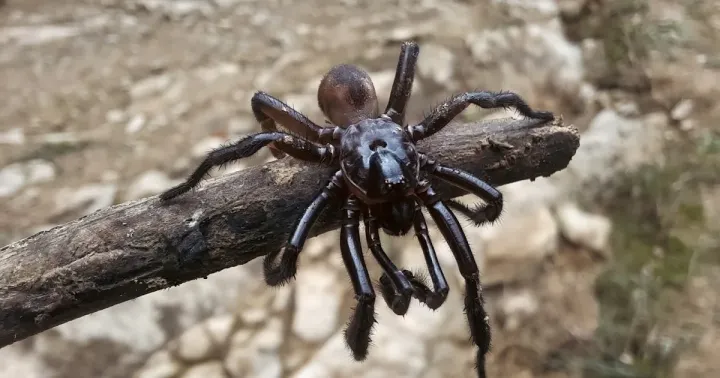
Description
How to identify
Cteniza sauvagesi belongs to the family Ctenizidae, commonly known as trapdoor spiders. These spiders are robust, well-adapted to life beneath the soil surface, and known for their secretive nature.
They possess a thick, armored cuticle and strong, short limbs, which are specialized tools for digging extensive burrows and maintaining their stable homes in the ground.
The coloration of these spiders is typically dark brown or nearly black, providing effective camouflage against the soil background where they spend most of their time.
Adult females are larger and remain within their burrows for most of their lives, only surfacing to ambush prey or during specific reproductive events.
Adult males are more prone to wandering during the mating season, which is often when they are encountered by farmers and agricultural workers on the surface.
What it damages
Cteniza sauvagesi is not a primary crop pest. It is an insectivorous predator that feeds on various ground-dwelling insects and arthropods, rather than plant tissues.
The damage caused is primarily physical, involving the displacement of soil during burrow construction, which can disrupt the structure of the topsoil in very specific conditions.
In highly sensitive agricultural environments, such as nurseries or ornamental plant cultivation, the presence of these burrows might be considered a minor disturbance.
There is no evidence of these spiders consuming crop roots, leaves, or fruits, making them ecologically neutral in terms of direct economic impact on crop yields.
Consequently, they are often viewed as part of the natural soil biodiversity rather than targets for eradication, unless their numbers are exceptionally high.
When it appears
The activity cycle of this species is highly dependent on soil temperature and moisture levels, which fluctuate significantly throughout the agricultural season.
Spring is marked by increased male activity, as individuals leave their burrows to locate females for mating, making them more visible in the field landscape.
During the peak of summer, especially in dry conditions, spiders retreat deeper into their burrows to conserve moisture and avoid surface-level heat stress.
Autumn brings a period of moderate activity as spiders reinforce their burrows and prepare for the upcoming cold weather, ensuring their survival during winter months.
Winter is a period of inactivity where spiders remain deep within their burrows in a state of diapause, safely protected from frost and external disturbances.
Signs of infestation
The most distinctive indicator of their presence is the small, camouflaged "trapdoor" at the burrow entrance, composed of silk, earth, and organic debris.
These lids are expertly crafted to blend with the surrounding soil, often making them nearly impossible to detect without careful and deliberate searching.
Evidence of digging, such as small mounds of soil displaced near the burrow entrance, can be spotted after rainfall or tillage operations in areas of high density.
The presence of adult spiders or their remains found during mechanical field work provides confirmation of the local colonization of the species.
On farms with uniform soil types, the lack of significant surface disturbances usually indicates that the population density of these spiders remains low and stable.
Control measures
Specific chemical control for Cteniza sauvagesi is generally not implemented, as the species is not considered a significant agricultural threat or pest.
Standard mechanical soil tillage is the most effective way to manage their presence, as it physically destroys their burrows and forces the spiders to migrate.
Maintaining healthy soil structure through proper crop management practices tends to create less favorable conditions for extensive burrowing by trapdoor spiders.
It is advisable to recognize their role as generalist predators, as they may assist in controlling populations of other small ground-dwelling insects that could be harmful.
Integrated pest management strategies should focus on crops and genuine threats, keeping population management of this spider species to a secondary, non-essential level.
Taxonomy
- Latin name
- Cteniza sauvagesi
- Family
- Ctenizidae
- EPPO code
- CTEZSA
Discussion
No discussions yet — be the first.