
Trapdoor spider
Ummidia
Description
How to identify
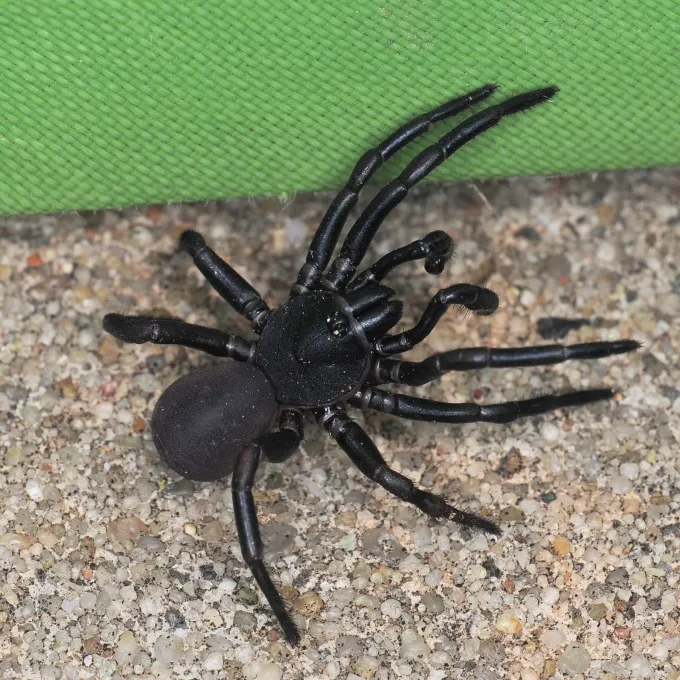
The trapdoor spider (genus Ummidia) belongs to the family Ctenizidae. These are robust spiders known for their incredible ability to construct silk-lined burrows in the soil.
Their anatomy is distinct: they possess a heavy, dark exoskeleton and strong, specialized forelimbs designed for efficient digging in various soil types.
Females are sedentary, spending almost their entire life cycle inside the burrow, while males are more mobile, actively searching for mates during specific seasons.
The most recognizable feature is the "trapdoor" at the burrow's entrance, constructed from silk and soil particles, allowing the spider to hide completely.
Adult spiders can measure up to 5 centimeters in length, making them significant members of the soil ecosystem in regions where they reside.
What it damages
Although trapdoor spiders are predators, they can cause indirect damage to agricultural lands by disrupting root systems during their intensive burrowing activity.
In greenhouses and commercial nurseries, these spiders can negatively affect young seedlings by tunneling under the root ball, causing plant stress and growth inhibition.
Potted plants are particularly vulnerable, as a deep spider burrow can displace significant amounts of potting media and disrupt essential root-soil contact.
The damage is primarily mechanical; root hairs are often severed during the spider's construction phase, leading to reduced water and nutrient uptake by the plant.
Furthermore, their presence interferes with routine maintenance operations, such as soil aeration, fertilization, and irrigation management in the root zone.
When it appears
The activity of trapdoor spiders is closely linked to soil moisture and temperature, dictating their seasonal behavior and movement patterns.
Peak surface activity occurs during the spring and autumn months when the soil is warm and moist, providing the ideal conditions for digging and hunting.
During the peak of summer, spiders retreat to the deeper layers of the soil to escape the heat and maintain the humidity level required for their survival.
Winter is generally spent in a state of diapause inside the burrow, with the trapdoor acting as an effective barrier against fluctuating ambient temperatures.
Juvenile dispersal usually happens during the start of the growing season, which often coincides with the germination and early development phases of many crops.
Signs of infestation
The primary sign of a trapdoor spider presence is the identification of camouflaged holes in the soil, covered by a distinct lid of silk and debris.
Upon closer inspection, one can find smooth tunnel walls reinforced with high-quality silk, which keeps the soil structure from collapsing into the chamber.
Localized wilting of plants despite adequate moisture levels is a strong indicator that root disruption by a burrowing animal may be occurring underneath.
Small piles of fresh soil debris and discarded insect exoskeletons near the burrow entrance are common indicators of a resident spider's feeding activity.
Persistent presence can lead to visible soil instability, as the formation of multiple burrows creates air pockets that affect the uniformity of the field soil.
Control measures
Deep cultivation and plowing are the most effective cultural methods for destroying burrow architecture and discouraging spiders from settling in a field.
Biological control using entomopathogenic fungi can be integrated into the soil management strategy to naturally reduce the population of these spiders.
In containerized crop production, manual inspection and destruction of visible trapdoor burrows in the growing medium remain the most practical solution.
Chemical control is often ineffective because the spider is safely isolated within its burrow, emphasizing the need for proactive mechanical interventions.
Managing soil moisture and avoiding excessive compaction can create less hospitable environments for the trapdoor spider, naturally limiting its proliferation.
Taxonomy
- Latin name
- Ummidia
- Family
- Ctenizidae
- EPPO code
- UMMISP
Discussion
No discussions yet — be the first.