
Ummeliata insecticeps
Ummeliata insecticeps
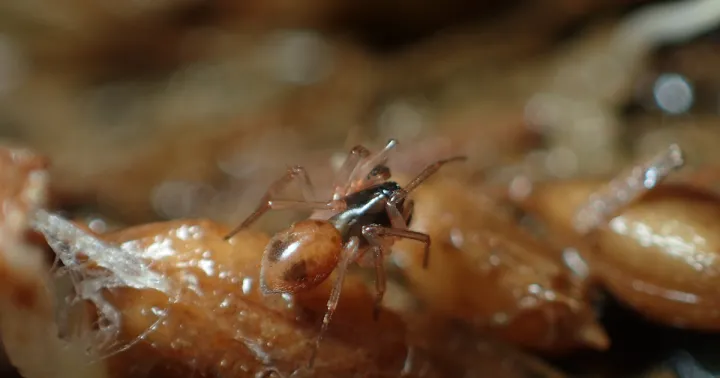
Description
How to identify
Ummeliata insecticeps is a spider species belonging to the Linyphiidae family within the Araneae order. This species is recognized by its small size and distinctively shaped cephalothorax, which is a key diagnostic feature for experts.
Adult specimens typically display a dark body coloration, often with a subtle metallic sheen. Males are notably distinct due to specialized head outgrowths, which are essential for identifying the species under microscopic examination.
As a predatory spider, it thrives in agricultural environments that provide humidity and shade. They are commonly found dwelling near the base of crop plants or within the dense lower canopy.
The biology of this species is highly dependent on environmental variables like moisture levels and temperature. They build small, horizontal sheet webs which are used to capture small insects and mites.
In intensive farming, their population dynamics are often linked to the availability of prey and the intensity of agricultural operations conducted throughout the growing season.
What it damages
This species is frequently observed in cereal fields, including wheat and barley crops. It is also a known inhabitant of rice paddy fields, where it finds suitable microclimates for its development.
It is important to clarify that Ummeliata insecticeps does not consume plant tissues directly. As an obligate predator, it does not cause mechanical damage to leaves or roots typical of traditional pests.
However, their presence can be perceived as an issue when they compete with other beneficial natural enemies for food resources. This competition might inadvertently decrease the efficacy of biological control agents.
In cases of high density, the accumulation of spider silk at the base of plants can trap moisture or organic matter, potentially creating favorable conditions for secondary fungal pathogens.
Generally, the economic damage caused by this spider is considered minimal. In many agricultural scenarios, they are viewed as neutral or even beneficial due to their role in predating on various crop pests.
When it appears
Active development begins in early spring as temperatures rise, signaling the spiders to emerge from overwintering sites in the soil or plant debris.
Population peaks are generally observed during the stem elongation and heading stages of cereal crops, when the density of the crop canopy provides the necessary humidity and shelter.
During the peak of summer, if conditions become too dry or hot, the activity of the spiders tends to decline as they seek out cooler and more humid micro-habitats within the field.
A secondary peak in activity often occurs during the autumn months, as the population prepares for the winter cycle by seeking stable shelters for hibernation.
The life cycle is closely synchronized with the phenological phases of major crops like rice and wheat, which ensures the spiders have a consistent environment for survival.
Signs of infestation
The most visible sign of their presence is the formation of fine, horizontal sheet webs stretched between the stalks of plants or across the soil surface.
Careful observation at the base of plants will reveal small, dark-colored spiders that retreat or move rapidly when disturbed by movement or air currents.
High densities of these webs in the lower strata of the crop are indicative of a successful colonization of the field by this specific spider species.
Remnants of insect exoskeletons caught within the web serve as direct evidence of the spider's predatory success in the local micro-environment.
The absence of other small arthropods in zones heavily covered by these webs can also serve as an indicator of the spider's local abundance and predatory pressure.
Control measures
There are no specific eradication programs for Ummeliata insecticeps, as they are largely considered part of the beneficial arthropod complex in agricultural settings.
Standard agronomic practices, such as proper soil tillage and effective weed management, help to naturally reduce their numbers by destroying overwintering habitats and web-building structures.
The indiscriminate use of broad-spectrum insecticides is discouraged, as it leads to the unnecessary decline of the entire beneficial predator population, potentially causing secondary pest outbreaks.
Maintaining biological diversity is key to ensuring these spiders do not become overly dominant, while still allowing them to perform their role in controlling harmful pests.
Regular field monitoring and scouting help agronomists assess the population balance, ensuring that any control decisions are made with consideration for the wider ecosystem.
Taxonomy
- Latin name
- Ummeliata insecticeps
- Family
- Linyphiidae
- EPPO code
- OEDOIN
Discussion
No discussions yet — be the first.