
Erigone dentipalpis
Erigone dentipalpis
Description
How to identify
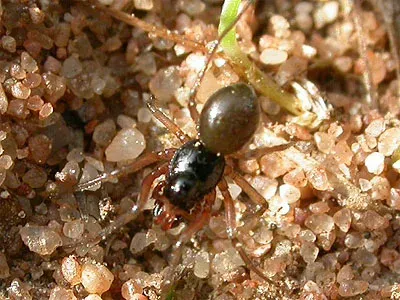
Erigone dentipalpis is a tiny spider belonging to the family Linyphiidae. These spiders are generally characterized by their very small body size, typically ranging between 2 to 3 millimeters in length.
The cephalothorax of this species usually presents a brown to dark reddish-brown color, while the abdomen is typically greyish or black, occasionally featuring subtle patterns.
The males of the species possess distinctive "teeth" or protrusions on their chelicerae and pedipalps, which serve as the primary diagnostic feature for identification.
These spiders are ground-dwelling organisms that prefer habitats with high humidity, such as leaf litter, soil crevices, and the dense base of agricultural crop plants.
They are known as sheet weavers, although they construct very small, horizontal webs close to the soil surface rather than large, conspicuous structures found in other spider families.
What it damages
Although often considered beneficial due to their predatory habits, high populations of Erigone dentipalpis can interfere with agricultural productivity in specific conditions.
The primary form of damage is the construction of dense, fine silk webs across the surface of emerging seedlings, which can physically obstruct plant growth and development.
These webs may interfere with the photosynthesis of very young seedlings, particularly in cereals like wheat or barley, during the critical early stages of crop establishment.
While they are not direct herbivores, the mechanical pressure from their silk networks in extreme numbers can lead to a reduction in the overall vigor of the crop stand.
Their presence is most problematic when excessive moisture encourages rapid reproduction, leading to an overabundance of silk that covers the soil surface and seedling base.
When it appears
Erigone dentipalpis is most active during the spring and summer seasons when the environmental conditions, particularly moisture levels, are optimal for their growth.
The peak activity period usually coincides with the vegetative stages of cereal crops, where the canopy provides a protected microclimate against heat and drying winds.
As the season progresses, they continue their life cycle, moving through various stages of development while spreading throughout the fields using silk as a means of transport.
In autumn, as temperatures drop, these spiders seek shelter in the soil or under debris to prepare for overwintering, showing significant resilience to cold temperatures.
Their lifecycle is closely tied to the availability of organic matter in the field, which supports their survival throughout the winter months before spring emergence.
Control measures
Effective management begins with proper soil tillage practices, which help to disturb overwintering sites and reduce the population density of the spiders before the planting season.
Crop rotation and the removal of excessive crop residues are recommended practices to minimize the habitats favorable for their reproduction and colonization.
While chemical insecticides applied for primary crop pests often reduce spider populations, specific targeting is rarely necessary due to their role as beneficial predators.
Integrated Pest Management (IPM) strategies emphasize monitoring populations to determine if the mechanical interference of their webs reaches an economic threshold.
Balancing their predatory role against potential seedling damage is crucial, as they help control common crop pests such as aphids and small dipterans.
Taxonomy
- Latin name
- Erigone dentipalpis
- Family
- Linyphiidae
- EPPO code
- ERGODE
Discussion
No discussions yet — be the first.