
Erigone atra
Erigone atra
Description
How to identify
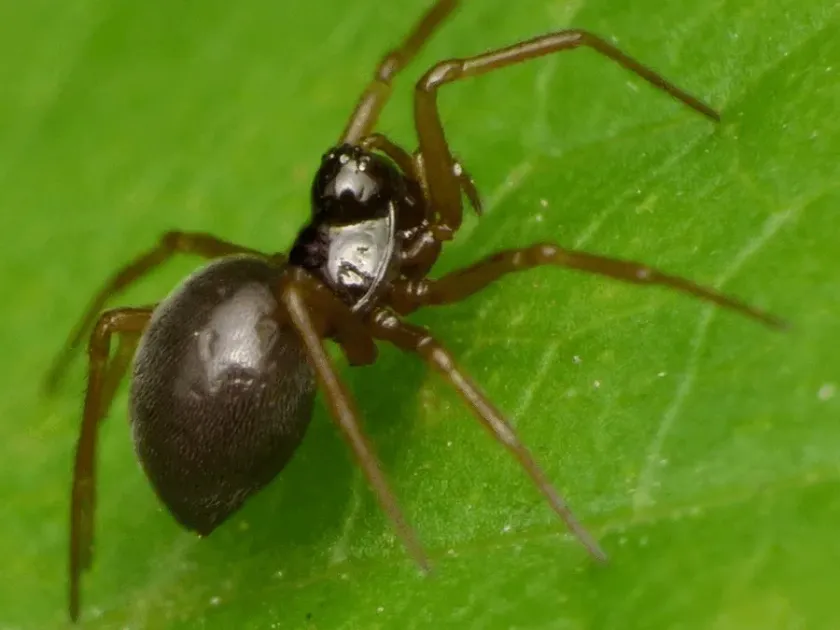
Erigone atra is a small spider of the Linyphiidae family, often misidentified in agricultural ecosystems as purely a beneficial predator. It is a tiny arthropod, measuring no more than 2–3 mm, with a dark brown or almost black cephalothorax and abdomen.
A distinctive feature of males is the presence of characteristic cephalic lobes, which allow for identification under a microscope. This spider prefers moist conditions and is frequently encountered within the dense foliage of agricultural crops.
Unlike larger orb-weaver spiders, Erigone atra creates very fine, nearly invisible horizontal sheet webs. These webs are located in the near-ground layer, directly on the soil or between the leaves of young plants, making them difficult to detect with the naked eye.
The species is a typical "ballooning" spider, capable of mass dispersal over long distances using silk threads carried by wind currents. This high mobility allows the population to rapidly colonize vast areas of farmland.
Systematically, it belongs to the order Araneae, family Linyphiidae. While these spiders are predatory, their mass accumulation in certain agroecosystems can create specific microclimatic conditions that favor the development of plant pathogens.
What it damages
The primary damage caused by Erigone atra is not the consumption of plant tissue, but the creation of dense web mats. These webs cover the surface of leaves and stems, impeding normal gas exchange and photosynthesis in young plants.
The spider poses a particular threat to winter cereal seedlings, vegetable plants in greenhouses, and nursery stock. The dense web retains moisture, creating an ideal environment for the development of fungal diseases such as powdery mildew or various rots.
In greenhouse operations, Erigone atra can infest leaves en masse, where its silk collects dust and pathogen spores. This significantly reduces the marketability of the produce and slows down plant growth during early development stages.
Although this spider preys on small insects, during food shortages or excessive population density, it interferes with beneficial insect pollinators. The reduction in the activity of beneficial entomophages caught in the webbing is also an indirect damage to the agroecosystem.
The massive presence of webbing on leaves can cause premature senescence of the leaf blade due to impaired transpiration. In some cases of severe infestation, stunted growth of entire plant clumps is observed.
When it appears
The active lifecycle of Erigone atra begins in early spring, as soon as the soil temperature rises above 5–7 degrees Celsius. This is the period of mass emergence of overwintering individuals from ground litter.
The population peak typically occurs in late spring and early summer, coinciding with the tillering phase of cereals. Humid and warm weather facilitates rapid reproduction and an increase in the density of spider webs in fields.
In summer, during dry spells, the spider's activity temporarily decreases as it is sensitive to moisture deficit. However, in the second half of summer, if irrigation or sufficient rainfall occurs, a second wave of population growth can be observed.
In autumn, Erigone atra begins migrating to find hibernation sites, often choosing the root zones of perennial grasses or remaining crop residues in fields. During this period, they can be seen at the tops of dry stems.
Both adult individuals and nymphs hibernate, burrowing into the soil or hiding under dry leaves. A low threshold for activity allows them to survive even mild winter temperatures.
Signs of infestation
The first visual sign of Erigone atra presence is the "webbing film" on the soil surface and lower leaves of plants. In the morning hours, dew makes these webs clearly visible, highlighting their extent.
The presence of tiny, black or dark brown specks on the surface of the web or leaves nearby often indicates the spider's activity. If, upon touching the plant, a spiderlet quickly descends via a silk thread, this confirms the species.
Stunted growth of seedlings accompanied by yellowing of the lower leaves can be an indirect sign that the plant is covered in webbing. Leaves beneath a layer of web may appear duller and less turgid than those free from it.
When inspecting crops with a magnifying glass, small egg sacs can be found on the underside of leaves. These appear as whitish or cream-colored pouches attached to leaf veins, indicating the beginning of the breeding process.
In protected cultivation (greenhouses), signs of infestation include reports of poor air circulation and the appearance of specific spots on leaves caused by high humidity trapped within the web structures.
Control measures
For controlling Erigone atra, the most effective method is agrotechnical management. Thorough plowing of fields after harvest destroys hibernation sites and significantly reduces the population within the soil layer.
Optimizing humidity levels and timely removal of weeds reduce the attractiveness of the plot for colonization. Weed-free inter-row spacing hinders the movement of spiders across the field.
The use of broad-spectrum insecticides is not always justified, as they kill beneficial entomophages. It is recommended to use chemicals only when reaching the economic injury level, prioritizing selective acaricides.
In greenhouses, frequent ventilation and lowering air humidity are effective control methods, making the environment unsuitable for spider survival. Biological preparations based on entomopathogenic fungi are also utilized.
Regular monitoring of crops using yellow sticky traps helps to notice an increase in spider density in time to take action before mass webbing begins. It is important to maintain ecological balance by preserving the spiders' natural enemies.
Taxonomy
- Latin name
- Erigone atra
- Family
- Linyphiidae
- EPPO code
- ERGOAT
Discussion
No discussions yet — be the first.