
Confused flour beetle
Ulomoides
Description
How to identify
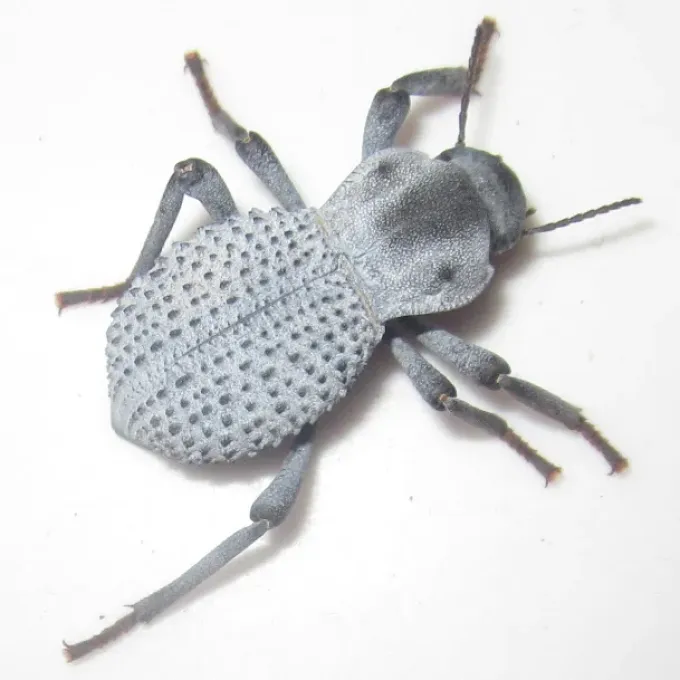
The Confused flour beetle (scientific name often linked to Ulomoides dermestoides or Tribolium confusum) is a small, oval-shaped beetle belonging to the Tenebrionidae family. Adult beetles are reddish-brown, about 3–5 mm in length, with flattened bodies.
Their head and thorax are characterized by dense, small punctures. The antennae have a distinct, gradually thickened club at the tip, which helps distinguish them from similar beetle species in stored products.
The larvae are cylindrical, creamy yellow to light brown in color, and reach up to 6–7 mm in length. They have a characteristic pair of horn-like projections on the last abdominal segment.
The life cycle consists of egg, larva, pupa, and adult stages. Under favorable indoor conditions, such as warm warehouses or food processing facilities, the beetle can complete several generations throughout the year.
These insects are highly adaptable to various humidity levels but thrive in temperatures ranging between 22 and 28 degrees Celsius, where their reproductive rate is at its peak.
What it damages
This beetle is a major secondary pest, meaning it prefers damaged grain or processed products. It is commonly found in flour, cereals, bran, pasta, spices, and dried fruits, infesting both residential and industrial stocks.
While the beetle does not usually attack perfectly intact grain, it readily exploits minor cracks in grain kernels, milling dust, or damaged packaging to feed on the endosperm, significantly reducing product quality.
Infestations often lead to a phenomenon known as "heating," where the insect activity raises the moisture and temperature levels in the grain mass, creating a breeding ground for mold and fungi.
Beyond actual consumption, the pest contaminates food supplies with its shed larval skins, feces, and dead insects, resulting in an unpleasant odor and taste that renders the product unfit for human consumption.
In the milling industry, this pest is particularly troublesome because it can hide deep within machinery, making it difficult to eradicate without complete facility sanitation and specialized treatments.
Signs of infestation
A primary sign of infestation is the clumping of flour or grain products. This occurs because the larvae produce secretions and webbing that bind particles together, leading to a noticeable change in product texture.
Owners and managers may notice the insects crawling on the surface of storage bags, walls, or near equipment. In severe cases, the entire stock may exhibit a grayish, dull discoloration and a characteristic musty, pungent smell.
- Presence of live beetles on the surface of stored grain or bags.
- Noticeable clumping or caking in flour or milled products.
- A persistent, sweetish, musty odor in the storage area.
- Discovery of larval cast skins during routine quality inspection.
Since the eggs are microscopic and often laid within cracks or crevices, early detection relies on mechanical sifting and probe sampling of the grain stored in silos or warehouses.
Consistent temperature monitoring is key, as unusual heat spikes in specific areas of the storage unit can indicate an active infestation cluster that requires immediate attention.
Control measures
Sanitation is the most effective long-term defense. Keeping the storage environment free of spilled grain, dust, and debris eliminates the beetle's primary food sources and breeding sites.
Before stocking a new harvest, warehouses should undergo professional disinfestation. This often involves applying residual insecticides to walls and floors, as well as cleaning out machinery and transport conduits.
If an infestation is confirmed, fumigation is the standard industry practice. Using phosphine-based products in airtight storage environments effectively kills the pest at all life stages, including eggs tucked inside kernels.
Environmental control is equally vital; cooling the grain or maintaining low humidity levels significantly slows down the reproductive cycle, making it harder for the population to reach damaging levels.
Implementing a strict FIFO (First-In, First-Out) inventory rotation policy helps prevent long-term storage in warm conditions, which is the most common cause of massive population build-ups in food storage facilities.
Taxonomy
- Latin name
- Ulomoides
- Order
- Coleoptera (beetles)
- Family
- Tenebrionidae
- EPPO code
- ULMDSP
Discussion
No discussions yet — be the first.