
Mold mite
Tyrophagus putrescentiae
Description
How to identify
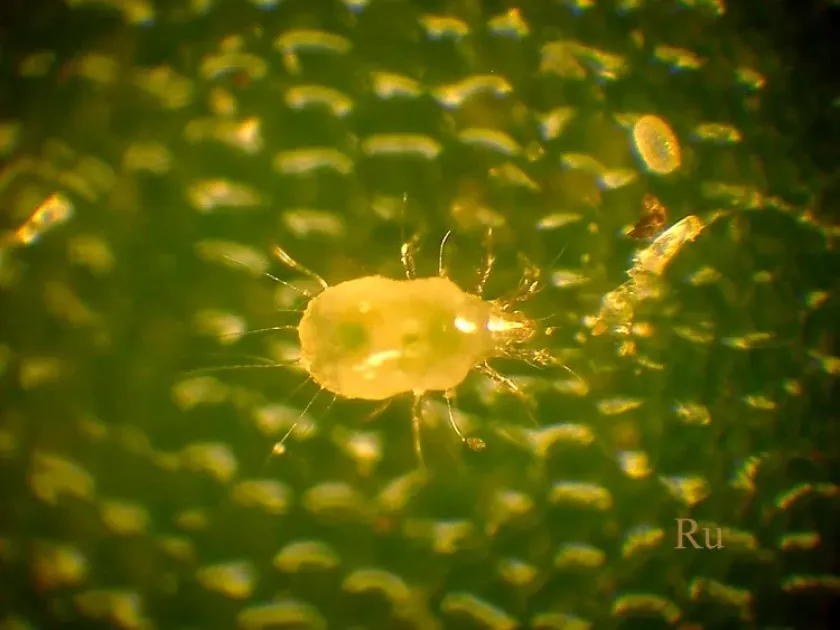
The mold mite (Tyrophagus putrescentiae) is a member of the Acaridae family. It is a tiny, translucent organism, typically ranging from 0.3 to 0.5 mm in length, making it hard to see without magnification.
This mite possesses long sensory hairs on its body, which aid in navigation within granular food sources. It is highly dependent on environmental moisture levels for its biological processes.
The life cycle of the mold mite is extremely rapid under optimal conditions (around 25–30°C and high relative humidity), allowing for massive population explosions within a few weeks.
When environmental conditions become harsh or food supplies dwindle, these mites can enter a resting state known as a hypopus, which is highly resistant to chemical and physical stressors.
They are cosmopolitan pests found worldwide, thriving particularly in environments where organic matter is beginning to decay or where humidity is inadequately controlled.
What it damages
Mold mites primarily infest stored grains such as wheat, corn, and barley, but they also attack processed goods like flour, protein-rich animal feeds, and cheeses.
They are particularly destructive to the grain embryo, which significantly reduces the germination rate of seeds, thereby jeopardizing the agricultural seed supply.
Beyond physical consumption, these mites carry spores of various molds and fungi on their bodies. As they move through the grain, they inoculate the seeds, leading to rapid spoilage.
The accumulation of mite feces and cast-off skins contaminates the product, leading to the development of a distinct, pungent, and earthy odor that renders the food unmarketable.
Infestations often result in grain heating, as the metabolic activity of the mites and the associated fungal growth cause the temperature within the bulk to rise dangerously.
Signs of infestation
The most noticeable sign of a severe infestation is a strong, sickly-sweet, or musty odor emanating from the stored grain storage area.
When examining the product, one might observe a fine, dusty layer on the surface of the grain heap, which is actually a combination of debris, mites, and fungal growth.
The infested material often loses its ability to flow freely, as the mites create webs of fungal growth that cause the grain particles to clump together into solid masses.
Detection is often confirmed by spreading a sample of the product onto a dark surface, such as black paper, and observing it under a bright light to detect movement.
Visual inspection with a magnifying glass or microscope reveals the presence of numerous slow-moving, tiny, translucent, or whitish creatures among the grain particles.
Control measures
The primary control strategy is the strict maintenance of low moisture levels in stored grain, typically keeping it below 14% to prevent mite development and reproduction.
Sanitation is critical; cleaning storage facilities of all grain residue, dust, and debris significantly reduces the chances of carry-over infestations between seasons.
Aeration and mechanical ventilation systems should be employed to manage temperature and humidity levels within the silos, ensuring they stay outside the mite's comfort zone.
- Fumigation with registered gas-phase pesticides (e.g., phosphine) to eliminate existing populations.
- Regular monitoring of storage temperatures using integrated sensor probes.
- Cleaning and disinfecting transport vehicles and storage equipment before loading new grain.
If an infestation occurs, affected areas must be isolated, the grain dried or processed, and the storage area treated with appropriate contact insecticides or fumigants.
Taxonomy
- Latin name
- Tyrophagus putrescentiae
- Order
- Mites
- Family
- Acaridae
- EPPO code
- TYROPU
Discussion
No discussions yet — be the first.