
Tyrophagus perniciosus
Tyrophagus perniciosus
Description
How to identify
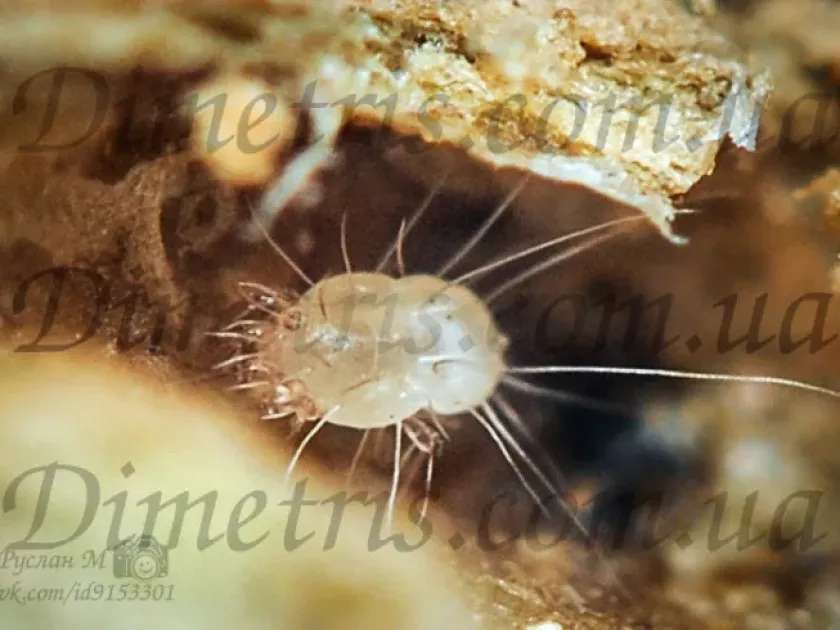
Tyrophagus perniciosus is a microscopic mite belonging to the Acaridae family and the Acariformes order. Its size typically ranges from 0.3 to 0.5 mm in length.
The body of the mite is transparent, elongated, and oval-shaped with a whitish hue. It is covered with long setae, which assist in its movement within the soil and organic substrates.
The life cycle encompasses several stages: egg, larva, protonymph, deutonymph, and adult. Under favorable conditions, the mite reproduces at an alarming rate.
The species is capable of forming a hypopus — a specialized developmental stage designed for survival under harsh environmental conditions or lack of food.
High humidity and temperatures around 20-25°C are ideal for the rapid development of this pest, making greenhouse environments particularly susceptible.
What it damages
This mite is a polyphagous pest known to cause significant damage to a wide range of vegetable and flower crops, especially those with bulbs and fleshy roots.
The primary hosts include onions, garlic, carrots, cucumbers, and various ornamental bulbs such as tulips, lilies, and gladioli both in the field and in storage.
By penetrating the plant tissues, the mites feed on the internal parts of bulbs and roots, severely disrupting the nutrient transport within the plant.
The damage caused by the mites often serves as an entry point for secondary pathogens, such as soft rot bacteria and fungi, which can destroy the crop entirely.
Economic losses are often severe in commercial storage facilities where the mite can quickly spread from infested bulbs to healthy ones, ruining large inventories.
Signs of infestation
Plants infested with Tyrophagus perniciosus exhibit stunted growth, chlorotic yellowing of the leaves, and overall wilting during the vegetation period.
Upon examination, the underground parts display hollow cavities. These spots are often filled with a characteristic fine, white, powdery substance consisting of debris and mite waste.
The basal plate of the bulb is often the first area to show decay, turning soft and mushy with a distinct unpleasant odor resulting from secondary bacterial decay.
In ornamental bulb production, failure to sprout or the development of twisted, weak stems are common indicators of a heavy mite infestation.
Storage-level infestations manifest as rapid decay of the bulbs, which can happen even if the outer appearance seems relatively intact, making detection tricky until rot sets in.
Control measures
Integrated Pest Management (IPM) is essential to control Tyrophagus perniciosus, focusing on cultural practices before resorting to chemical treatments.
Proper crop rotation is a vital preventive measure; avoid planting susceptible host crops in the same area for at least three to four years to break the mite life cycle.
Sanitation of storage areas and greenhouses is crucial. Removing all plant debris and ensuring proper ventilation and temperature control helps suppress mite populations.
Treating planting material with acaricides or hot water dips (if appropriate for the specific crop) can help eliminate initial infestations on the bulbs.
- Monitor greenhouse moisture levels to avoid excess humidity.
- Use certified, clean, and treated planting materials.
- Apply authorized acaricides upon the appearance of early symptoms.
- Store bulbs under dry, cool conditions (below 5°C) to restrict activity.
Taxonomy
- Latin name
- Tyrophagus perniciosus
- Order
- Mites
- Family
- Acaridae
- EPPO code
- TYROPE
Discussion
No discussions yet — be the first.