
Tyrophagus longior
Tyrophagus longior
Description
How to identify
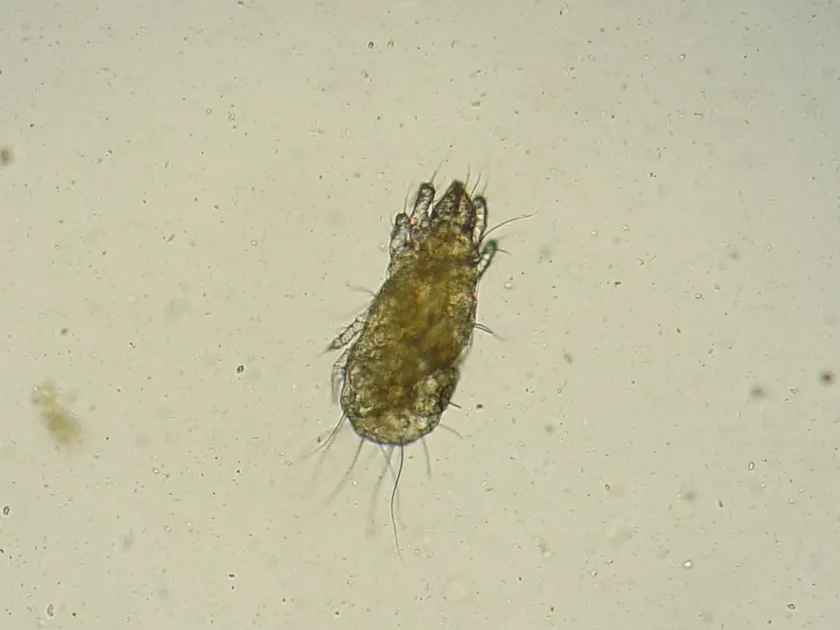
Tyrophagus longior is a mite belonging to the Acaridae family within the Acariformes order. It is a microscopic arachnid characterized by an elongated, translucent, and whitish body.
The adult mites typically measure between 0.3 and 0.5 mm in length. A distinguishing feature of this species is the presence of long setae, which facilitate sensory perception and movement.
The life cycle encompasses several stages: egg, larva, protonymph, hypopus (a specialized dispersal stage), deutonymph, and adult. The hypopus stage allows the mite to survive extreme conditions.
Optimal conditions for rapid population growth include grain moisture levels exceeding 15% and ambient temperatures ranging from +20°C to +25°C.
These mites are highly mobile and can easily spread through contaminated transport vehicles, grain handling machinery, and standard warehouse equipment.
What it damages
The primary concern is the destruction of the grain germ, which drastically reduces seed viability and overall quality for processing and commercial use.
This pest is highly polyphagous, attacking not only raw grain but also flour, cereals, processed foods, dried fruits, and high-protein agricultural products like oilseeds.
Infestation leads to the contamination of goods with mite excrement, molted skins, and carcasses, resulting in a distinct, musty odor that renders the products unusable.
Large colonies of Tyrophagus longior contribute to grain self-heating, which further degrades the quality of the batch and promotes secondary fungal infections.
Economic impact is significant, as even a minor infestation can lead to the rejection of food supplies due to health regulations regarding contamination levels.
Control measures
The cornerstone of management is grain drying. Keeping grain moisture content below 13-14% inhibits mite development and is the most effective preventative measure.
Regular sanitation of grain storage facilities is essential. Removing dust and debris prevents the establishment of local populations that can infect new grain harvests.
In case of infestation, fumigation is the standard industry practice. Utilizing phosphine-based fumigants in airtight storage silos ensures the elimination of mites at all life stages.
Monitoring grain temperature and moisture levels is critical. Regular inspections allow for early detection of hotspots where mites might be active.
Empty warehouse management, including the use of residual insecticides on surfaces, provides a protective barrier against the re-introduction of mites into cleaned storage areas.
Taxonomy
- Latin name
- Tyrophagus longior
- Order
- Mites
- Family
- Acaridae
- EPPO code
- TYROLO
Discussion
No discussions yet — be the first.