
Tyrophagus
Tyrophagus
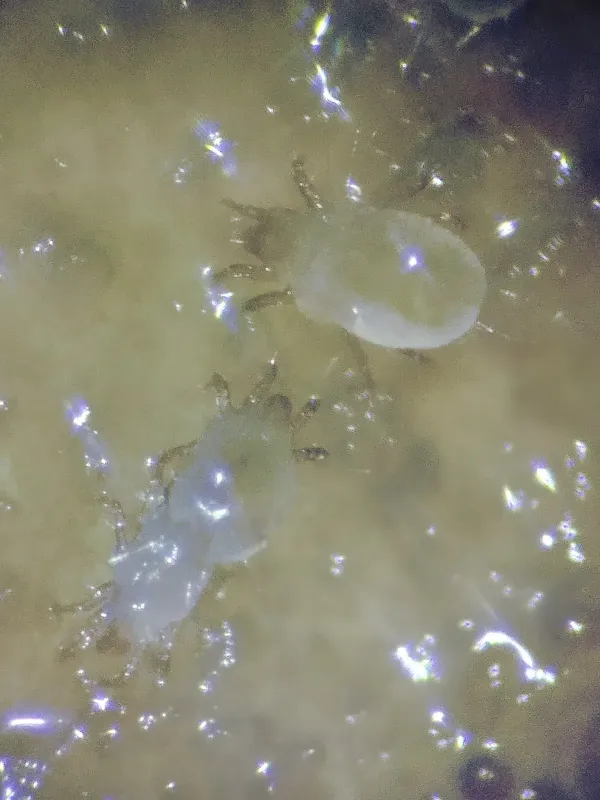
Description
How to identify
Tyrophagus is a genus of mites belonging to the family Acaridae, order Sarcoptiformes. These tiny arthropods are commonly known as mold mites or bulb mites, reflecting their feeding habits and common habitats.
The adult mites are microscopic, measuring between 0.3 and 0.5 mm in length. Their bodies are semi-transparent, yellowish-white, and possess long, distinct setae (bristles) that help in sensory perception.
The life cycle progresses from egg to larva, protonymph, deutonymph (hypopus), and finally the adult stage. The deutonymph stage is a unique, non-feeding, highly resistant form adapted to survive harsh environmental conditions.
These mites reproduce rapidly under warm and humid conditions. Optimal development occurs at temperatures between 20°C and 30°C, with a life cycle often completed in under two weeks.
As cosmopolitan pests, they are distributed worldwide. They thrive in organic-rich environments, including damp soil, greenhouses, and stored food products such as grain, cheese, and dried fruits.
What it damages
Tyrophagus mites cause significant economic damage to various agricultural crops, particularly during the germination and seedling stages. They feed on roots, bulbs, and corms, often hollowing them out completely.
In greenhouses, they frequently attack vegetable crops like cucumbers, peppers, and tomatoes. The damage is often exacerbated by the introduction of secondary bacterial and fungal infections through mite feeding wounds.
Stored agricultural products are highly vulnerable to infestation. Mites penetrate seeds and grains, consuming the endosperm and embryos, which leads to total loss of germination potential and spoilage.
Ornamental horticulture faces severe threats from these mites, particularly in bulbous plants like tulips, lilies, and gladioli. The destruction of the basal plate leads to stunted growth and plant death.
In moist field conditions, they are often overlooked as primary pests, yet they contribute to the decline of weak plants by feeding on decaying organic matter and subsequently transitioning to living tissues.
Signs of infestation
The earliest sign of a Tyrophagus infestation is poor seed germination or uneven emergence of seedlings. When excavated, seeds appear empty or partially consumed, often accompanied by a foul smell.
Plants affected in the root zone exhibit yellowing of leaves, stunted growth, and a tendency to wilt easily during the day. In advanced stages, the stem base becomes mushy and rots.
A dusty, greyish-white layer may appear on the surface of infested bulbs or soil. This layer consists of mites, their shed skins, and excrement, serving as a clear indicator of a massive population.
In stored goods, the presence of these mites causes the product to clump together and develop a distinct musty or sweet-sour odor. Infested areas of grain storage may show heat spots.
For bulb crops, visual inspection of the basal area reveals brown, sunken lesions. If squeezed, the tissue may yield fluid, indicating the presence of soft rot facilitated by mite injury.
Control measures
Effective control of Tyrophagus requires rigorous sanitation practices. Removing crop debris from fields and greenhouses is essential to eliminate primary breeding sites for the mites.
Environmental management plays a crucial role; maintaining low humidity levels (below 60%) in storage facilities and greenhouses effectively inhibits mite reproduction and spread.
Chemical control involves the application of specialized acaricides. Because mites are not insects, common insecticides are often ineffective; therefore, choosing the correct chemical class is vital.
Biological control using predatory mites, such as those from the Phytoseiidae family, can be an excellent strategy for managing Tyrophagus populations in protected cultivation environments.
Pre-planting treatments, such as hot water dips for bulbs or using systemic chemical dressings for seeds, provide a protective window that helps seedlings establish before mite damage occurs.
Taxonomy
- Latin name
- Tyrophagus
- Order
- Mites
- Family
- Acaridae
- EPPO code
- TYROSP
Discussion
No discussions yet — be the first.