
Cheese mite
Tyrolichus casei
Description
How to identify
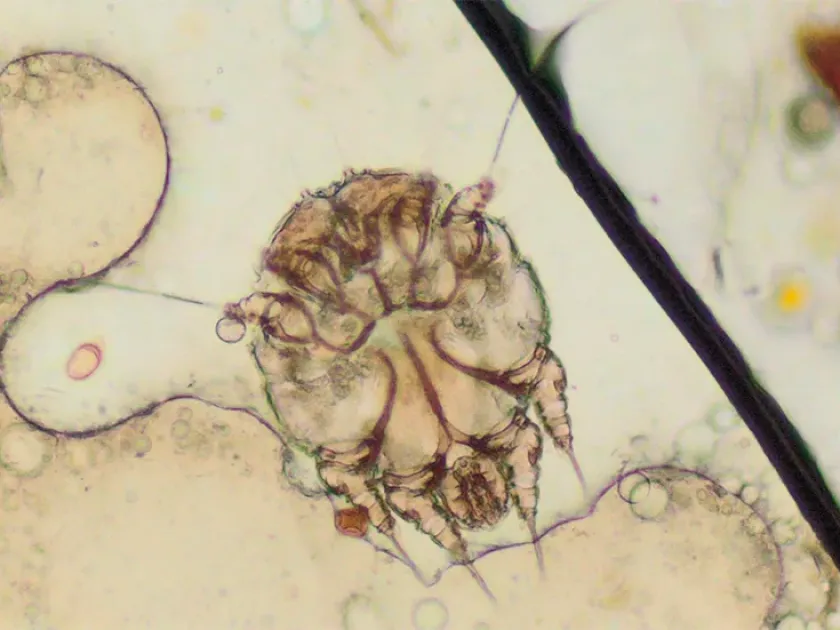
The cheese mite (Tyrolichus casei) is a microscopic arachnid belonging to the family Acaridae, order Acariformes. Adults typically measure between 0.3 and 0.5 mm in length.
Their bodies are oval, translucent, and usually cream or white in color, making them difficult to spot without magnification unless they are present in huge numbers.
They possess well-developed legs with suckers or claws, allowing them to move efficiently across the surfaces of the products they infest.
The life cycle is rapid under favorable conditions, typically between 20°C and 25°C, and they can produce large colonies in a very short time frame.
Like many stored product mites, they are synanthropic and thrive specifically within human-built storage facilities, warehouses, and food processing plants.
What it damages
While named for the damage they cause to aged cheeses, these mites are generalist feeders and infest various types of stored commodities.
Commonly attacked items include grains, flour, dried fruits, cured meats, and even medicinal herbs stored in dry conditions.
The mites burrow into the product, consuming it and leaving behind waste, which degrades both the physical structure and the sensory quality of the food.
Products infested by cheese mites become covered in a fine, powdery dust, which is actually a mix of mites, cast skins, and excrement.
Economic damage is substantial, as infested products are often considered unfit for human consumption, leading to significant inventory losses.
Signs of infestation
An early indication of a cheese mite infestation is a distinct, somewhat sweet and pungent smell that develops in the storage environment.
A fine, grayish-white dust will appear on the surface of the cheese or food packaging, which signifies the presence of the mite population.
Close inspection under a magnifying glass often reveals the movement of these particles, indicating that the dust is composed of living mites.
Visible pitting, cracks, or tunneling on the surface of the food material are telltale signs that the mites have penetrated the interior of the product.
The accumulation of debris and structural breakdown of the product surface are definitive indicators of an established and growing infestation.
Control measures
The primary control strategy is the management of the storage environment, specifically keeping temperatures below 5°C and relative humidity under 60%.
Strict sanitation protocols, including regular cleaning of shelves, floors, and cracks where organic debris collects, are essential to prevent outbreaks.
Proper inventory management, such as the first-in, first-out (FIFO) system, minimizes the time food is exposed to potential colonization.
In cases of severe infestation, specialized fumigation or the application of food-grade insecticidal dusts may be required to eliminate the colony.
- Ensure dry storage conditions to limit mite growth.
- Inspect all incoming goods for early signs of contamination.
- Seal and airtight store products to prevent cross-contamination.
Taxonomy
- Latin name
- Tyrolichus casei
- Order
- Mites
- Family
- Acaridae
- EPPO code
- TYROCA
Discussion
No discussions yet — be the first.