
Gladiator stick insect
Tyrannophasma gladiator
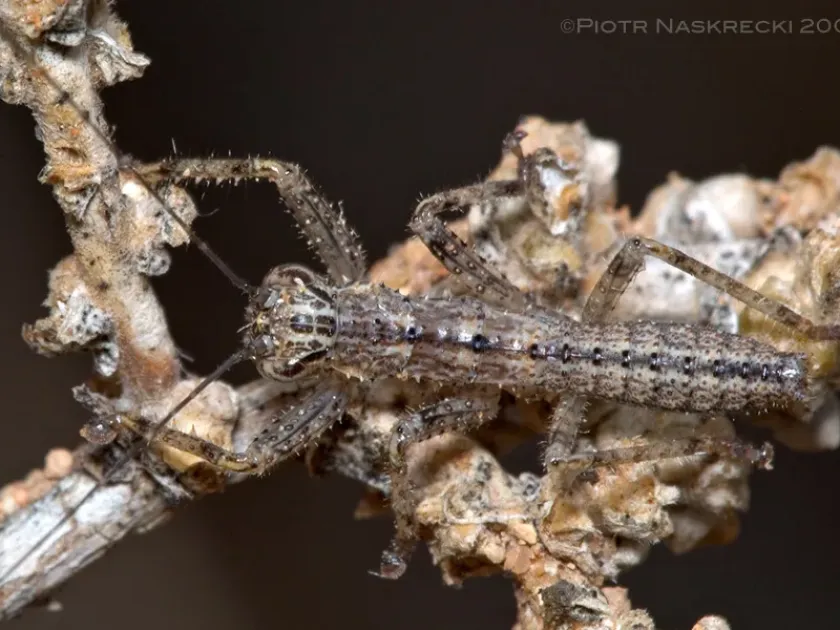
Description
How to identify
The Gladiator stick insect (Tyrannophasma gladiator) belongs to the order Phasmatodea. These insects are masters of camouflage, evolving to mimic branches and twigs to remain undetected by predators and human observers alike.
The life cycle is hemimetabolous, consisting of egg, nymph, and adult stages. Each nymphal instar resembles the adult but is smaller, gradually developing more complex morphology and, in some cases, protective spines.
As nocturnal feeders, these insects remain inactive during the day, hiding among the dense foliage of their host plants. This cryptic behavior makes them a challenging pest to manage in professional agricultural settings.
Physiologically, the species possesses robust mandibles capable of processing fibrous plant material. Their digestive system is highly efficient, allowing them to extract nutrients even from tough, low-quality foliage.
Population growth is largely influenced by ambient temperature and humidity. In stable, warm environments, such as greenhouses, the species can maintain continuous reproductive cycles, leading to persistent infestations.
What it damages
Tyrannophasma gladiator primarily targets the leaves and soft tissues of various ornamental shrubs and certain horticultural crops. They feed by chewing, which results in distinct irregular patterns on the foliage.
Severe infestations lead to significant defoliation, which severely limits the plant's ability to photosynthesize. This leads to weakened plant vitality, stunted growth, and in extreme cases, the death of young specimens.
The damage is characterized by jagged leaf edges and, in cases of high population density, complete skeletalization of leaves. They may also consume the buds of young shoots, halting vertical growth.
In nursery environments, the economic damage is significant as the aesthetic and commercial value of plants is compromised. The wounds created by the insects serve as entry points for bacterial and fungal pathogens.
Plants weakened by the Gladiator stick insect are less resistant to abiotic stress and disease. Careful scouting is required to distinguish this feeding damage from that caused by other chewing pests.
Control measures
Integrated pest management (IPM) for this species involves a combination of mechanical removal and targeted chemical intervention. Manual collection at night is a highly effective, non-chemical approach.
Chemical control should focus on contact and systemic insecticides. Timing is critical, with applications most effective during the nymphal stages before the insects reach maturity and become more resilient.
Biological control methods are being explored, particularly the use of entomopathogenic fungi such as Beauveria bassiana. These natural agents can significantly reduce insect numbers in controlled environments.
Sanitation practices are essential for prevention. This includes the removal of weeds and debris in and around the greenhouse or field, which provides shelter for nymphs and egg-laying sites for adults.
- Regular night monitoring with flashlights.
- Application of contact insecticides during early stages.
- Sanitation to eliminate potential breeding grounds.
- Use of entomopathogenic biological controls.
Taxonomy
- Latin name
- Tyrannophasma gladiator
- Family
- Mantophasmidae
- EPPO code
- TYRPGL
Discussion
No discussions yet — be the first.