
Mantophasma zephyra
Mantophasma zephyra
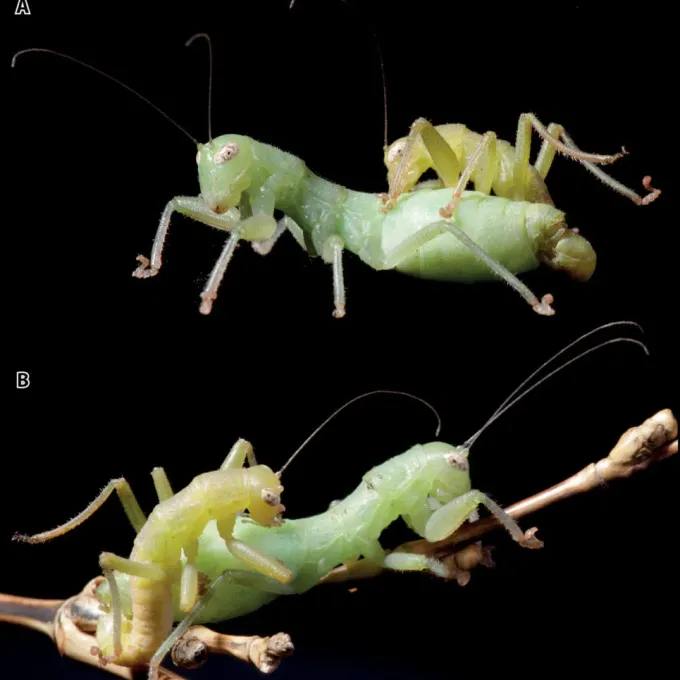
Description
How to identify
Mantophasma zephyra is a remarkable insect species belonging to the order Mantophasmatodea. Discovered in the early 21st century, this insect represents a unique group of wingless predators.
The morphology of the insect includes an elongated body and specialized legs designed for catching prey in arid environments. They exhibit remarkable camouflage, blending seamlessly with dry vegetation.
The head is equipped with strong mandibles adapted for carnivorous feeding, and the eyes are well-developed to track movement in dense plant stalks.
As members of the family Mantophasmatidae, they are primarily restricted to the specific ecosystems of Southern Africa, having no significant presence in commercial agriculture worldwide.
They are not true pests, and their rarity makes them more of a subject for evolutionary studies rather than field pest management programs.
What it damages
This species is not a plant-feeder. Therefore, it does not inflict direct damage on agricultural crops or horticultural plants.
Their predatory nature means they feed on small insects and arthropods, often acting as neutral or beneficial entities within an ecosystem.
Reports of crop damage are non-existent, as they do not possess the mouthparts or the behavior patterns required to consume plant tissue for sustenance.
Any interaction between Mantophasma zephyra and crops is purely accidental, usually involving resting on leaves or stems while searching for insect prey.
Farmers should not view this insect as an economic threat, as it does not negatively impact yield or plant health.
When it appears
The life cycle of Mantophasma zephyra is heavily influenced by environmental conditions, particularly rainfall patterns in their native habitat.
They undergo incomplete metamorphosis, with nymphs appearing during the more favorable seasons when prey availability is at its peak.
Eggs are designed to withstand long, hot, and dry periods, acting as a dormant stage until the environmental conditions allow for successful hatching.
Adults are typically active during the warmer months, during which time they roam across the landscape to forage for small invertebrate prey.
Seasonal fluctuations in temperature effectively regulate their population growth and activity levels in the wild.
Control measures
No control measures are required for Mantophasma zephyra because they are not recognized as pests in agricultural science.
Standard integrated pest management (IPM) practices used for controlling actual crop pests will naturally mitigate any interaction with this species if present.
Focusing on the control of actual harmful insects is recommended, while leaving non-harmful species undisturbed to maintain ecological balance.
There is no economic justification for applying specific chemical treatments against this species, as it does not affect crop productivity.
- Integrated Pest Management (IPM).
- Field monitoring.
- Preservation of beneficial insects.
Taxonomy
- Latin name
- Mantophasma zephyra
- Family
- Mantophasmidae
- EPPO code
- MANPZE
Discussion
No discussions yet — be the first.