
Peacock mite
Tuckerella flabellifera
Description
How to identify
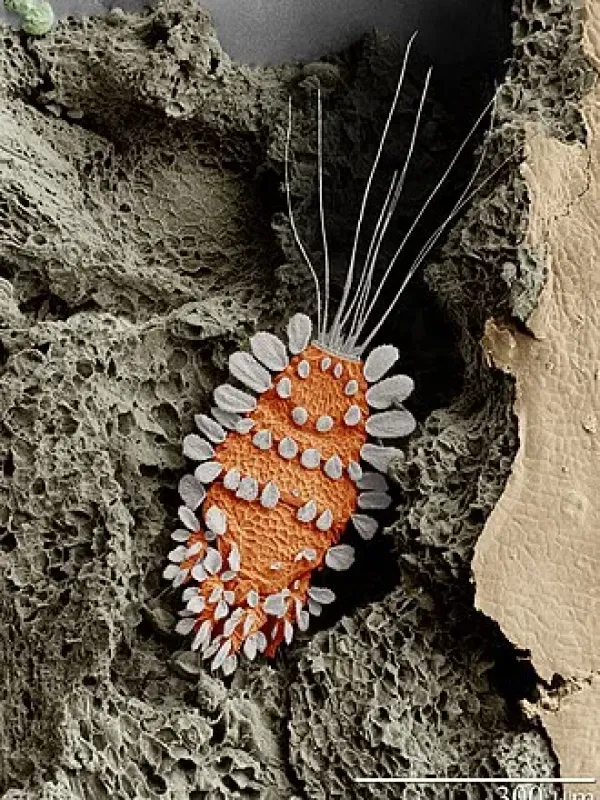
The peacock mite (Tuckerella flabellifera) is a member of the Tuckerellidae family, belonging to the Trombidiformes order. It is commonly referred to as the peacock mite due to the long, fan-like posterior setae that resemble a peacock's tail.
These mites are microscopic, with a flattened, reddish or orange-colored body. Their mobility is relatively low, and they typically remain on the same host plant for extended periods, making them persistent pests in orchards and greenhouses.
The life cycle progresses through the egg, larva, protonymph, deutonymph, and adult stages. Females lay eggs directly onto plant tissues, often covering them with their bodies to protect them from predators and environmental stressors.
Taxonomic identification requires specialized microscopic examination of the dorsal setae structure. In field settings, they are often difficult to detect without a magnifying glass due to their minute size and cryptic behavior.
Populations tend to thrive in hot, arid conditions, where they can reproduce rapidly. Understanding these environmental triggers is essential for early detection in both agricultural and decorative plant settings.
What it damages
Peacock mites infest a variety of hosts, including citrus trees, tea bushes, and various ornamental shrubs. They primarily feed on the epidermis of leaves and young shoots, causing significant physiological stress to the plant.
By piercing the plant tissue with their mouthparts, they sap essential nutrients, which disrupts photosynthesis and leads to chlorosis. This weakened state makes plants more susceptible to secondary infections and environmental damage.
Severe infestations result in stunted growth, leaf deformation, and premature leaf drop. In fruiting trees, this loss of photosynthetic surface directly impacts yield volume and the quality of the fruit produced.
For ornamental plants, the aesthetic damage is often the primary concern, as the leaves develop unsightly discolored spots and may eventually wither and fall off, ruining the appearance of the foliage.
Nursery stock is particularly vulnerable; if left unchecked, these mites can cause significant stunting in young plants, leading to high mortality rates before the plants are even ready for sale.
Signs of infestation
The first signs of an infestation include the appearance of tiny, light-colored stippling on the upper leaf surfaces. As the mites continue to feed, these spots coalesce into larger, bleached patches.
If you examine the undersides of the leaves, you may notice the mites themselves or their characteristic silvery-white cast skins, which remain after the mites molt during their growth phases.
Plants affected by a high density of mites will show general signs of poor health, such as yellowing foliage and a reduction in the distance between nodes (shortened internodes) on new growth.
Heavy infestations are often accompanied by the presence of mite frass and debris, which can accumulate on the leaf surface and further inhibit the plant's ability to undergo normal gas exchange.
In advanced cases, one can observe significant leaf curling and dieback of the tender tips of branches, indicating that the mite colony has reached a critical level that requires immediate intervention.
Control measures
Consistent monitoring is the most effective way to manage peacock mite populations. Inspecting the undersides of leaves, particularly on susceptible host plants, allows for early detection before damage becomes severe.
Chemical control using acaricides is standard, though it is important to rotate products to prevent the mites from developing resistance. Ensure thorough coverage of the plant surface, especially the undersides of leaves.
Cultural practices, such as maintaining adequate humidity and avoiding drought stress, can significantly reduce the attractiveness of the environment to these mites. Regular irrigation helps maintain plant vigor.
Biological control methods involve the introduction of natural predators, such as predatory mites of the Phytoseiidae family, which can effectively keep the Tuckerella flabellifera population in check.
Strict quarantine protocols should be followed for new plant material. Inspecting and potentially treating incoming stock prevents the introduction of this pest into previously unaffected areas of your garden or orchard.
Taxonomy
- Latin name
- Tuckerella flabellifera
- Order
- Mites
- Family
- Tuckerellidae
- EPPO code
- TUCKFL
Discussion
No discussions yet — be the first.