
Peacock mite
Tuckerella
Description
How to identify
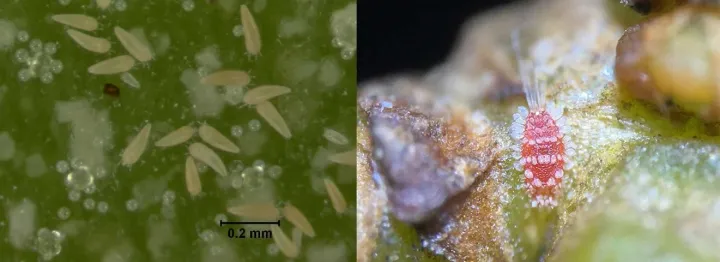
The peacock mite, scientifically known as Tuckerella, belongs to the family Tuckerellidae within the suborder Trombidiformes. It is named for the long, plume-like setae on its posterior, which resemble the tail feathers of a peacock.
Adult mites are typically vibrant red or orange, making them relatively easy to spot on green leaves despite their small size of approximately 0.3–0.4 mm. Using a magnifying glass is essential for accurate identification and scouting in the field.
These mites possess a unique morphology, characterized by specific sensory organs on the dorsal body and a specialized gnathosoma structure. Such features differentiate them from the common spider mites found in many gardening environments.
Their life cycle consists of egg, larva, protonymph, deutonymph, and adult stages. Depending on environmental temperatures, the generation time can range from two weeks to over a month, allowing for rapid population explosions in warmer climates.
High temperatures and dry conditions are primary triggers for population growth. During these periods, the incubation time for eggs decreases, leading to faster reproductive rates and more severe plant infestations if left unchecked.
What it damages
The peacock mite is a polyphagous pest that affects a variety of woody plants and shrubs. Common hosts include citrus trees, tea plants, grapevines, and various ornamental species like hibiscus and palms.
The mite feeds by inserting its stylets into the epidermal cells of the plant tissues to extract sap. This feeding action creates necrotic spots that eventually coalesce, causing significant tissue damage and impairing the plant's ability to photosynthesize.
Feeding wounds often compromise the plant's cuticle, providing entry points for secondary infections such as fungal pathogens and bacteria. This not only causes physical damage but also impacts the aesthetic value of ornamental plants and the marketability of fruits.
Severe infestations lead to premature leaf drop, stunted shoot growth, and a general decline in plant vigor. If an infestation persists on young seedlings, it can eventually lead to complete desiccation and death of the plant.
Signs of infection include chlorotic spots that turn brown or grayish over time. Unlike many other spider mite species, the peacock mite does not always produce heavy webbing, making visual inspection of the underside of the leaves crucial for early detection.
Control measures
Management of the peacock mite requires an integrated pest management (IPM) approach that combines cultural practices with targeted chemical or biological interventions. Regular monitoring is the foundation of any effective control strategy.
Cultural control measures involve pruning infested branches, maintaining proper plant hydration, and removing weeds that may serve as alternative hosts. Ensuring adequate spacing between plants improves air circulation and helps create a less favorable environment for mites.
Chemical control involves the application of specialized acaricides. It is critical to select products that are effective against all life stages of the mite, including the eggs, to break the reproductive cycle effectively.
To prevent the development of pesticide resistance, rotate between different chemical classes throughout the season. Thorough coverage of the foliage, especially the underside of the leaves, is essential to ensure the acaricide reaches the hidden populations.
Biological control agents, such as predatory mites (e.g., Phytoseiulus), can be highly effective in reducing peacock mite populations. Utilizing these natural enemies is a sustainable practice, particularly in greenhouse settings where environmental conditions can be managed.
Taxonomy
- Latin name
- Tuckerella
- Order
- Mites
- Family
- Tuckerellidae
- EPPO code
- TUCKSP
Discussion
No discussions yet — be the first.