
Giant willow aphid
Tuberolachnus salignus
Description
How to identify
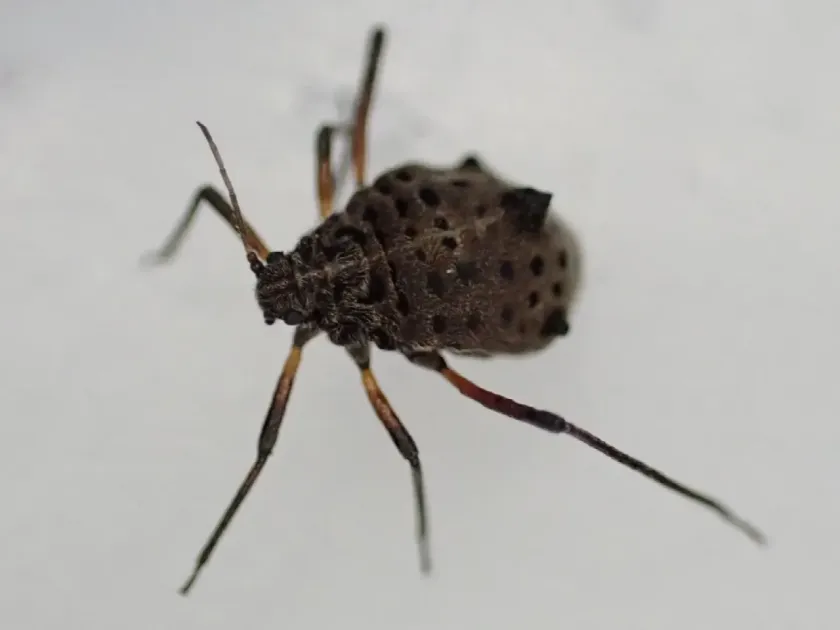
The giant willow aphid (Tuberolachnus salignus) belongs to the Lachnidae family, order Hemiptera. It is one of the largest aphid species worldwide, with adults reaching 5–6 mm.
The body is dark brown or black, covered with dense, short hairs, which gives them a unique matte appearance. A distinct conical dorsal tubercle (spine) on the abdomen is their most recognizable feature.
They are primarily wingless, viviparous females that live in dense colonies, clustering together on the bark of willow branches and trunks.
Their size and dark coloration make them stand out clearly against the lighter bark of willow trees, often forming masses visible even from a distance.
The species has a complex life cycle, and in many regions, the entire cycle occurs on the same willow tree without needing alternate hosts.
What it damages
The giant willow aphid primarily feeds on various species of the Salix genus, including weeping, brittle, and white willows, which are common in landscape design.
They occasionally infest poplars, making them a concern for parks, riparian zones, and nurseries where these trees are frequently planted.
By piercing the bark with their proboscis, they drain significant amounts of sap from the phloem, placing the host tree under intense physiological stress.
Heavy infestations can lead to the withdrawal of such vast amounts of nutrients that young trees may lose their vigor and fail to grow properly during the season.
The damage is compounded by the tree's weakened state, making it more susceptible to secondary fungal infections and winter injury.
When it appears
The active season begins in early spring as soon as sap flow commences in the willow tree, triggered by rising temperatures.
Multiple generations are produced throughout the summer months, with population densities often peaking in late summer and early autumn.
Unlike many other aphid species, they remain active into the late autumn months, with colonies often found on bark even after the leaves have fallen.
Overwintering is achieved through eggs laid in the crevices of the bark, which survive harsh conditions and provide a base for the next spring's population.
Under optimal conditions, the growth of a colony is exponential, allowing a small group of aphids to cover significant areas of the tree in a matter of weeks.
Signs of infestation
The most prominent sign is the massive production of honeydew, a sugary liquid excrement that covers the trunk and can even drip onto the ground beneath.
This sweet honeydew acts as a magnet for ants, wasps, and hornets; their unusual activity on the tree trunk is often the first indicator for tree owners.
Sooty mold fungi thrive on the sugar-rich honeydew, turning the bark black and sticky, which interferes with the plant's normal gas exchange.
Visible stress, such as yellowing of foliage and premature leaf drop, occurs as the aphid colony continues to sap the tree's resources.
- Sticky, shiny residue on tree bark.
- Large, active ant trails along the trunk.
- Black, powdery sooty mold on bark and leaves.
- Visible clusters of large, dark-bodied aphids.
- Stunted shoot growth and leaf deformation.
Control measures
Systemic insecticides are the most effective management strategy, as they travel through the plant's vascular system to reach the aphids feeding on the bark.
Applications of compounds like imidacloprid or acetamiprid are standard, ideally timed for early spring to catch the initial population before it explodes.
Managing the ant population is essential, as ants actively deter natural predators like ladybirds and lacewings that would otherwise feed on the aphids.
For smaller ornamental trees, horticultural oils or insecticidal soaps can be used as a contact control measure if applied thoroughly to the bark.
Promoting the health of the tree through proper watering and fertilization helps the willow better withstand aphid feeding pressure and recover faster.
Taxonomy
- Latin name
- Tuberolachnus salignus
- Order
- Hemiptera (bugs, aphids, leafhoppers)
- Family
- Aphididae
- EPPO code
- TUBRSA
Discussion
No discussions yet — be the first.