
Willow aphid
Tuberolachnus
Description
How to identify
The willow aphid (Tuberolachnus salignus) is a species of aphid belonging to the family Aphididae, notorious for being one of the largest aphid species found on trees.
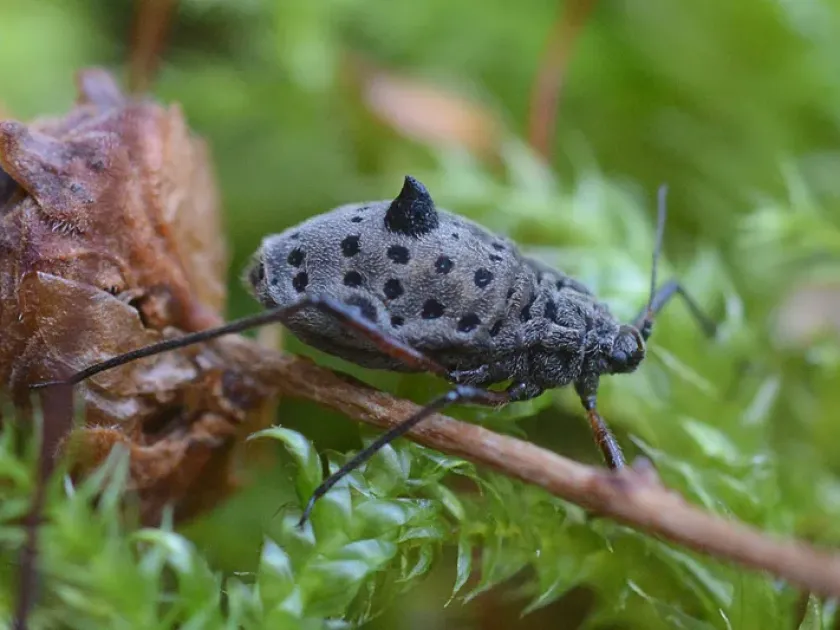
Adult aphids are typically dark brown or black in color and possess a distinct, prominent, and conical tubercle on the dorsal side of their abdomen.
They are relatively sedentary insects that tend to cluster in very high densities on the bark of willow branches, forming massive, dark-colored colonies.
Their life cycle involves complex patterns of parthenogenesis during the warmer months and sexual reproduction in the autumn to ensure over-wintering.
The colonies are so dense that they often look like textured growths or bark disfigurements to the untrained eye, making them easy to overlook initially.
What it damages
The primary host for this pest is the willow tree (Salix genus), though it can occasionally affect closely related species in garden settings.
By feeding on the phloem sap of young to medium-aged shoots, the aphids inflict severe nutritional stress on the tree, draining its vital energy reserves.
The constant sap extraction leads to stunted growth, wilting of young shoots, and a significant reduction in the overall vigor and aesthetic appeal of the tree.
Massive infestations often cause heavy secretion of honeydew, which creates a sticky surface prone to the growth of sooty mold, further damaging the tree's health.
Severe and prolonged infestations can result in premature leaf drop, branch dieback, and increased susceptibility to other pests or secondary fungal infections.
When it appears
The activity begins in early spring, as soon as temperatures allow the overwintering eggs to hatch and the young aphids to start feeding.
The population reaches its peak density during mid-to-late summer, coinciding with optimal growth conditions for both the tree and the aphid colony.
Winged forms appear throughout the summer months, allowing the population to migrate and colonize new, healthy parts of the tree or adjacent trees.
As the weather cools in autumn, the aphids undergo a reproductive shift, producing eggs that are deposited into bark crevices to survive the winter.
Because they produce multiple generations in a single season, a single cluster can rapidly spread to cover an entire tree if left unchecked.
Signs of infestation
The most obvious sign is the presence of large, dense, dark, and seemingly "furry" masses of aphids clustered tightly on the branches and twigs.
Sticky honeydew deposits on leaves and branches, often accompanied by the presence of ants, wasps, or flies, serve as a strong indicator of an aphid infestation.
The appearance of black sooty mold on the bark or foliage, caused by the colonization of fungi on the aphid honeydew, is a classic secondary symptom.
Deformed, yellowing, or prematurely dropping leaves on otherwise healthy-looking branches are often the result of heavy feeding by these sap-sucking pests.
A closer inspection of the bark will reveal the aphids themselves, especially around nodes or in areas where the bark is relatively soft.
Control measures
Integrated Pest Management (IPM) is the best approach, starting with the removal and destruction of heavily infested branches during pruning.
For small trees or minor infestations, spraying the colonies with a strong jet of water can effectively dislodge and reduce the aphid population.
Systemic insecticides are the most effective chemical control, as they are absorbed by the plant and kill the aphids when they feed on the sap.
Encouraging natural predators such as ladybugs, lacewings, and hoverflies is an excellent biological control strategy for organic gardening practices.
Always ensure your trees are well-watered and properly fertilized, as a healthy tree is far more resilient to aphid damage than a stressed one.
Taxonomy
- Latin name
- Tuberolachnus
- Order
- Hemiptera (bugs, aphids, leafhoppers)
- Family
- Aphididae
- EPPO code
- TUBRSP
Discussion
No discussions yet — be the first.