
Tuberculatus indicus
Tuberculatus indicus
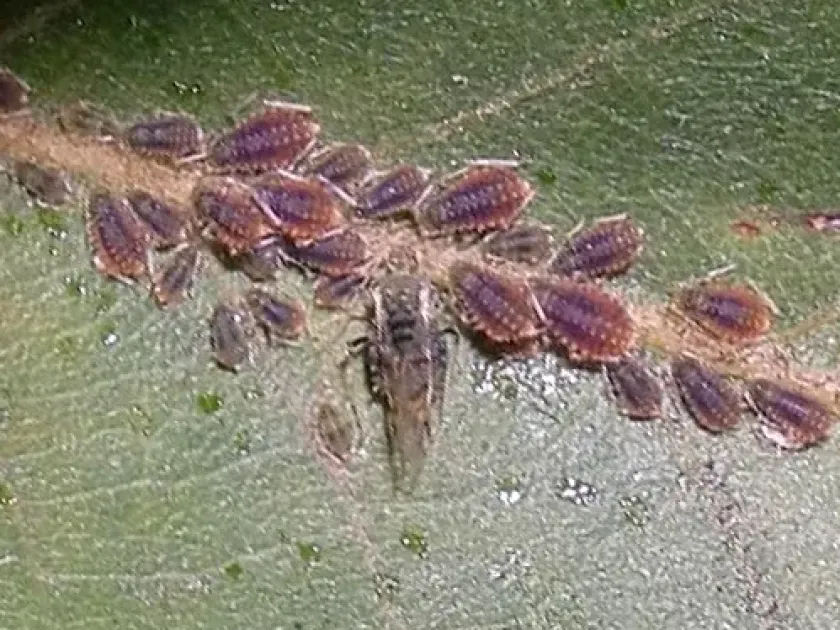
Description
How to identify
Tuberculatus indicus is a species of aphid belonging to the family Aphididae. It is a specialist feeder commonly found on oak trees (Quercus species) and is characterized by distinct morphological features.
The body of adult individuals often displays small dorsal tubercles, which is a key diagnostic feature for the genus Tuberculatus. Their coloration is usually pale, ranging from yellow to light green, aiding in camouflage.
The life cycle involves multiple generations per season. The population includes both winged (alatae) and wingless (apterae) forms, allowing for efficient colonization and dispersal across the host plant.
Field identification can be challenging due to their small size. Specialists typically examine the structure of the siphunculi and the wing venation patterns under magnification to confirm the species.
These aphids tend to form colonies on the underside of leaves, which provides a sheltered microclimate. This position also makes them harder to detect during casual inspections.
What it damages
The primary hosts for Tuberculatus indicus are various species of oak. This pest is a significant concern for arborists, foresters, and nursery managers who handle deciduous ornamental trees.
Damage is caused by the aphid piercing the leaf epidermis and sucking out nutrient-rich phloem sap. This feeding process results in reduced vigor, stunted leaf development, and overall tree stress.
A major indirect impact of this pest is the secretion of honeydew. This sticky substance coats the leaves, promoting the growth of sooty mold, which can obstruct gas exchange and photosynthesis.
Leaves affected by high aphid pressure often curl, yellow, and undergo premature abscission. In severe infestations, this leads to significant leaf loss, which can weaken the tree over several seasons.
The presence of large aphid colonies also makes the tree a target for secondary opportunistic pathogens, which may take advantage of the weakened physiological state of the host.
When it appears
The season starts in early spring when eggs deposited on tree bark in the previous autumn hatch in synchrony with bud burst. This allows the newly emerged nymphs to feed on young, succulent tissue.
Peak population density typically occurs in early to mid-summer when environmental conditions are ideal for rapid reproduction. During this time, the aphids can complete several cycles in a short period.
As the season progresses toward autumn, changing day length and temperature trigger the production of sexual forms. These individuals mate and lay overwintering eggs on the host tree.
Environmental factors such as high humidity or heavy rainfall can temporarily regulate population growth. However, in stable conditions, the population can reach levels that require chemical intervention.
Regular scouting is recommended from late spring through late summer to track the build-up of colonies and determine if intervention thresholds have been met.
Signs of infestation
One of the earliest signs of infestation is the appearance of chlorotic spots on the leaf blades. These represent areas where the aphids have been feeding consistently for an extended duration.
White shed skins (exuviae) left behind by nymphs after molting are a very reliable sign that an active population of aphids is currently present on the tree foliage.
Ant activity is a major indicator; ants are often found tending the aphids to collect their honeydew. A heavy flow of ants moving up and down the trunk is a strong diagnostic sign.
The development of a black, powdery layer of sooty mold on the upper surface of leaves clearly signals that honeydew production has been heavy for some time.
In cases of high infestation, the tree's overall appearance will change as leaves begin to curl and drop prematurely, causing the tree to look sparse and sickly.
Control measures
Chemical control focuses on the use of systemic insecticides, which are absorbed by the plant and ingested by the aphids during feeding. These are highly effective for large-scale infestations.
Biological control plays a crucial role in integrated pest management. Encouraging natural predators like ladybugs, hoverflies, and lacewings can keep aphid numbers below damaging levels.
Good horticultural practices, such as proper watering and nutrient management, help trees withstand aphid attacks. Healthy trees are significantly more resilient to minor infestations.
For ornamental trees, applying insecticidal soaps or horticultural oils can be a safer, less toxic option to manage small colonies while minimizing the impact on beneficial insects.
- Monitor for early signs of leaf yellowing.
- Implement systemic insecticide treatments if thresholds are exceeded.
- Promote biodiversity to maintain a population of natural predators.
Taxonomy
- Latin name
- Tuberculatus indicus
- Order
- Hemiptera (bugs, aphids, leafhoppers)
- Family
- Aphididae
- EPPO code
- TUBEIN
Discussion
No discussions yet — be the first.