
Yellow oak aphid
Tuberculatus eggleri
Description
How to identify
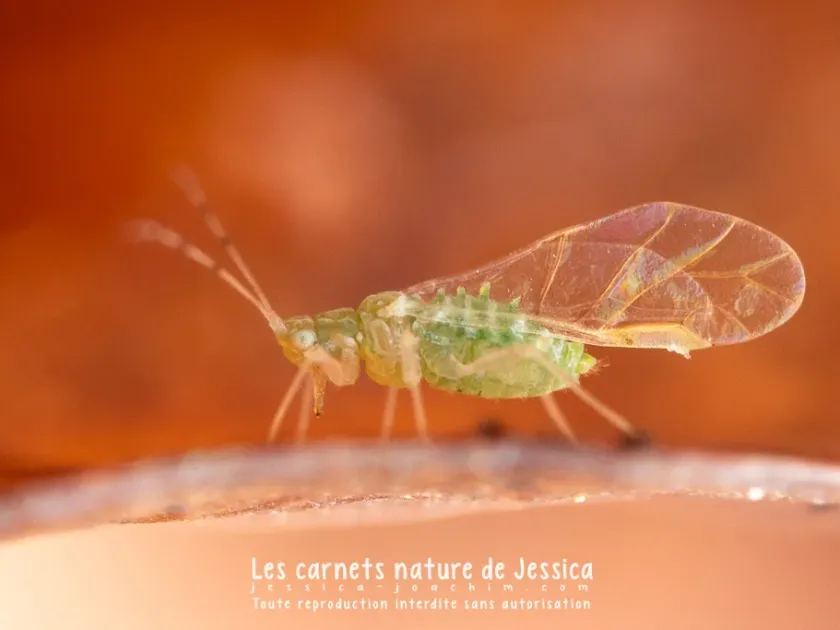
The yellow oak aphid (Tuberculatus eggleri) belongs to the order Hemiptera and the family Aphididae. It is a small insect characterized by a yellowish-green coloration, often featuring dark spots or stripes on the dorsal side of the abdomen.
Adults possess developed wings, which enable them to actively disperse across the tree canopy. The pest's body features specialized projections that assist in camouflaging against the undersides of oak leaves.
The life cycle of this species is closely tied to the oak tree. Reproduction occurs through both sexual and parthenogenetic methods, ensuring rapid population growth under favorable climatic conditions.
These insects are highly specialized pests that prefer specific oak species. Identification is often difficult because they tend to press tightly against leaf veins, making them nearly invisible upon casual inspection.
Nymphs share a similar color to the adults but differ in size and lack functional wings. They feed actively, rapidly increasing the colony size on young shoots and foliage.
What it damages
The primary host for this species is the pedunculate oak and other members of the Quercus genus. The aphid mainly inhabits the underside of the leaf blade, where it congregates along the major veins.
Damage is caused by the extraction of cell sap, which disrupts the tree's metabolic processes. During mass outbreaks, plants become weakened, leading to reduced growth rates and lower resistance to other pathogens.
Affected leaf areas may become deformed and yellow. Severe infestations often lead to premature leaf drop, which negatively impacts photosynthesis and the accumulation of energy reserves before winter.
Aphids excrete honeydew, which serves as a substrate for the development of sooty mold. This coating impairs leaf respiration and degrades the sanitary condition of the stands, giving the trees an unkempt appearance.
In the long term, continuous aphid attacks can contribute to the dieback of young twigs and overall tree decline, which is particularly dangerous for nursery saplings and urban plantings.
When it appears
The appearance of this pest is observed from early spring, as soon as buds begin to open. Founders hatch from eggs that overwintered on the bark of young branches and begin to colonize the leaves.
Population peaks typically occur during the first half of summer when weather conditions are most favorable for reproduction. During this period, dozens of individuals can be found on a single leaf.
The second half of summer is characterized by a gradual decline in activity, although in warm weather, reproductive cycles can continue into early autumn. During this time, sexual morphs are produced.
In autumn, females lay eggs that remain in bark crevices throughout the winter. It is in the egg stage that the pest survives the adverse winter period.
Monitoring for aphid activity should begin in May, as early detection of colonies allows for measures that significantly reduce damage to the leaf canopy.
Signs of infestation
The first sign of infestation is the curling or partial discoloration of oak leaf edges. Frequently, the foliage loses its vibrant green color and acquires a chlorotic, pale tint.
The presence of a sticky substance on the leaf surface and beneath the tree indicates the activity of a large aphid colony. This honeydew often attracts ants, which frequently associate with the pests.
The appearance of a black coating — sooty mold — is a late sign of infestation. It rapidly covers the sticky areas, interfering with the normal development and health of the tree.
On the underside of the leaf, one can spot numerous small light or yellowish dots, which are clusters of insects of various developmental stages.
- Deformation of leaf blades
- Presence of sticky honeydew
- Ant colonies active on the branches
- Development of sooty mold
- Premature leaf drop in late summer
Control measures
Effective protection involves the use of systemic insecticides, which penetrate plant tissues and affect aphids while they feed on sap. This is the most efficient method for large-scale infestations.
Biological control methods include attracting natural predators such as ladybugs, lacewings, and hoverfly larvae. Maintaining biodiversity in forest belts helps keep the aphid population in check.
In small gardens or nurseries, the application of eco-friendly products based on potassium soap or horticultural oils is possible; these physically block the insects' spiracles.
An important element is good silvicultural care aimed at increasing the oak's vitality: regular watering, fertilization, and the avoidance of stress factors contribute to better resistance against pests.
When planning treatments, it is crucial to consider the economic threshold and apply sprays before mass leaf curling occurs, as this curling protects the aphids from direct contact with the pesticide.
Taxonomy
- Latin name
- Tuberculatus eggleri
- Order
- Hemiptera (bugs, aphids, leafhoppers)
- Family
- Aphididae
- EPPO code
- TUBEEG
Discussion
No discussions yet — be the first.