
Oak yellow aphid
Tuberculatus annulatus
Description
How to identify
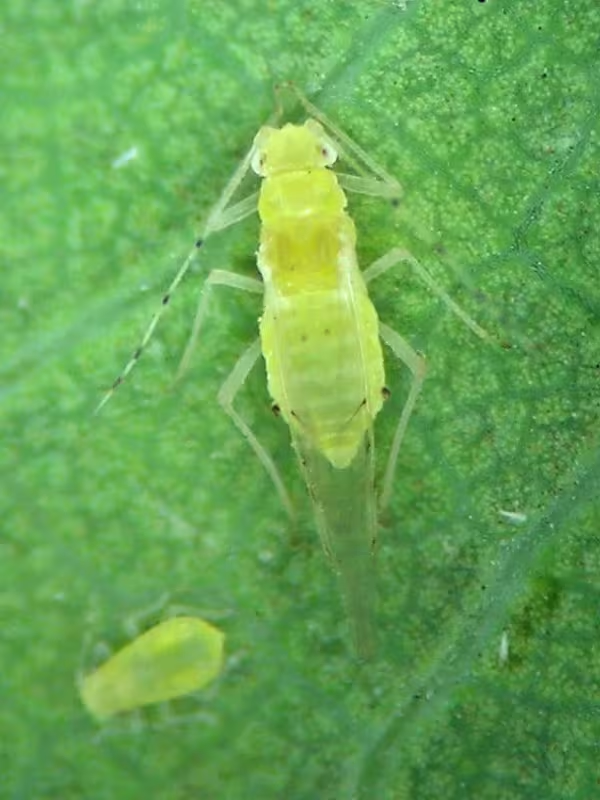
The oak yellow aphid (Tuberculatus annulatus) is a small, specialized insect belonging to the family Aphididae that feeds exclusively on oak species.
These aphids are characterized by a distinct yellow or lemon-green color, making them difficult to spot against the backdrop of oak leaves.
Adult specimens typically measure between 1.5 and 2.5 millimeters in length, and the winged forms possess transparent wings with dark veins.
The life cycle involves several nymphal stages, during which the insects develop gradually, often remaining in clusters on the underside of leaves.
As a mono-phagous insect, this species has evolved deep biological adaptations to synchronize its life cycle with the phenology of host oak trees.
What it damages
This pest targets various oak species (Quercus), primarily affecting the leaves where they suck out sap, which is rich in essential nutrients.
Continuous feeding causes the leaves to lose vigor, leading to yellowing, distortion, and, in severe cases, premature leaf abscission.
The aphids secrete honeydew, a sticky substance that promotes the growth of sooty mold, blocking photosynthesis and damaging the aesthetic quality of trees.
Heavy infestations reduce the tree's energy reserves, weakening its overall health and making it more susceptible to secondary pathogens and drought.
Young trees in nurseries are particularly vulnerable to growth retardation when colonized by high populations of these aphids.
When it appears
The season begins in early spring when nymphs emerge from eggs that have overwintered in bark crevices of the host tree.
Throughout the spring and summer, the population grows rapidly through several generations, including both wingless and winged individuals for dispersal.
Activity peaks during the warm summer months, particularly in July and August, when trees are at their highest physiological activity levels.
As autumn approaches, the aphid produces sexual forms that mate and lay overwintering eggs, ensuring the species survives until the next year.
Fluctuations in climate, particularly warm winters, can lead to earlier emergence and more severe infestation levels in the following growing season.
Signs of infestation
The most visible sign of an infestation is the presence of honeydew on the leaves, which creates a shiny, sticky appearance.
The presence of ants roaming the branches is a strong indicator of aphid activity, as ants frequently tend to aphids to harvest the honeydew.
Careful inspection of the underside of leaves will reveal clusters of tiny yellow insects resting near the veins of the foliage.
Chlorotic spots or localized yellowing on the leaf blade often indicate the points where the aphids have been feeding for an extended period.
Early leaf drop during mid-summer, while the rest of the tree appears otherwise normal, can point to significant aphid pressure.
Control measures
Effective management requires a combination of biological, chemical, and cultural practices to minimize damage to oak populations.
Preserving natural predators like ladybird beetles, lacewings, and hoverflies is critical for maintaining natural ecological balance.
For ornamental or high-value trees, targeted insecticide treatments may be necessary during peak population growth phases.
- Utilize systemic insecticides approved for tree care to target feeding aphids.
- Encourage beneficial insect habitats by planting diverse vegetation near oak stands.
- Monitor trees regularly during the spring and summer months to detect outbreaks early.
Integrating these strategies helps maintain tree vigor while reducing the reliance on broad-spectrum chemical interventions.
Taxonomy
- Latin name
- Tuberculatus annulatus
- Order
- Hemiptera (bugs, aphids, leafhoppers)
- Family
- Aphididae
- EPPO code
- TUBEAN
Discussion
No discussions yet — be the first.