
Tropical leafminer
Tropicomyia
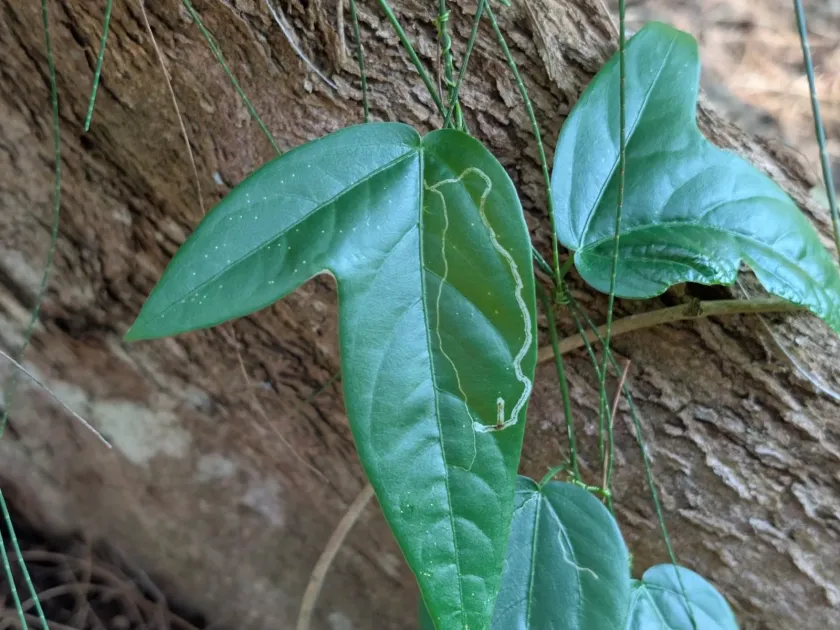
Description
How to identify
The tropical leafminer (genus Tropicomyia) belongs to the order Diptera and the family Agromyzidae. These are tiny flies, with adults typically measuring between 2 to 3 mm in length, often characterized by a dark appearance.
Accurate identification of these pests is difficult due to their similarity to other leafminer species. Often, specialized entomological expertise is required to distinguish them based on morphological characteristics.
The life cycle of Tropicomyia comprises four stages: egg, larva, pupa, and adult. In tropical and subtropical climates, this cycle is very rapid, allowing for multiple generations within a short period.
The larvae are internal feeders, meaning they spend their entire larval stage consuming the internal tissues of host leaves. They create distinct, winding tunnels known as mines throughout the leaf lamina.
Unlike many other leafminers, Tropicomyia species are known to burrow into the stems, petioles, and even midribs of younger plants, making them particularly damaging to seedlings and young ornamental crops.
What it damages
The tropical leafminer is highly polyphagous, meaning it feeds on a vast array of plant species. This makes it a significant threat to various agricultural and horticultural sectors worldwide.
Common host plants include legumes such as beans and soybeans, solanaceous crops like tomatoes, various cotton varieties, and numerous tropical fruit trees and ornamental shrubs.
The primary damage is caused by the larvae, which consume the photosynthetic leaf tissue. This disruption significantly impairs the plant's ability to produce energy, leading to reduced growth and yield.
Severe infestations result in heavy leaf drop, wilting, and, in young plants, stunted growth or complete destruction of the shoot tips. The aesthetic value of ornamental plants is also severely compromised.
Furthermore, the physical punctures made by adult females during feeding and oviposition provide entry points for secondary pathogens, such as fungi and bacteria, which can cause further systemic disease.
Signs of infestation
The most visible symptom is the presence of pale, serpentine trails on the leaf surface. As the larvae grow, these tunnels become wider and more noticeable, often crisscrossing the entire leaf.
These mines can be distinguished by their length and the presence of fine excrement lines deposited by the larvae as they progress through the leaf tissue. Dried, necrotic spots often form along older mines.
In cases where the larvae mine the petioles or stems, signs include visible twisting or distortion of the growth structure, which can lead to localized necrosis or weakening of the plant's vascular system.
Early signs of an infestation often appear as tiny, clear, or white punctures on the leaves. These are caused by the female fly, which uses her ovipositor to create feeding holes for obtaining plant sap.
For monitoring purposes, one should look for these trails during early development stages. Holding the leaf up to the light can reveal the presence of the larva or the structure of the internal mine.
Control measures
Managing the tropical leafminer requires an integrated approach that combines sanitation, biological control, and targeted chemical applications to keep populations below economic damage thresholds.
Good sanitation practices are essential, including the removal and destruction of infested leaves and weeds that act as alternate hosts, ensuring that the pest cycle is broken regularly.
Yellow sticky traps are a highly effective tool for detecting the presence of adult flies in greenhouses, allowing for early intervention before the population reaches an uncontrollable level.
Biological control methods involve the use of parasitoid wasps (Hymenoptera), which occur naturally and can significantly suppress leafminer populations by parasitizing the larvae inside their mines.
Chemical control should focus on systemic insecticides that can penetrate the leaf tissue. Contact insecticides are generally ineffective because the larvae remain protected inside the plant throughout their development.
Taxonomy
- Latin name
- Tropicomyia
- Order
- Diptera (flies)
- Family
- Agromyzidae
- EPPO code
- TRPCSP
Discussion
No discussions yet — be the first.