
Juniper mite
Trisetacus juniperinus
Description
How to identify
The juniper mite (Trisetacus juniperinus) is a member of the Eriophyidae family, known as gall mites. These are microscopic pests, typically measuring only 0.2 mm in length, making them invisible to the naked eye and difficult to detect without high-magnification tools.
Physically, they possess a slender, worm-like body that is usually whitish or yellowish. Unlike typical mites, these organisms have only two pairs of legs located at the front of the body, which is a distinctive anatomical feature of the Eriophyidae group.
The life cycle of the juniper mite is entirely dependent on the host plant. They spend their entire life, including feeding and reproduction, nestled within the scales of the juniper needles or in the axils of shoots, providing them with natural protection from external elements.
Dispersal across a landscape occurs primarily through wind currents, rain splash, or hitchhiking on larger insects. Additionally, the introduction of the pest into a new garden frequently occurs through the purchase and planting of infested nursery stock.
Population explosions are most common during warm, dry periods. Under these favorable conditions, the mites reproduce rapidly, leading to high densities that can cause significant damage to the plant's aesthetic and physiological integrity within a single growing season.
What it damages
The primary hosts for Trisetacus juniperinus are species of the Juniperus genus, particularly those with scale-like needles. The mites feed on the cell sap of the foliage, disrupting the plant's metabolic functions.
As the mites feed, the host plant suffers from nutrient depletion. This leads to stunted growth, loss of foliage luster, and eventually, the browning and dieback of branches, which can significantly ruin the plant's ornamental appeal in landscaping.
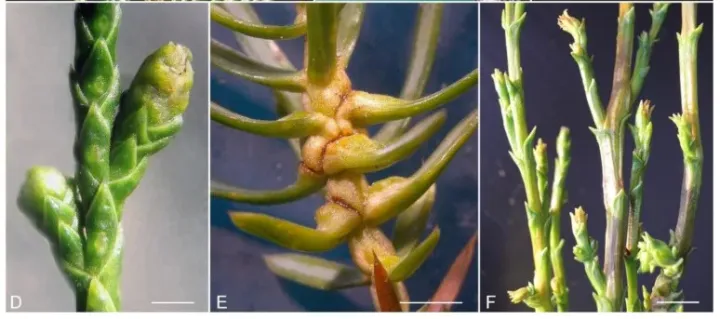
Affected shoots often show signs of physical deformation, becoming distorted or brittle. The change in needle color—often shifting to a dull yellow or brown—is a direct result of the toxic saliva injected by the mites while feeding on the needle tissue.
Severe infestations weaken the plant's overall defense system. This makes the juniper highly susceptible to secondary attacks from fungi and opportunistic diseases, which can accelerate the necrosis of the foliage and shoots, leading to branch death.
The long-term impact includes a reduction in cold hardiness. Weakened junipers struggle to recover from winter stress or late spring frosts, which may lead to irreversible damage to the structure of the canopy.
Signs of infestation
The most telltale sign of a juniper mite infestation is the formation of galls or abnormal swellings on the shoots. These deformations are the plant's pathological response to the feeding activity of the mites.
Early diagnosis relies on spotting subtle color changes in the foliage. The needles may lose their vibrant green hue, appearing matte, dull, or slightly yellow. If left untreated, this discoloration spreads across entire branches, leading to needle drop.
Using a hand lens, one may observe the microscopic mites or their debris trapped beneath the scales of the needles. Also, keep an eye out for stunted new growth that looks cramped or twisted compared to healthy segments of the plant.
It is critical to inspect the interior of the canopy regularly, as infestations often begin in these sheltered, low-light areas before spreading outward. A dense canopy may harbor a significant population long before the outer needles show symptoms.
If your juniper looks unthrifty, displays uneven growth, or has localized patches of needle distortion, it is a strong indicator of a mite problem that requires immediate diagnostic action and targeted treatment.
Control measures
Control of the juniper mite requires the use of specialized acaricides, as standard broad-spectrum insecticides are often ineffective against this specific group. Systemic acaricides are preferred as they penetrate the plant tissue where the mites hide.
Effective active ingredients often include abamectin or spirodiclofen. It is essential to conduct multiple treatments, typically 2–3 applications spaced 10–14 days apart, to target successive generations as they emerge from eggs.
Cultural control involves aggressive sanitation. Pruning and removing all infested branches is a mandatory step. These clippings should be destroyed (burned or bagged for removal) immediately to stop the spread of mites to healthy plants.
Maintaining the overall vigor of the plant is part of a successful management strategy. Proper watering, balanced fertilization, and thinning out dense branches to improve airflow help the juniper withstand mite pressure more effectively.
Preventative monitoring from early spring through late summer is the best defense. Detecting the pest at the initial stage allows for localized management, preventing the mite from becoming a permanent fixture in your landscape.
Taxonomy
- Latin name
- Trisetacus juniperinus
- Order
- Mites
- Family
- Phytoptidae
- EPPO code
- TRSEJU
Discussion
No discussions yet — be the first.