
Hogchoker
Trinectes maculatus
Description
How to identify
The Hogchoker (Trinectes maculatus) is a small flatfish belonging to the order Pleuronectiformes and the family Achiridae.
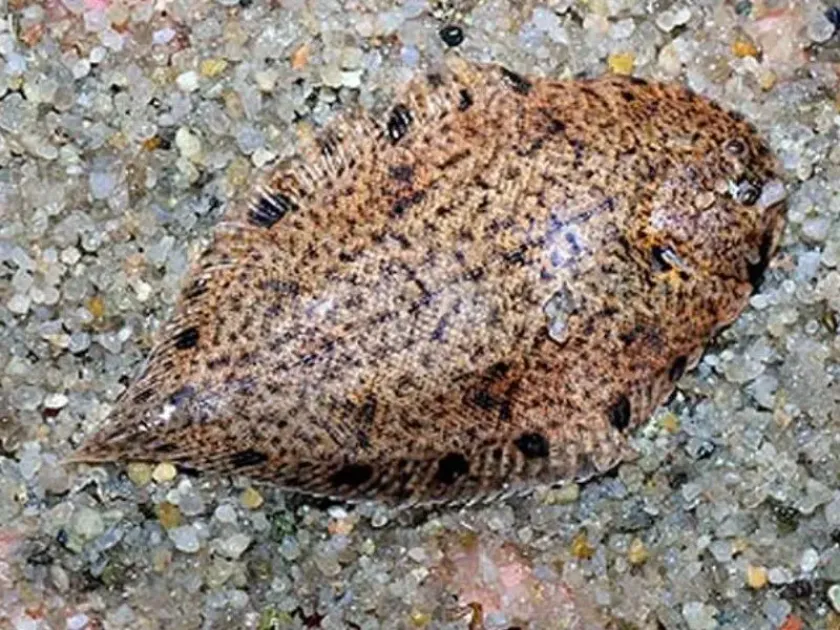
It possesses an oval-shaped, highly compressed body that is well-adapted for life on sandy or muddy substrates in estuarine environments.
A distinctive feature of the Hogchoker is that both eyes are located on the right side of its head, a trait shared with other soles.
The skin is covered with minute, rough, ctenoid scales, giving the fish a texture often described as feeling like sandpaper.
Coloration is typically dark brown or olive with irregular dark crossbands, providing excellent camouflage against the river or sea bottom.
What it damages
While the Hogchoker is not a pest for agricultural crops, it poses challenges for the aquaculture industry and fisheries management.
The species can cause damage to netting and cages in fish farms due to their presence and activity around submerged structures.
As a bottom-dweller, it competes for resources and may interfere with the feeding processes of commercially farmed fish species.
The name "Hogchoker" derives from the fact that its rough scales and bony body make it difficult for larger animals to swallow, which can lead to hazards in feeding areas.
Managing the presence of this species is crucial for maintaining the integrity of submerged infrastructure in coastal fish farming.
When it appears
The lifecycle and activity levels of the Hogchoker are closely tied to seasonal water temperature fluctuations in coastal and estuarine zones.
During the warmer spring and summer months, these fish are more active, often migrating into shallower waters to feed and spawn.
As water temperatures drop during the autumn and winter, the fish migrate toward deeper channels and reduce their overall metabolic activity.
Spawning events usually occur in late spring and summer, leading to increased population density in coastal brackish waters.
Predicting these seasonal movements helps aquaculture operators anticipate when potential interaction with the species is at its peak.
Signs of infestation
The presence of Hogchokers in an aquatic facility is frequently identified during routine maintenance of underwater nets and cages.
Signs of physical damage, such as abrasions or micro-tears in synthetic netting, are common indicators of their movement against structures.
Observations by divers or underwater cameras often reveal the fish partially buried in the substrate near the base of farm structures.
Monitoring the composition of bycatch in control nets provides accurate data on the population density of the species in the area.
Indirect signs include reduced feed efficiency in pens, which may suggest that local fish populations are being disturbed by bottom-dwelling species.
Control measures
Effective control involves the use of high-strength, abrasion-resistant materials for cages to withstand the abrasive texture of the fish's skin.
Preventative maintenance includes keeping submerged structures clean of biofouling to reduce the attraction of bottom-feeding organisms.
Physical barriers or fine-mesh screens can be installed at water intake points to prevent the entry of juvenile Hogchokers into growing pens.
Operational management focusing on optimal feeding techniques helps ensure that food does not settle on the bottom and attract unwanted species.
- Utilizing reinforced netting materials.
- Conducting regular inspections of submerged assets.
- Installing fine-mesh exclusion screens.
Taxonomy
- Latin name
- Trinectes maculatus
- Family
- Pleuronectidae
- EPPO code
- TRNEMA
Discussion
No discussions yet — be the first.