
Destructor beetle
Tribolium destructor
Description
How to identify
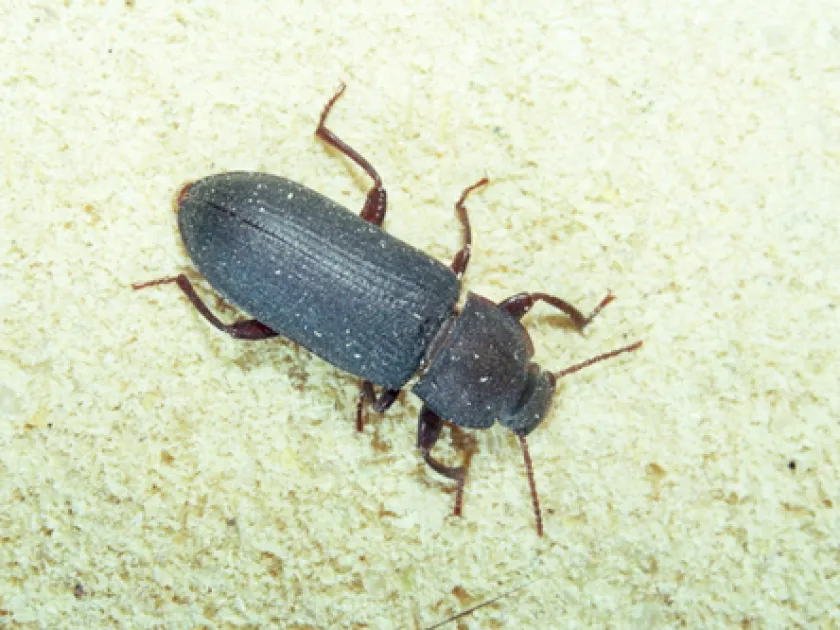
Tribolium destructor, known as the destructor beetle, is a common stored-product pest belonging to the Tenebrionidae family. Adults are dark brown to black, typically measuring between 5 and 6 mm in length.
The name stems from its antennae, which possess a distinct club-like structure at the terminal segments, differentiating them from other similar flour beetles.
Larvae are cylindrical and yellowish-white, growing up to 10 mm long with a darkened, sclerotized head capsule and specific urogomphi on the last abdominal segment.
The life cycle is temperature-dependent and can be completed in a few months under optimal warm conditions, which are frequently found in warehouses or food processing plants.
The species is notably resilient and can survive in a variety of environments, making it a persistent problem in grain storage facilities and even domestic pantries.
What it damages
The destructor beetle is a generalist feeder that damages various commodities, including cereals, flour, dried fruits, oilseeds, and processed feed products.
Both adults and larvae consume the grain germ, significantly reducing the viability of seeds and the nutritional value of processed food stocks.
By boring into grain kernels and pulverizing them, the larvae contribute to the accumulation of waste products, rendering the commodity unsuitable for consumption.
Contamination by frass, larval skins, and dead insects leads to severe quality degradation, often resulting in complete loss of market value for the affected lot.
Heavy infestations can lead to increased moisture content in stored grains, creating an ideal environment for secondary pests and the growth of toxic fungi.
Signs of infestation
Visual inspection often reveals the presence of fine powder mixed with debris, which is a classic indicator of beetle larvae feeding inside grain masses.
Adults are often spotted on walls, near lighting sources, or crawling on the surface of stored bags, particularly during late evening hours when they are most active.
A persistent, musty odor coming from stored products usually indicates a high level of insect activity and the potential decomposition of organic material.
Detection of shed larval skins during routine cleaning or bin inspection suggests that the beetle population has successfully completed multiple life stages on-site.
Clumping of flour or grain particles is another common sign, often occurring as the insects increase the local temperature and humidity levels within the pile.
Control measures
Sanitation is the most effective preventative measure; keeping warehouses free of spilled grain and organic dust minimizes the food supply for the beetles.
Fumigation using phosphine-based products is the standard procedure for eliminating existing infestations in large grain stocks within sealed silos or warehouses.
Monitoring using pheromone traps and light traps provides early warning systems, allowing facility managers to intervene before populations explode.
Managing the environmental conditions of the storage facility, particularly keeping temperatures low and grain moisture below 13%, is vital to curbing beetle reproduction.
Empty storage areas should be thoroughly treated with approved surface insecticides to prevent new infestations from migrating into the fresh harvest.
Taxonomy
- Latin name
- Tribolium destructor
- Order
- Coleoptera (beetles)
- Family
- Tenebrionidae
- EPPO code
- TRIBDE
Discussion
No discussions yet — be the first.