
Confused flour beetle
Tribolium
Description
How to identify
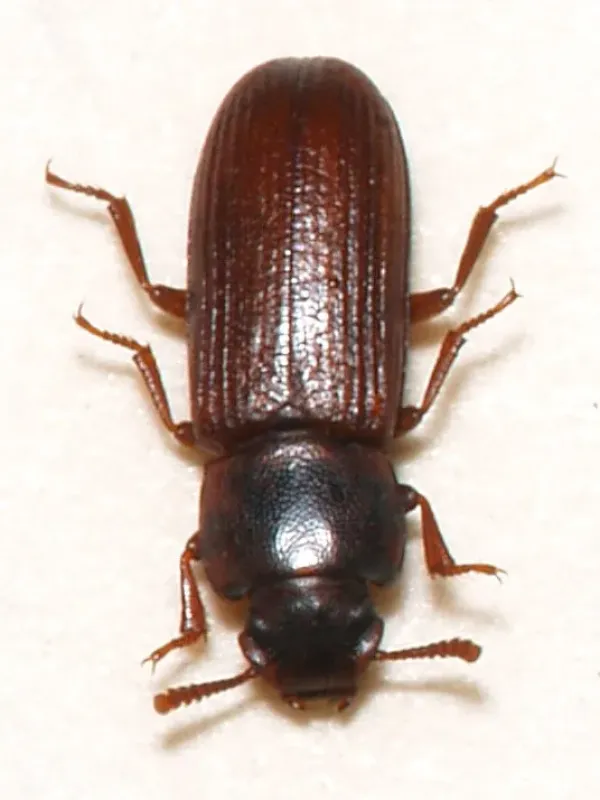
The confused flour beetle (Tribolium confusum) belongs to the Tenebrionidae family. It is a small insect, measuring approximately 3–4 mm in length, with an elongated, flattened, reddish-brown body.
The larvae of this pest are creamy-yellow in color, reach 6–7 mm in length, and have two small pointed projections on their final abdominal segment.
Pupae are usually white or pale yellow, immobile, and found within the grain bulk or flour where the larvae have been feeding.
Adult beetles are capable of flight in warm conditions, which allows them to migrate rapidly across large grain storage facilities and processing plants.
This beetle is highly resilient and can thrive in environments with low moisture, making it one of the most successful pests in the grain industry.
What it damages
The confused flour beetle is a major secondary pest of stored products, primarily attacking flour, cereals, bran, and various grain-based food products.
While they prefer processed products, they also infest broken or damaged whole grains of wheat, barley, maize, and rice during prolonged storage.
The larvae feed on the grain or flour, causing significant weight loss and contaminating the food supply with excrement, cast skins, and secretions.
Infested products often develop an unpleasant, musty odor, rendering them unsuitable for human consumption or for high-quality food processing.
In industrial milling facilities, they can accumulate in machinery, leading to cross-contamination of products and significant economic losses.
When it appears
In heated indoor environments such as granaries, warehouses, and mills, the confused flour beetle can remain active and reproduce throughout the entire year.
Optimal conditions for development include temperatures between 20°C and 30°C and a substrate moisture content of at least 10–12%.
The life cycle from egg to adult takes approximately 25–40 days, allowing for multiple generations per year depending on environmental conditions.
Females are highly prolific, laying several hundred eggs throughout their lifespan directly into the food material or nearby cracks in the flooring.
The population growth is rapid in warm climates, often causing significant infestations within just a few months if left uncontrolled.
Signs of infestation
The primary indicator of an infestation is a distinctive, pungent, moldy odor emanating from the grain or flour due to the beetles' chemical secretions.
Visible presence of adult beetles on the surface of stored grain, especially when light is introduced into a dark storage area, confirms an active colony.
The formation of clumps or mats in flour, often held together by larval silk and excrement, is a classic sign of advanced infestation.
Frequent discovery of cast larval skins during sieve testing of grain samples is a strong signal that the population is currently breeding.
Finding beetles clustered in crevices, near conveyor belts, or within machinery housing indicates localized hot spots of infestation.
Control measures
Good sanitation is the first line of defense: regular cleaning of grain debris, dust, and spills from all corners of the storage facility is crucial.
Physical methods such as aerating the grain to lower moisture content or cooling the grain to temperatures below 15°C help slow down development.
Residual spraying of surfaces with approved contact insecticides is effective for empty warehouse treatment before accepting new grain deliveries.
Fumigation using phosphine-based products is the standard industry practice for eliminating deep-seated infestations within large grain bulks.
Integrated Pest Management (IPM) using pheromone traps and regular physical inspection helps in early detection and prevents widespread pest outbreaks.
Taxonomy
- Latin name
- Tribolium
- Order
- Coleoptera (beetles)
- Family
- Tenebrionidae
- EPPO code
- TRIBSP
Discussion
No discussions yet — be the first.