
Trialeurodes vittata whitefly
Trialeurodes vittata
Description
How to identify
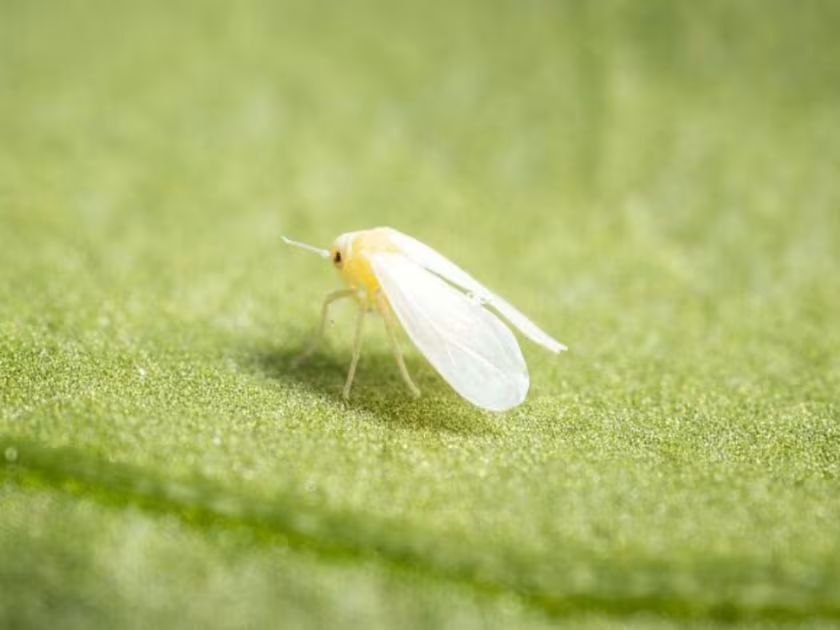
The whitefly species Trialeurodes vittata belongs to the family Aleyrodidae, order Hemiptera. Adult insects are small, moth-like creatures covered in a fine layer of waxy white powder.
The body of the adult is yellowish, and they possess distinctive markings on their wings that are key for accurate taxonomic identification. Their size is small, typically measuring only a few millimeters in length.
The immature stages include a mobile crawler stage that moves across the leaf surface to find an optimal site for feeding. Subsequent nymphal stages are sedentary and appear as small, flat, scale-like structures on the underside of leaves.
The species is well-adapted to sheltered environments such as greenhouses, where it can thrive throughout the year. Humidity and temperature are the primary factors influencing the development and survival of these whiteflies.
The life cycle involves an egg stage, several nymphal instars, and the adult stage. The transition between these phases is highly sensitive to the surrounding environmental conditions.
What it damages
This pest causes significant economic losses by piercing plant tissues and extracting cell sap. This feeding behavior drains the plant of essential nutrients, leading to reduced vigor and stunted growth.
Symptoms of heavy infestation include chlorosis, leaf yellowing, and eventual leaf drop. The plant's ability to undergo photosynthesis is severely compromised, which directly limits overall yield.
Whiteflies excrete honeydew, a sugary substance that promotes the growth of sooty mold. This dark mold covers the leaf surface, further inhibiting light absorption and causing aesthetic and physiological damage.
Trialeurodes vittata is known to serve as a vector for various plant viruses. Transmission of these pathogens can lead to systemic disease, potentially causing the total loss of the crop.
Young, rapidly growing plants are the most susceptible to damage. Severe infestations can prevent the development of healthy fruits and cause late-stage plant death.
When it appears
The outdoor activity of this species begins in late spring when temperatures consistently remain above 15°C. In controlled environments, they remain active and reproductive throughout the year.
Populations tend to reach their peak during the warmest summer months, provided humidity levels are sufficient. The optimal thermal range for rapid reproduction is between 22 and 26°C.
During the autumn, populations often move to sheltered locations or find refuge on evergreen weeds. The pupal stage is the most resilient to colder conditions, allowing the species to survive between seasons.
Development rates are strongly influenced by heat, with shorter life cycles occurring in warmer conditions. Cold spells can significantly slow development and increase mortality rates in outdoor populations.
Proactive monitoring should start in late spring using yellow sticky cards. Early detection is crucial to prevent the whitefly population from reaching damaging levels.
Signs of infestation
The most recognizable sign of an infestation is the presence of white adult flies that flutter into the air when a plant is disturbed. A cloud of these insects is a clear indication of a high infestation level.
Sticky honeydew on the leaves is a major indicator of whitefly activity. This substance often attracts secondary visitors like ants, which can alert growers to the underlying problem.
Leaf yellowing and curling are characteristic symptoms of prolonged sap extraction. Affected plants often appear dull and lack the vibrancy of healthy, pest-free specimens.
Visual inspection of the underside of leaves will reveal the sedentary, scale-like nymphal stages. These nymphs are often overlooked until the infestation has already become advanced.
Black sooty mold forming on the foliage confirms that the whitefly colony has been active for an extended period. This fungus is a secondary symptom that drastically reduces the market quality of the produce.
Control measures
Managing Trialeurodes vittata requires an integrated pest management (IPM) strategy. Combining cultural, biological, and chemical methods is the most effective way to ensure control.
Cultural practices include rigorous weed control, as weeds often act as host bridges for pests. Ensuring proper plant spacing and ventilation can also make the environment less favorable for whitefly expansion.
Biological control involves the introduction of natural enemies like Encarsia formosa, a parasitoid wasp. These beneficial insects can significantly reduce whitefly populations in greenhouses.
Chemical control should be employed strategically, focusing on systemic insecticides. It is vital to rotate modes of action to prevent the whitefly from developing resistance to chemical treatments.
- Consistent monitoring with yellow sticky traps.
- Timed applications of systemic insecticides.
- Removal and safe disposal of heavily infested plant parts.
- Strict greenhouse sanitation and quarantine procedures.
- Use of biological control agents to manage populations.
Taxonomy
- Latin name
- Trialeurodes vittata
- Order
- Hemiptera (bugs, aphids, leafhoppers)
- Family
- Aleyrodidae
- EPPO code
- TRIAVT
Discussion
No discussions yet — be the first.