
Acaudaleyrodes
Acaudaleyrodes
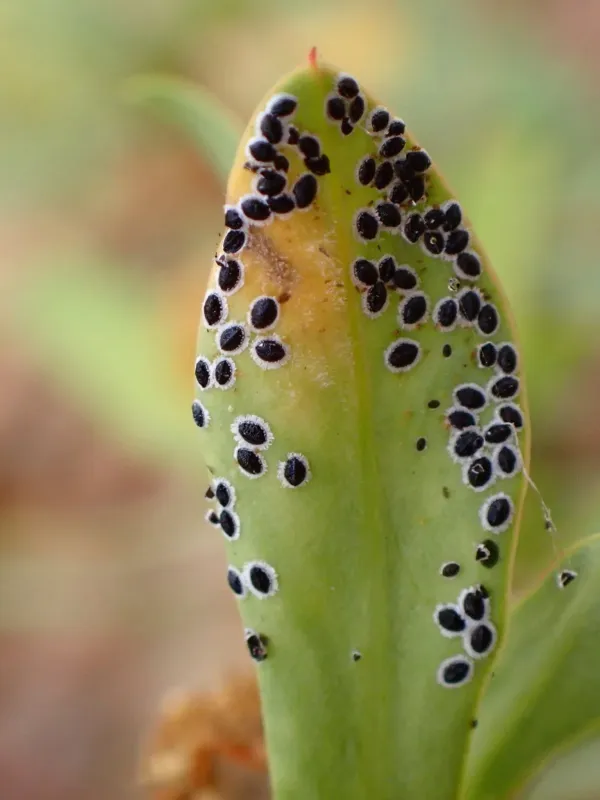
Description
How to identify
Acaudaleyrodes is a genus of insects belonging to the Aleyrodidae family, commonly known as whiteflies. These small hemipterans are significant pests in both protected and open-field agriculture.
The adult insect appears as a tiny, moth-like creature with white wings covered in a waxy powder. They are highly mobile and usually congregate on the underside of leaves.
The life cycle passes through several stages: egg, multiple larval instars, puparium, and adult. The puparium stage is often used by taxonomists to distinguish this genus from other whitefly species.
Environmental factors like temperature and humidity play a crucial role in their development. Warm, humid conditions significantly shorten the life cycle, leading to rapid population explosions.
Monitoring is typically conducted using yellow sticky cards, which attract adults and allow agronomists to assess the density of the pest population throughout the growing season.
What it damages
This pest attacks a wide range of host plants, including various vegetables, ornamentals, and perennial crops. Greenhouse cultivation is particularly susceptible to severe infestations.
Feeding occurs through piercing-sucking mouthparts, which extract phloem sap from the plants. This depletes the plant's resources and disrupts overall growth and vigor.
Physical damage manifests as chlorosis, leaf yellowing, curling, and eventual necrosis. Heavy infestations can lead to stunted growth and significant losses in marketable yield.
A major indirect impact is the secretion of honeydew. This sticky substance encourages the growth of sooty mold, which coats the leaves and impairs the plant's photosynthetic ability.
Beyond physical damage, Acaudaleyrodes acts as a vector for various plant viruses, which can cause systemic infections and irreversible damage to entire crop plantings.
Signs of infestation
The most obvious sign of an infestation is the sudden flight of white insects when the infested plant is shaken or disturbed during maintenance.
Inspect the undersides of leaves to find clusters of sessile larvae and puparia. They often appear as translucent or yellowish scales attached to the leaf epidermis.
A sticky, shiny film on the leaves or the surface underneath the plant is a clear indicator of honeydew accumulation caused by the pest.
The presence of black, powdery sooty mold on the foliage is a late-stage symptom indicating that the pest population has been present for a significant period.
Wilting, premature leaf drop, and irregular discolouration are common physiological responses to the stress caused by the pest's constant sap-feeding.
Control measures
Management requires an integrated pest management (IPM) approach, combining physical, biological, and chemical control measures to keep populations below threshold levels.
Cultural practices such as removing weeds around the growing area and maintaining proper plant spacing are essential for reducing habitat suitability.
Biological control agents, including parasitic wasps and predatory mites, can effectively manage whitefly numbers when introduced early in the infestation cycle.
Chemical control should be applied judiciously, focusing on systemic insecticides. It is vital to rotate different chemical classes to prevent the development of pesticide resistance.
- Deploy yellow sticky traps for monitoring and mass trapping.
- Sanitize growing areas by removing crop debris immediately after harvest.
- Apply systemic insecticides during peak infestation periods.
- Introduce natural enemies like Encarsia formosa or similar predators.
Taxonomy
- Latin name
- Acaudaleyrodes
- Order
- Hemiptera (bugs, aphids, leafhoppers)
- Family
- Aleyrodidae
- EPPO code
- ACDLSP
Discussion
No discussions yet — be the first.