
Acaudaleyrodes rachipora whitefly
Acaudaleyrodes rachipora
Description
How to identify
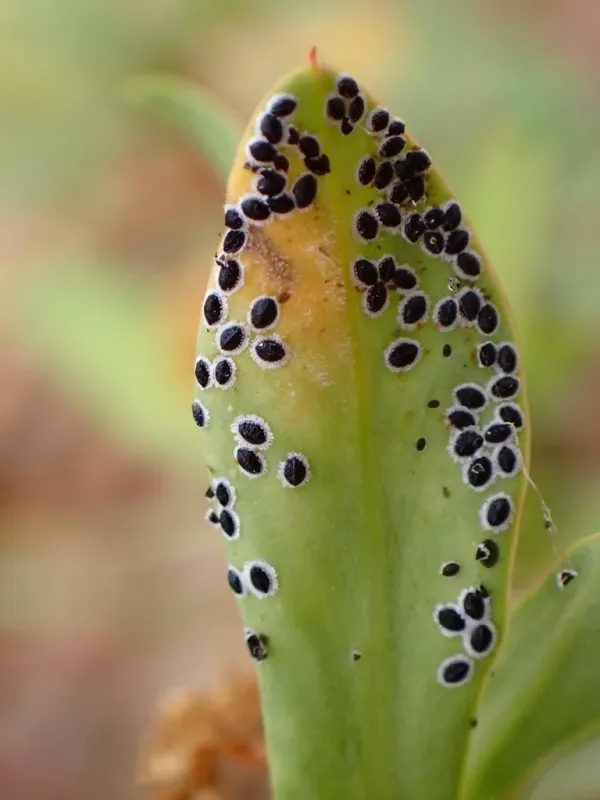
The Acaudaleyrodes rachipora whitefly belongs to the family Aleyrodidae, order Hemiptera. It is a specialized pest recognized by distinct morphological structures of the puparium, which lacks the characteristic "tail" found in other genera.
Adults are tiny, typically measuring about 1.5 mm, with bodies covered in a fine white wax. They are characterized by their habit of resting on the undersides of leaves, which provides protection against environmental stress.
The life cycle encompasses eggs, three mobile larval stages, a sessile puparial stage, and adults. Each stage is adapted to survival on the host plant surface.
Reproduction is highly responsive to temperature, with warm climates facilitating continuous breeding throughout the growing season.
This species requires high-resolution microscopic analysis for accurate species identification, as it is often confused with other whitefly species in the field.
What it damages
Acaudaleyrodes rachipora feeds on a wide range of host plants, including various legumes and ornamental species, causing direct mechanical damage through sap extraction.
By removing plant nutrients, the pest significantly stunts growth, reduces flowering, and compromises the overall vigor of the host plant.
The accumulation of honeydew secreted by the larvae promotes the development of sooty mold, which blocks sunlight and interferes with essential photosynthetic activity.
Direct damage often leads to chlorosis, leaf curl, and, in severe cases, total defoliation and death of young plant tissues.
The economic impact is heightened when infestations occur in greenhouse environments, where the pest can proliferate rapidly under controlled conditions.
Signs of infestation
Initial signs of infestation are detected as yellowing or chlorotic mottling on the upper leaf surface directly above colony sites.
The presence of a sticky, glistening substance (honeydew) on leaves is a primary indicator of whitefly activity and usually precedes the growth of black sooty mold.
During morning or evening hours, disturbing the infested foliage will cause the adults to fly in a visible cloud, facilitating easy visual scouting.
The presence of sessile, scale-like puparia on the underside of leaves confirms the successful establishment and life cycle progression of the pest.
Weakened plant development, characterized by smaller leaves and decreased fruit yield, serves as a secondary indicator of long-term infestation.
Control measures
Implementing yellow sticky traps is a standard practice for both monitoring pest density and reducing adult population levels in protected environments.
Integrated Pest Management (IPM) strategies emphasize the importance of sanitation, including the removal of weeds that serve as alternative hosts during off-seasons.
Chemical control involving systemic insecticides is often used when thresholds are exceeded, targeting the larval stages to prevent population explosions.
The use of biological control agents, such as parasitoid wasps or predatory mites, provides a sustainable approach to suppressing whitefly populations in large-scale agriculture.
Strict quarantine and inspection of new plant material are essential to prevent the entry and further spread of Acaudaleyrodes rachipora into non-infested regions.
Taxonomy
- Latin name
- Acaudaleyrodes rachipora
- Order
- Hemiptera (bugs, aphids, leafhoppers)
- Family
- Aleyrodidae
- EPPO code
- ALTRCI
Discussion
No discussions yet — be the first.