
Papaya whitefly
Trialeurodes variabilis
Description
How to identify
The papaya whitefly (Trialeurodes variabilis) belongs to the order Hemiptera and the family Aleyrodidae. These small insects typically measure 1–1.5 mm in length and possess white, waxy-coated wings that give them a dusty appearance.
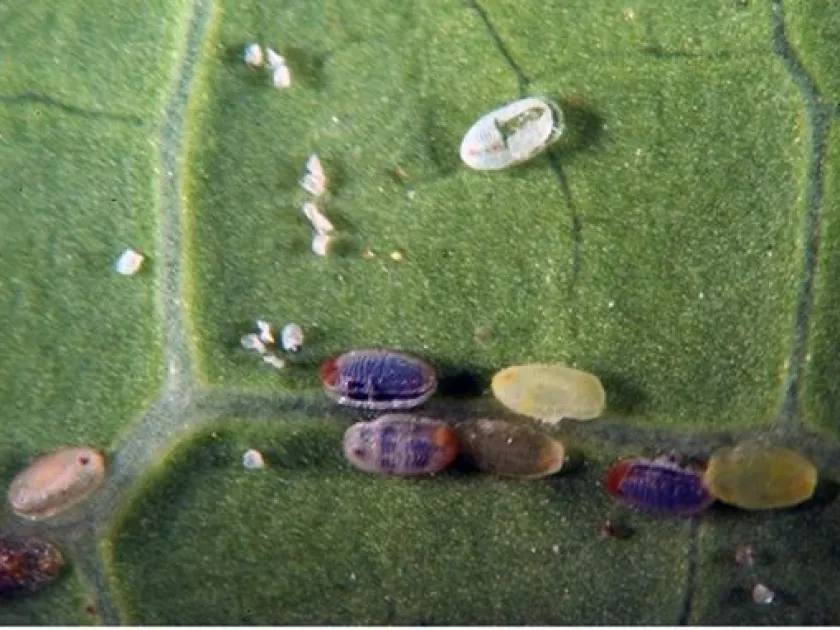
The insect develops through several life stages, starting from mobile crawlers to sedentary nymphs. The nymphal stages are often transparent or yellowish, flattened, and firmly attached to the leaf underside, making them challenging to spot during early infestations.
Adults are most active during dawn and dusk. They exhibit rapid reproduction rates under favorable climatic conditions, creating dense colonies that can quickly colonize healthy plant tissues.
The life cycle is highly temperature-dependent. Warm, humid environments accelerate their developmental speed, allowing multiple generations to overlap, which increases the pressure on host plants throughout the growing season.
Identification is best achieved by inspecting the underside of leaves. A characteristic sign of their presence is a white cloud of adults taking flight when the host plant is disturbed or shaken.
What it damages
While the primary host is papaya (Carica papaya), this pest is known to infest a variety of other botanical species, including several weeds and ornamental plants found near agricultural fields.
Both adults and nymphs cause damage by feeding on plant sap. This feeding behavior drains nutrients from the plant, resulting in stunted growth, chlorosis, and a overall decline in plant vigor.
The excretion of honeydew by the whiteflies encourages the growth of sooty mold. This dark fungal layer covers the leaves, significantly reducing the plant's ability to perform photosynthesis and lowering fruit quality.
Beyond direct feeding damage, the papaya whitefly is a vector for various plant viruses. Transmission of these pathogens can lead to severe systemic disease outbreaks that may devastate entire plantations.
Typical symptoms include yellowing of foliage, leaf curling, and premature senescence. In high-density populations, the cumulative effect of feeding and secondary infections can lead to substantial yield losses.
Control measures
Effective management of the papaya whitefly requires an integrated pest management (IPM) approach that combines cultural, biological, and chemical strategies.
Cultural practices include sanitation, such as the prompt removal of crop debris and aggressive weeding, which eliminates alternative hosts and breeding grounds for the whitefly population.
Biological control involves the introduction or conservation of natural enemies, including predatory insects and parasitic wasps, which can help maintain whitefly populations below economic threshold levels.
Chemical control should be employed strategically, utilizing systemic insecticides during the peak growth phases. It is vital to rotate different chemical classes to prevent the development of pesticide resistance in the population.
Monitoring using yellow sticky traps is a critical component of control, as it provides early warning of infestation levels and aids in the precise timing of insecticide applications to maximize efficacy.
Taxonomy
- Latin name
- Trialeurodes variabilis
- Order
- Hemiptera (bugs, aphids, leafhoppers)
- Family
- Aleyrodidae
- EPPO code
- TRIAVB
Discussion
No discussions yet — be the first.