
Laurel whitefly
Trialeurodes lauri
Description
How to identify
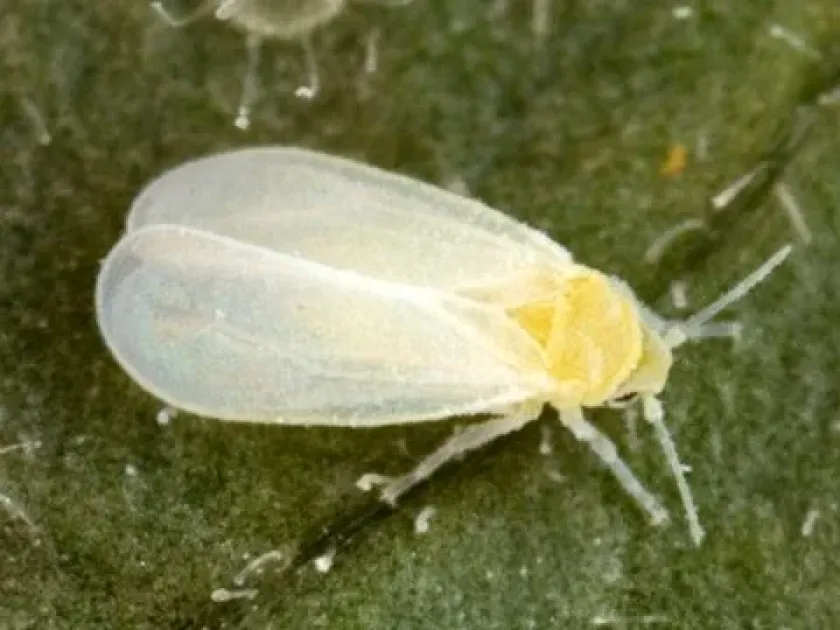
The laurel whitefly (Trialeurodes lauri) is a small insect belonging to the family Aleyrodidae. They are tiny, winged insects that appear as small white moths, typically measuring only a few millimeters in length.
Adults possess two pairs of wings covered in a fine white powdery substance, which gives them their common name. They are very active and fly readily when the host plant is disturbed.
The immature stages, known as nymphs or puparia, are sedentary and attach themselves firmly to the undersides of the laurel leaves to feed.
The nymphs are flat, oval-shaped, and often translucent or yellowish, making them difficult to spot without close inspection of the leaf surface.
These insects thrive in protected environments such as greenhouses and indoor gardens, where they can complete their life cycle continuously throughout the year.
What it damages
The primary host plant is the bay laurel (Laurus nobilis). Whiteflies feed by piercing the plant tissue and sucking out the sap, which saps the plant's vitality.
Heavy feeding causes stunted growth, leaf curling, and yellowing, which significantly impacts the overall health and ornamental quality of the laurel.
A major indirect threat is the production of honeydew, a sticky substance that promotes the growth of sooty mold, covering the leaves and reducing photosynthesis.
Furthermore, the laurel whitefly can act as a vector for various plant viruses, potentially introducing diseases that are difficult to manage once established.
In severe infestations, the cumulative effect of nutrient loss and secondary infections can lead to premature leaf drop and the eventual death of the affected plant.
Signs of infestation
The presence of honeydew on the leaves is often the first visible symptom, making the foliage feel sticky to the touch and attracting ants.
Closer examination of the underside of leaves reveals the presence of small, scale-like nymphs scattered across the green tissue.
Disturbing a laurel branch usually triggers an immediate flight response, with adult whiteflies rising in a cloud, clearly indicating an active infestation.
The accumulation of black, velvety sooty mold on the upper surfaces of leaves is a definitive indicator of an advanced whitefly colony.
General plant decline, including yellowing or wilting of new growth, should prompt an immediate inspection for this pest.
Control measures
Sanitation is key to prevention: regularly prune infested foliage and maintain good air circulation to keep humidity levels unfavorable for the pest.
Yellow sticky traps are highly effective for monitoring adult populations and can help reduce the number of insects available to reproduce.
For chemical control, apply registered systemic or contact insecticides, taking care to cover the undersides of the leaves thoroughly where nymphs reside.
Biological control methods, such as introducing the parasitic wasp Encarsia formosa, offer an eco-friendly way to manage and suppress whitefly numbers.
Always perform regular inspections and prioritize non-toxic methods, such as insecticidal soaps, before resorting to more intensive chemical interventions.
Taxonomy
- Latin name
- Trialeurodes lauri
- Order
- Hemiptera (bugs, aphids, leafhoppers)
- Family
- Aleyrodidae
- EPPO code
- TRIALA
Discussion
No discussions yet — be the first.