
Trialeurodes
Trialeurodes
Description
How to identify
The genus Trialeurodes belongs to the Aleyrodidae family of the Hemiptera order. The most prominent species is the greenhouse whitefly, Trialeurodes vaporariorum.
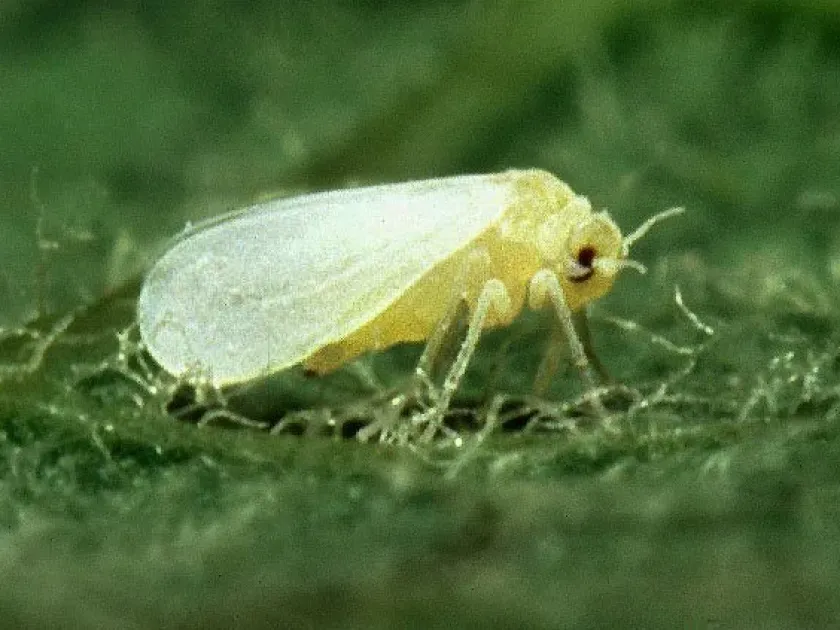
Adults are small insects, about 1–1.5 mm long, with two pairs of white wings covered in a waxy, powdery substance. The first instar larvae are mobile, while later stages are stationary, flat, and translucent.
The life cycle consists of egg, larval stages, puparium, and adult. In greenhouse environments, the pest breeds year-round, completing its cycle in 20–40 days depending on temperature.
Females lay eggs on the undersides of young leaves, attaching them with a short pedicel. A single female can produce up to 300 eggs during her lifespan.
The combination of high reproductive rates and the hidden nature of larvae feeding on plant sap makes this genus a significant threat to protected cultivation.
What it damages
Trialeurodes affects a wide range of agricultural crops. It is particularly destructive to vegetable, ornamental, and flowering plants.
Commonly affected crops include cucumbers, tomatoes, peppers, eggplants, and various indoor flowers in greenhouses.
Both adults and larvae cause damage by sucking sap from plant tissues, which leads to stunted growth and general plant weakening.
Damage is often exacerbated by the growth of sooty mold, which develops on the honeydew excreted by the insects, further blocking photosynthesis.
Beyond direct damage, the pest acts as a vector for various plant viruses, such as leaf curl and chlorosis, which can lead to total crop loss.
When it appears
In greenhouses, Trialeurodes remains active throughout the year, with continuous overlapping generations. Peak populations usually occur during spring and summer.
In outdoor conditions, the pest colonizes plants during warm months, though major outbreaks are most frequent in protected environments.
Optimal conditions for rapid development are high humidity and temperatures between 22 and 26 degrees Celsius.
In temperate climates, the pest overwinters primarily in heated greenhouses or on remaining plant debris in indoor facilities.
The spread of the population within a greenhouse occurs rapidly, especially when ventilation is poor and plant density is high.
Signs of infestation
The first sign of infestation is the appearance of small white flies fluttering when plants are disturbed or shaken.
Small translucent larvae and eggs can be found on the undersides of leaves, while sticky honeydew appears on upper leaf surfaces.
Affected leaves begin to yellow, curl, and drop prematurely, causing the plant to look sickly and stressed.
The development of a black, sooty coating on the leaves indicates advanced infestation and secondary fungal growth.
Heavy infestations result in deformed, poorly developed fruits that are commercially unviable due to their condition and size.
Control measures
Yellow sticky traps are an essential tool for monitoring and reducing adult populations within greenhouse structures.
Cultural control measures include thorough disinfection of greenhouses after harvest, weed management, and maintaining optimal climate conditions.
Biological control involves the use of beneficial insects, such as the parasitoid wasp Encarsia formosa, which targets the larval stages.
Chemical control requires systemic insecticides, as the larvae's waxy coating often protects them from direct contact sprays.
- Application of neonicotinoid-based insecticides.
- Use of entomopathogenic fungi like Beauveria bassiana.
- Regular monitoring of leaf undersides.
- Immediate removal and disposal of heavily infested plant tissues.
Taxonomy
- Latin name
- Trialeurodes
- Order
- Hemiptera (bugs, aphids, leafhoppers)
- Family
- Aleyrodidae
- EPPO code
- TRIASP
Discussion
No discussions yet — be the first.