
Trama rara
Trama rara
Description
How to identify
Trama rara is a specialized species of root aphid belonging to the family Aphididae. This pest lives exclusively underground, which makes it extremely difficult to detect during standard field inspections.
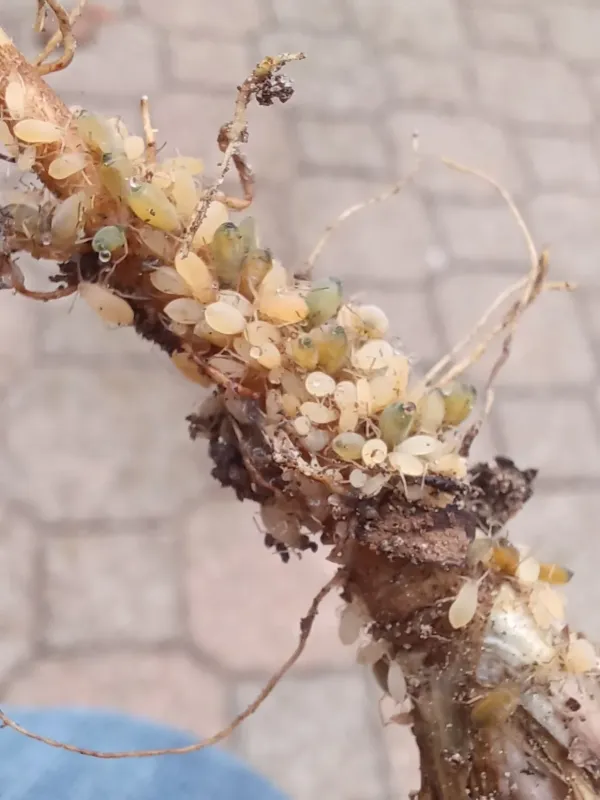
Physically, these insects have evolved to thrive in soil environments. They are typically pale, whitish, or greyish in color, providing effective camouflage against the root systems of the plants they infest.
Systematically, this species is part of the order Hemiptera. A key feature of its biology is the obligate symbiotic relationship with ants, which protect the aphid colonies and help transport them between roots.
The insect develops entirely within the rhizosphere. Due to its narrow specialization, the pest can persist in a field for several seasons if the agro-ecological conditions remain favorable for its survival.
Because of its subterranean lifestyle, the presence of Trama rara is often only recognized once the host plant begins to show significant signs of decline, making proactive scouting essential.
What it damages
The primary hosts for Trama rara are the roots of various herbaceous plants and specific agricultural crops. The pest feeds by extracting sap from the roots, which disrupts the plant's nutrient uptake.
As the aphids feed, they cause direct physiological stress to the host. Infected plants often exhibit stunted growth, yellowing foliage, and a reduced capacity to withstand abiotic stresses like drought.
The damage to the root tissue is not limited to nutrient loss. The feeding sites create micro-wounds that serve as entry points for various soil-borne pathogens, including fungi and bacteria, leading to root rot.
The impact is most severe on young seedlings or during the peak vegetative stage of the crop. A high density of aphids can cause significant yield losses by effectively starving the plant from below.
Economic impact is particularly noticeable in crops grown in light or sandy soils, where the ease of movement for both ants and aphids facilitates rapid colonization across the entire field.
When it appears
The activity of Trama rara typically begins in the spring as soil temperatures rise. This period triggers the expansion of colonies as they move onto the emerging root systems of crops.
During the summer months, the population peaks, driven by optimal soil warmth and moderate moisture levels. The species is highly sensitive to the soil environment, often migrating vertically to find the best conditions.
In the autumn, as temperatures drop, the aphids prepare for overwintering. They may survive in various life stages deep within the soil profile, ensuring the species persists until the next growing season.
Monitoring should be conducted early in the season to identify infested patches. Timely action is necessary because once the colony reaches a critical size, the damage to the root system becomes irreversible.
Seasonal weather fluctuations, such as intense rainfall or severe drought, significantly influence the vertical distribution of the pest in the soil, which should be considered when planning inspection dates.
Signs of infestation
The most prominent sign of an infestation is the unexplained wilting of plants, even when irrigation or soil moisture levels are adequate. This is often the first indicator of root-level problems.
The presence of ant mounds or increased ant activity around the base of the plant stem is a strong indirect indicator that root aphids, including Trama rara, are being tended in the root zone.
Upon carefully extracting a suspect plant, you may observe white, cotton-like masses on the roots. These are waxy secretions produced by the aphids to protect their bodies while feeding.
The roots themselves may appear underdeveloped or necrotic. In areas where the aphids have been feeding, the root structure is often compromised, showing signs of decay or reduced lateral root density.
Patches of chlorotic and slow-growing plants scattered throughout a field are characteristic symptoms of a localized infestation of this subterranean pest.
Control measures
Managing Trama rara requires an integrated pest management (IPM) strategy that focuses on both the pest and its symbiotic ant partners. Reducing ant populations is often the first step in control.
Cultural practices such as deep autumn plowing help disrupt the soil environment and destroy overwintering sites. Crop rotation is also essential to break the life cycle of the pest.
Chemical control involves the use of systemic insecticides applied as a soil drench. This method ensures the active ingredient reaches the root zone where the aphids are actively feeding.
- Implementation of strict weed control to remove alternate hosts.
- Use of certified, pest-free planting material.
- Application of biological control agents like entomopathogenic fungi.
- Maintaining optimal soil fertility to help plants compensate for root damage.
By combining these methods, growers can effectively manage the population density of the pest and mitigate its negative impact on crop production and overall farm yield.
Taxonomy
- Latin name
- Trama rara
- Order
- Hemiptera (bugs, aphids, leafhoppers)
- Family
- Aphididae
- EPPO code
- TRAMRA
Discussion
No discussions yet — be the first.